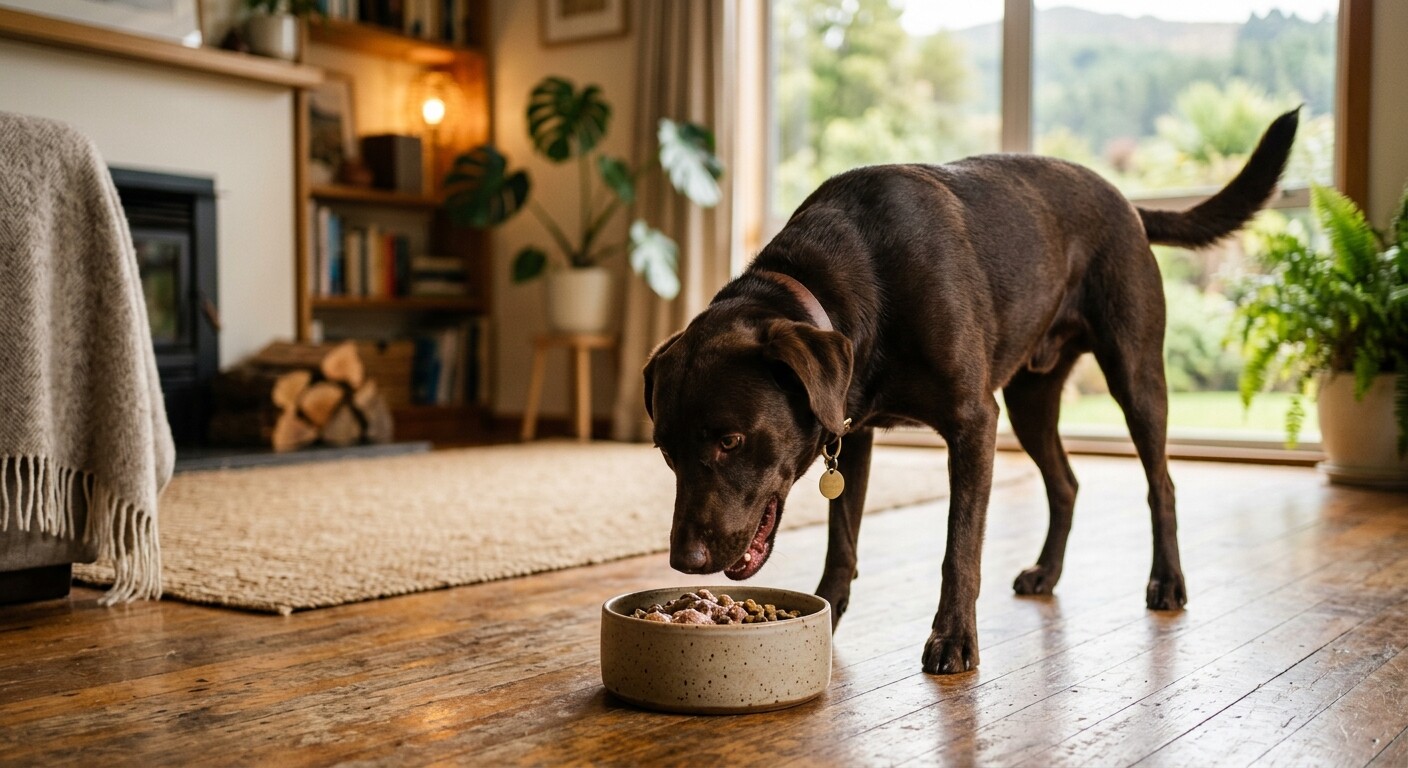
Independent review of Purina Pro Plan for NZ owners — ingredient analysis, real-world feeding experience, and comparison with NZ alternatives. Worth it?
Purina Pro Plan sits in that awkward middle ground of dog food — more expensive than supermarket kibble, cheaper than boutique brands, but backed by more feeding trials than both put together. Every dog is different — talk to your vet if you’re switching foods for health reasons, or if your dog has a sensitive stomach or known allergies. Walk into any Animates or PetStock in New Zealand and you’ll find walls of Pro Plan varieties targeting every conceivable dog type.
But does “scientifically formulated” actually translate to better nutrition? And at $80-120 for a 14kg bag, is Pro Plan worth the step up over Black Hawk or Ivory Coat?
I’ve gone through the ingredients, dug into the feeding trial data, and compared costs against NZ alternatives. Here’s my honest take.
Bottom line: Pro Plan is nutritionally solid with genuine research behind it, but you’re paying partly for marketing and brand recognition. For most dogs, Black Hawk offers similar nutrition at better value.
PawPick rating: 7/10 — dependable and well-studied, but not quite enough to outrun the better-value kibble options. Rated on ingredient quality, value in NZ, availability, and whether the claimed benefits show up in the bowl.
What Is Purina Pro Plan?
Pro Plan is Purina’s premium line, positioned above Purina One and Supercoat but below their vet prescription diets. The range covers different life stages, sizes, and specific needs — from puppy growth to senior support to sensitive stomachs.
Key selling points:
- “Scientifically formulated” with feeding trial data
- Real meat as first ingredient in most formulas
- Prebiotic fibre for digestive health
- Omega fatty acids for skin and coat
- No artificial colours or flavours
Available in NZ through:
- Animates, PetStock, Pet Essentials
- Online via Pet Direct, Mighty Ape
- Some supermarkets (limited range)
Price range: $75-120 for 14kg bags, depending on formula
Ingredient Analysis: The Good and Concerning
Let’s look at Pro Plan’s most popular formula in NZ: Adult Medium & Large Breed Chicken.
The Full Ingredient List
Chicken (20%), wheat, poultry meal, corn, rice, animal fat, minerals, dried beet pulp, dried egg, fish oil, salt, vitamins, prebiotics, antioxidants.
What I Like ✅
Real chicken first: 20% fresh chicken provides quality protein and good palatability. Unlike some competitors that lead with meals, fresh meat here indicates better manufacturing standards.
Poultry meal inclusion: Despite fresh chicken first, poultry meal (third ingredient) provides concentrated protein. When properly sourced, meals are nutritionally valuable.
Fish oil inclusion: Specific mention of fish oil rather than generic “oils” suggests they’ve actually thought about omega-3s for coat and joint health.
Prebiotic fibre: Dried beet pulp supports digestive health without causing loose stools in most dogs.
No artificial colours: Unlike some other Purina ranges, Pro Plan avoids unnecessary dyes.
The Concerning Parts ❌
Wheat as second ingredient: For a food marketed as premium, wheat sitting this high is a bit disappointing. Wheat and corn together suggest carbohydrate loading to keep costs down.
“Animal fat” vagueness: Quality fat sources specify the animal (chicken fat, beef fat). Generic “animal fat” could be anything and suggests lower-grade sourcing.
Salt addition: While dogs need sodium, added salt in a complete food often indicates palatability enhancement to mask average ingredients.
No percentage disclosure beyond chicken: I know the chicken content (20%) but not protein meal percentages, which makes proper nutritional assessment tricky. For context, 20% fresh chicken in a kibble formula sounds impressive, but water weight is lost during extrusion — the actual contribution to the finished dry product is considerably less than 20%. This is standard practice across the industry, but worth understanding when comparing protein sources.
Manufactured in the US, priced like a local premium: Pro Plan arrives in NZ with a significant import markup. A 14kg bag costs $85–100 at Animates — similar to what you’d pay for NZ-made Addiction, and only $10–20 less than a 15kg bag of Ivory Coat Grain Free, which has a noticeably cleaner ingredient list. The research premium is real, but it doesn’t explain why the ingredients include wheat and corn at a $7/kg price point.
Compared to NZ Alternatives
vs Black Hawk Lamb & Rice:
- Black Hawk: Lamb meal (25%), rice, lamb (8%), barley…
- Pro Plan: Chicken (20%), wheat, poultry meal, corn…
Black Hawk provides clearer protein sourcing and avoids the wheat/corn combination.
vs Ivory Coat Grain Free:
- Ivory Coat: Deboned chicken, sweet potato, chicken meal, peas…
- Pro Plan: Chicken (20%), wheat, poultry meal, corn…
Ivory Coat cuts grains entirely and provides more specific ingredient naming — worth considering if you’re looking at grain-free approaches.
vs ZIWI Peak (for context):
- ZIWI: Beef, beef heart, beef liver, beef tripe, beef kidney…
- Pro Plan: Chicken (20%), wheat, poultry meal, corn…
The gap in protein quality and processing is stark, though that’s reflected in the price. ZIWI Peak represents a different tier entirely.
Nutritional Profile: Meeting Minimums vs Optimising
Guaranteed Analysis (Adult Medium/Large)
- Crude protein: 27% (minimum)
- Crude fat: 16% (minimum)
- Crude fibre: 3% (maximum)
- Moisture: 12% (maximum)
How This Stacks Up
Protein content: 27% meets AAFCO standards and matches many premium competitors. But protein quality depends on digestibility — fresh chicken scores well, though I can’t assess the poultry meal quality without more data.
Fat content: 16% is fine for most adult dogs but lower than high-activity formulas like Black Hawk. If your dog is very active, you might need Pro Plan Sport (higher fat).
Fibre: 3% is reasonable for digestive health without being excessive.
Caloric density: Approximately 1,750 kcal/kg — standard for the category.
Pro Plan doesn’t publish:
- Digestibility percentages
- Specific calcium/phosphorus ratios
- Detailed amino acid profiles
- Omega-3 fatty acid content
This transparency gap makes direct comparison harder than it should be.
The Science Marketing vs Real Science
Purina leans heavily on Pro Plan’s “scientific backing” and feeding trials. Here’s what I found when I actually looked into it:
Legitimate Research ✅
Feeding trial data: Unlike most pet food companies, Purina conducts actual feeding trials — studies where dogs eat the food for months while researchers monitor health markers.
Digestibility studies: Pro Plan formulas undergo digestibility testing, ensuring nutrients are actually absorbed rather than just present on paper.
Life-stage research: Puppy growth studies and senior health research inform formula development.
Prebiotic efficacy: Research supports their prebiotic fibre claims for digestive health.
Marketing Overreach ⚠️
“Scientifically formulated” ambiguity: This phrase appears on loads of Pro Plan packages but doesn’t specify what makes it more scientific than competitors who also employ nutritionists.
“Vet recommended” claims: While some vets do recommend Pro Plan, many recommend other brands too. Vet recommendations often reflect familiarity and sales training rather than exclusive nutritional superiority.
“Advanced nutrition” language: Marketing copy implies unique nutritional insights, but Pro Plan’s nutrition profile is similar to other quality kibbles.
The Reality
Pro Plan does invest more in feeding trials than most competitors, which gives genuine confidence in nutritional adequacy. But this research mostly confirms the food meets basic nutritional needs rather than proving it’s actually superior to other quality options.
Real-World Feeding Experience
What I’ve Seen and Heard
Palatability: Most dogs find Pro Plan highly palatable. The combination of real chicken, animal fat, and salt creates appealing taste and aroma.
Digestive tolerance: Generally well-tolerated, though wheat and corn can trigger sensitivities in some dogs. The prebiotic fibre helps with stool quality, but consider probiotics for extra digestive support and sensitive stomach alternatives if issues crop up.
Energy levels: Dogs typically maintain good energy on Pro Plan, which suggests decent nutrient absorption.
Coat condition: Fish oil inclusion often improves coat shine within 6-8 weeks, though dedicated omega-3 supplements may provide more targeted support.
Common Issues
Weight gain: The caloric density and palatability can lead to weight gain if you’re not careful with portions.
Grain sensitivities: Dogs with wheat or corn sensitivities may develop skin issues or digestive upset.
Stool volume: Higher carbohydrate content can mean bigger, more frequent stools compared to higher-protein alternatives.
Transitioning Tips
If switching to Pro Plan:
- Gradual transition over 7-10 days
- Monitor for skin and digestive changes
- Adjust portions — Pro Plan is calorie-dense
- Watch for increased thirst (salt content) and keep fresh water accessible
Popular NZ Options
Adult Medium & Large Breed:
- Best for: Most adult dogs 15kg+
- Protein: 27%, Fat: 16%
- Price: ~$85-100/14kg
Adult Small & Toy Breed:
- Best for: Dogs under 15kg
- Smaller kibble size, higher calorie density
- Protein: 28%, Fat: 18%
- Price: ~$90-110/7kg
Puppy Medium & Large:
- Best for: Puppies of larger breeds
- Higher protein (32%) and fat (20%) for growth
- DHA for brain development
- Price: ~$95-115/14kg
Sensitive Skin & Stomach:
- Best for: Dogs with food sensitivities
- Salmon and rice formula
- Limited ingredients, prebiotics
- Price: ~$100-120/14kg
OptiAge (Senior):
- Best for: Dogs 7+ years
- Enhanced antioxidants, glucosamine
- Easier-to-digest proteins
- Price: ~$100-120/14kg
My Recommendations
For healthy adult dogs: Standard Adult Medium/Large provides solid nutrition at the lowest Pro Plan price point.
For sensitive dogs: The Salmon & Rice sensitive formula addresses common protein and grain sensitivities, though specialised allergy diets may work better for severe cases. This is something I’ve navigated with Māui — his stomach doesn’t tolerate just anything.
For puppies: Pro Plan puppy formulas are nutritionally appropriate, but Black Hawk Puppy offers similar nutrition with clearer ingredient sourcing.
For seniors: OptiAge provides beneficial supplements including omega-3 support for joint health, though the base nutrition doesn’t differ massively from adult formulas.
Value Analysis: Cost vs Benefit
Price Comparison (14kg bags, March 2026)
| Brand | Formula | Price Range | Price per kg |
|---|
| Pro Plan | Adult Chicken | $85-100 | $6.00-7.15 |
| Black Hawk | Lamb & Rice | $75-90 | $5.35-6.45 |
| Ivory Coat | Grain Free | $90-110 | $6.45-7.85 |
| ZIWI Peak | Air Dried | $220-250 | $15.70-17.85 |
| Royal Canin | Adult | $100-120 | $7.15-8.55 |
Cost Per Day (25kg Labrador)
Pro Plan Adult: ~$2.10-2.50 daily
Black Hawk equivalent: ~$1.85-2.25 daily
Ivory Coat equivalent: ~$2.25-2.75 daily
Value Assessment
What you’re paying for with Pro Plan:
- Established brand reputation
- Feeding trial research
- Wide availability
- Formula variety
- Consistent quality control
What you’re not getting extra:
- Superior ingredient quality (vs NZ premium alternatives)
- Dramatically better nutrition (vs Black Hawk/Ivory Coat)
- Unique nutritional benefits
- NZ manufacturing — Pro Plan is produced in Nestlé Purina’s US facilities. At $6–7/kg, you’re paying a similar price per kilogram to Addiction Dog Food (NZ-made) or only slightly less than Black Hawk (Australian-made). The import premium is real but not reflected in ingredient quality
The ingredient gap is harder to ignore at this price: A 14kg bag at $100 NZD works out to about $7.15/kg. Black Hawk’s Lamb & Rice at $80 for the same bag is $5.70/kg — and has clearer protein sourcing with lamb meal as the first ingredient at 25%, no wheat, no corn. Pro Plan’s second and fourth ingredients are wheat and corn respectively. That’s a significant carbohydrate filler load for a food priced at a premium.
My take: Pro Plan provides solid nutrition with research backing, but the premium is for brand recognition and marketing rather than meaningfully better ingredients. If you want the feeding-trial reassurance, Pro Plan is fine. But the price-per-ingredient-quality ratio doesn’t favour it over NZ-stocked alternatives.
Who Should (and Shouldn’t) Feed Pro Plan
Pro Plan Works Well For:
First-time dog owners: Clear feeding guidelines, wide availability, and nutritional adequacy make it a safe starting point while you learn what your dog actually needs.
Dogs with no sensitivities: If your dog handles wheat and corn without issues, Pro Plan provides good nutrition without ultra-premium pricing.
Convenience-first households: Available everywhere in NZ, which is handy during travel or emergencies.
Dogs needing specific formulas: The range variety means you can find targeted nutrition within one brand, from large breed puppy to senior weight management.
Consider Alternatives If:
Your dog has grain sensitivities: Wheat and corn are primary ingredients. Grain-free options may suit better, especially for breeds prone to food allergies like French Bulldogs.
You prioritise ingredient quality: Black Hawk or ZIWI Peak offer cleaner ingredient lists with better transparency. Consider K9 Natural for freeze-dried options or raw feeding for maximum ingredient control.
Budget is tight: Cheaper options provide adequate nutrition at lower cost — check my cheapest dog food NZ guide.
You prefer NZ-made: Pro Plan is manufactured overseas. ZIWI Peak and K9 Natural are made here in NZ.
Your dog is very active: Pro Plan’s fat content may not cut it for high-energy dogs or working breeds.
Quality Control and Recalls
Manufacturing Standards
Pro Plan is manufactured by Nestlé Purina in facilities that meet international food safety standards. Quality control includes raw ingredient testing, production monitoring, finished product analysis, and supply chain tracking.
Recall History
Purina has had recalls over the years:
- 2016: Mould contamination in some Pro Plan wet foods
- 2018: Elevated vitamin D levels in certain formulas
- 2021: Metal contamination in limited production runs
Recalls aren’t great, but they do show the monitoring systems are working. Most affected volumes were small and dealt with quickly.
Current Safety
Recent Pro Plan sold in NZ appears to have good quality control with no major safety concerns. Large-scale production always carries some contamination risk that smaller, specialty manufacturers may avoid.
Environmental and Ethical Considerations
Sustainability
Positives:
- Large-scale production efficiency
- Established supply chains
- Research into sustainable protein sources
Concerns:
- Factory farming protein sources
- Packaging waste from wide distribution
- Limited transparency about sourcing practices
For environmentally conscious owners: NZ-made options like ZIWI Peak may tell a better sustainability story, though at significantly higher cost.
The Bottom Line
Pro Plan delivers on its promise of scientifically-backed, nutritionally complete dog food. The feeding trials and research investment provide genuine confidence in nutritional adequacy — something many smaller brands can’t match.
But Pro Plan’s nutritional profile isn’t dramatically superior to other quality options in NZ. You’re paying partly for brand recognition and wide availability rather than exclusively better nutrition.
My Recommendation
Choose Pro Plan if: You want research-backed nutrition with wide availability and your dog has no grain sensitivities. It’s a reliable choice that does the job.
Skip Pro Plan if: You prioritise ingredient transparency, want grain-free options, or are after better value. Black Hawk offers similar nutrition with cleaner ingredients for less money.
For most NZ dogs: Pro Plan is fine but not exceptional. Unless the research backing or brand familiarity specifically appeals to you, Black Hawk or Ivory Coat provide comparable nutrition with better ingredient transparency.
Pro Plan isn’t bad — it’s just not special enough to justify the premium over NZ alternatives that do the same job with cleaner labels. If you’re deciding between Pro Plan and Royal Canin, my Royal Canin vs Purina Pro Plan NZ comparison covers the head-to-head in detail.
For a direct head-to-head, see our ACANA vs Purina Pro Plan NZ comparison.
Considering other options? Check my Black Hawk vs Ivory Coat comparison or my best dog food NZ guide for alternatives at every price point. For premium NZ-made options, see my ZIWI Peak vs K9 Natural comparison.
 PawPick