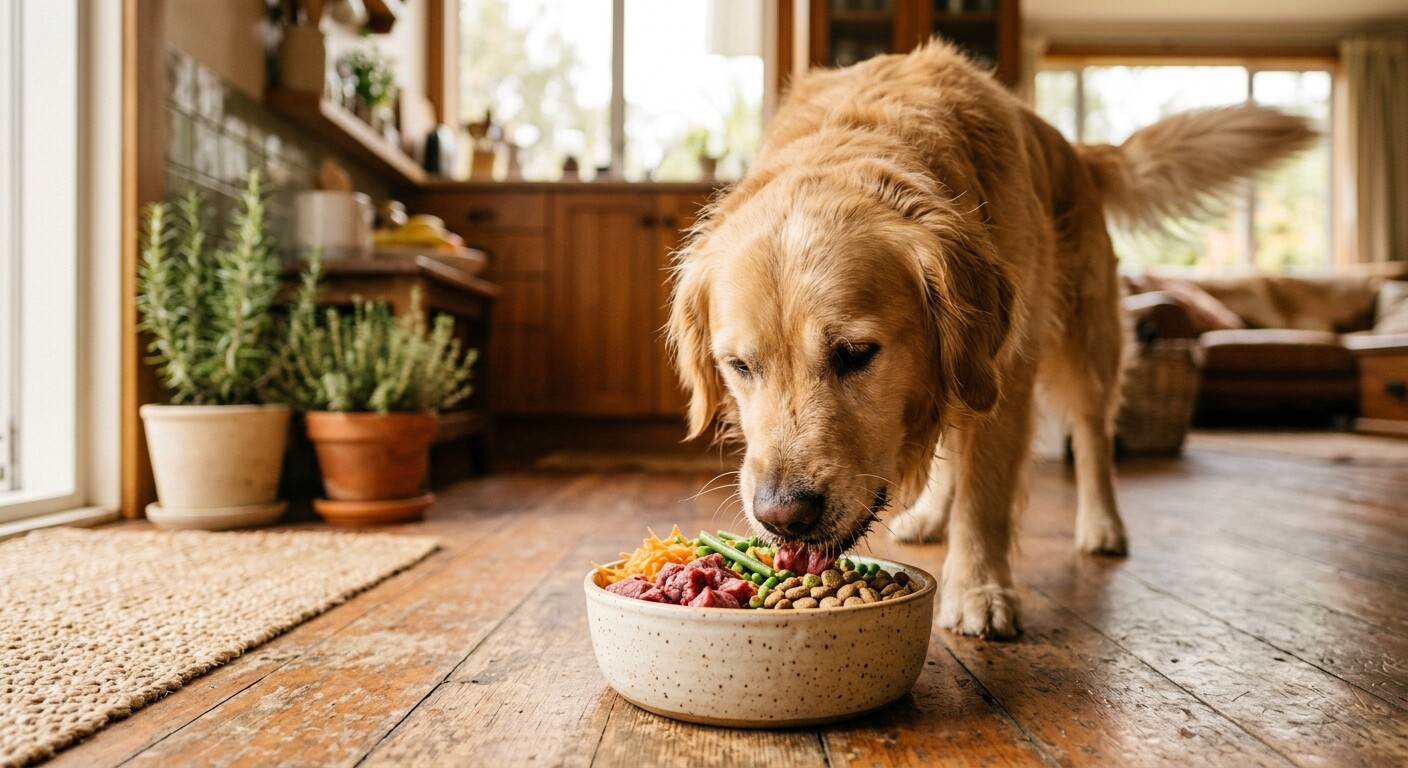
Compare raw dog food delivery services in NZ by coverage, weekly cost, freezer needs and convenience — including Raw Essentials, Go Raw, Brodies, K9 Natural and ROAR.
Best raw dog food delivery in NZ: quick answer
For most Kiwi dog owners who want frozen raw delivered, Raw Essentials is the safest starting point because it combines broad coverage, stores, delivery, and feeding support. Go Raw Pet Food is the value pick in major centres, Brodies is the South Island regional option, and K9 Natural is the convenient freeze-dried route if freezer space or cold-chain delivery is the sticking point.
Raw feeding has grown heaps in NZ over the past five years. What used to mean trips to specialty butchers and a lot of guesswork is now supported by professional delivery services offering balanced, convenient raw diets straight to your door.
The challenge isn’t availability — it’s sorting genuine quality from marketing hype, understanding real costs, and finding a service that actually delivers to your area reliably. If you’re still weighing up raw feeding vs kibble and haven’t fully committed, our raw vs kibble dog food comparison covers the practical trade-offs before you invest in a delivery subscription. If your real problem is a fussy dog that needs moisture and smell in the bowl, the best dog rolls NZ guide may be the cheaper first experiment.
I’ve compared the major NZ raw dog food delivery services to help you work out which one fits your dog’s needs, your budget, and your location.
Raw dog food delivery services compared
| Service | Best for | Coverage | Practical caveat |
|---|
| Raw Essentials | First-time raw feeders wanting support | Broad NZ coverage plus stores | Costs more than some regional suppliers |
| Go Raw Pet Food | Value in main centres | Auckland, Hamilton, Wellington, Christchurch | Regional/rural coverage is limited |
| K9 Natural | Convenience and no freezer pressure | Nationwide via shelf-stable delivery | Freeze-dried is the premium-cost option |
| ROAR Pet Food | Premium sourcing in delivery zones | Selected urban areas | Limited coverage and higher price |
| Brodies Raw Pet Food | South Island regional value | Canterbury and Otago | Not a nationwide solution |
Best raw dog food delivery services in NZ
🏆 Best overall: Raw Essentials
- Coverage: Nationwide (17 physical stores + delivery)
- Price range: $5-6/day for 20kg dog
- Delivery areas: All major centres, rural areas via courier
- Specialties: Complete balanced meals, single protein options, puppy formulations
- Best for: First-time raw feeders wanting proven quality and support
Raw Essentials has the most mature delivery operation in NZ. Their meals are nutritionally balanced (no guesswork about calcium ratios), frozen in portion sizes, and arrive with clear feeding guides.
What I like: Consistent quality control. Real nutritionist support you can actually ring up and talk to. Wide protein variety including novel options (venison, duck) for allergy-prone dogs — particularly handy for breeds like French Bulldogs and Cavalier King Charles Spaniels known for sensitivities.
What’s not perfect: More expensive than some competitors. Limited same-day delivery (most areas are next-day or 2-day).
Typical order: $45-60 for a week’s worth for a 20kg dog, delivered fortnightly.
🚚 Best value: Go Raw Pet Food
- Coverage: Auckland, Hamilton, Wellington, Christchurch
- Price range: $4-7/day for 20kg dog
- Delivery areas: Urban areas only, weekly delivery runs
- Specialties: Bulk purchasing discounts, customisable mixes
- Best for: Cost-conscious raw feeders in major centres
Go Raw focuses on competitive pricing through bulk operations and direct-to-consumer sales. They offer good value on standard proteins (beef, chicken, lamb) and volume discounts that Raw Essentials can’t match.
What I like: Genuine bulk savings. Flexible delivery schedules. Good communication about delivery windows.
What’s not perfect: Limited rural delivery. Less protein variety than competitors. No weekend delivery.
Typical order: $40-55 for a week’s worth for a 20kg dog, with savings on monthly orders.
🌟 Most convenient: K9 Natural (freeze-dried delivery)
- Coverage: Nationwide
- Price range: $7-9/day for 20kg dog (after rehydration)
- Delivery areas: Anywhere NZ Post delivers
- Specialties: Shelf-stable until rehydrated, no freezer space required
- Best for: Travel-friendly raw feeding, small freezers, inconsistent schedules
K9 Natural’s freeze-dried format solves most raw feeding logistics problems. Add water, wait 10 minutes, serve. Made in Christchurch from NZ ingredients.
What I like: No cold chain requirements. Portable for holidays and travel. Consistent quality — same food every time.
What’s not perfect: Most expensive per serve. Requires a bit of planning (rehydration time). Some dogs prefer the texture of fresh frozen.
Typical order: $50-65 for a week’s worth for a 20kg dog, quarterly delivery to spread costs.
🥩 Best for premium quality: ROAR Pet Food
- Coverage: Auckland, Tauranga, Wellington (expanding)
- Price range: $6-8/day for 20kg dog
- Delivery areas: Urban areas, Tuesday/Friday delivery
- Specialties: Human-grade ingredients, ethically sourced, custom blends
- Best for: Owners prioritising ethical sourcing and premium quality
ROAR sources from specific farms with animal welfare credentials and uses human-grade processing facilities. Higher price point, but the quality is visibly better — you can tell from the meat colour and texture.
What I like: Transparent sourcing. Genuinely premium quality. Custom nutrition consultations available.
What’s not perfect: Limited delivery areas. Premium pricing. Less protein variety than Raw Essentials.
Typical order: $55-70 for a week’s worth for a 20kg dog, weekly delivery.
🎯 Best regional option: Brodies Raw Pet Food (Canterbury/Otago)
- Coverage: Christchurch, Timaru, Dunedin, surrounding areas
- Price range: $4.50-6/day for 20kg dog
- Delivery areas: Canterbury and Otago regions
- Specialties: Local sourcing, competitive pricing, farm-to-bowl philosophy
- Best for: South Island dog owners wanting local, affordable raw
Family-run Canterbury business sourcing directly from local farms. Good balance of quality and price, with the advantage of shorter supply chains and fresher product.
What I like: Genuinely local operation. Competitive pricing. Personal service — you deal with the same people consistently.
What’s not perfect: Regional coverage only. Limited exotic protein options. No weekend delivery.
Typical order: $40-50 for a week’s worth for a 20kg dog, fortnightly delivery.
How to choose the right raw delivery service
1. Check delivery coverage first
Not all services deliver everywhere, and rural delivery often comes with surcharges or longer wait times. Raw Essentials and K9 Natural have the broadest coverage; regional services like Go Raw and Brodies may not reach your postcode.
2. Calculate your real daily cost
Raw feeding is more expensive than kibble — go in with your eyes open. For a 20kg dog, expect $4-8/day. Any service advertising “$2/day” is usually talking about supplements or treats, not complete meals.
3. Consider your freezer space
Most raw delivery services send 1-2 weeks’ worth at once. A 20kg dog needs roughly 400-600g/day, so you’re looking at 3-6kg of frozen food per week. K9 Natural’s freeze-dried format sidesteps this entirely but costs more per serve.
4. Start with balanced complete meals
If you’re new to raw feeding, go with a service offering complete balanced meals rather than trying to DIY from individual proteins. Getting calcium, phosphorus, and vitamin ratios wrong can cause genuine health problems. This is especially important for growing large breed puppies and active breeds like Border Collies and German Shepherds that need precise nutrition.
5. Factor in worming requirements
Raw-fed dogs need more frequent worming treatment — every 4-6 weeks rather than quarterly — particularly for hydatid tapeworm, which is a genuine NZ-specific risk. Budget an extra $15-20 per quarter.
Raw delivery vs. buying locally
Delivery advantages:
- Convenience: Delivered to your door on schedule
- Consistency: Same quality batch to batch
- Variety: Access to proteins not available locally
- Portion control: Pre-portioned meals remove guesswork
Local purchasing advantages:
- Freshness: Often fresher than delivered (depending on your supplier)
- Cost: May be cheaper, especially for basic proteins
- Flexibility: Can adjust quantities on the spot
- Relationship: Direct connection with supplier for custom requests
My take:
Delivery wins for most households. The convenience factor is real, quality control is generally better, and the time saved usually justifies the price premium. Local purchasing makes sense if you’ve got a reliable specialist butcher nearby and enjoy the hands-on side of raw feeding.
Common concerns about raw delivery
Temperature control during transport
Professional raw delivery services use insulated packaging and gel packs to maintain cold chain during transport. Most guarantee arrival within 24-48 hours and offer replacement if product arrives warm.
Red flags: Services that can’t explain their cold chain process, delivery times over 48 hours, or no temperature monitoring.
Nutritional balance
Complete balanced raw meals from established services are formulated to meet AAFCO standards. This takes the guesswork out compared to DIY raw feeding, where calcium-phosphorus ratios are easy to mess up.
What to look for: “Complete and balanced” on the label, feeding guides by dog weight and life stage, access to nutritional analysis.
Cost compared to kibble
Raw feeding costs 2-4x more than premium kibble. For context: feeding a 20kg dog ZIWI Peak costs roughly $4-5/day. Quality raw delivery typically runs $5-8/day.
Budget reality check: Factor in increased worming costs, potentially higher vet bills if transitioning causes digestive upset, and the inconvenience cost if delivery fails.
Feeding guides by dog size
Small dogs (5-10kg)
- Daily requirement: 100-200g
- Weekly cost: $20-35
- Best services: K9 Natural (portion flexibility), Raw Essentials (puppy/senior formulas)
- Breed note: Staffies often thrive on raw but watch weight gain — I keep a close eye on Māui’s portions
Medium dogs (10-25kg)
- Daily requirement: 200-500g
- Weekly cost: $30-60
- Best services: Go Raw (bulk discounts), Raw Essentials (variety), Brodies (regional value)
- Breed note: Golden Retrievers and Labradors often do well on raw but they’ll eat everything in sight, so portion carefully
Large dogs (25-40kg)
- Daily requirement: 500-800g
- Weekly cost: $50-85
- Best services: Go Raw (volume pricing), Raw Essentials (nutritional support), ROAR (premium quality)
Giant breeds (40kg+)
- Daily requirement: 800g+
- Weekly cost: $70+
- Best services: Contact services directly for bulk pricing — standard retail becomes pricey at this size
Making the switch to raw delivery
Week 1: Transition gradually
Mix 25% raw with 75% current food. Most dogs adapt quickly, but rushing it causes digestive upset that gets blamed on the raw diet rather than the switch itself. Adding probiotics during transition can help.
Week 2: Increase to 50/50
Monitor stools — they should become smaller and firmer as the week progresses. Increased water consumption is normal.
Week 3: 75% raw, 25% previous food
By now your dog’s gut bacteria should be adapting. Energy levels often pick up noticeably.
Week 4: Full raw transition
Monitor weight and body condition. Most dogs maintain or lose slightly on raw initially, then stabilise. Adjust portions based on body condition, not just feeding guides.
What’s normal during transition:
- Increased thirst and urination (first week)
- Smaller, firmer stools
- Cleaner teeth over 4-6 weeks — though dental chews are still worth keeping up
- Improved coat shine (6-8 weeks) — the natural omega-3s do their thing
When to worry:
- Persistent diarrhoea after week 2
- Significant weight loss
- Lethargy or behavioural changes
- Dental damage from inappropriate bones
Cost comparison: raw delivery vs. premium kibble
| Dog Size | Premium Kibble/Week | Raw Delivery/Week | Difference |
|---|
| 10kg | $20-25 | $25-40 | +25-60% |
| 20kg | $35-45 | $45-70 | +30-55% |
| 30kg | $50-65 | $65-95 | +30-45% |
Based on ZIWI Peak for kibble comparison and Raw Essentials for raw pricing
Bottom line
For most Kiwi dog owners: Raw Essentials provides the best combination of quality, support, and nationwide coverage. The price premium over competitors is worth it for the peace of mind and nutritional consistency.
For budget-conscious households in main centres: Go Raw offers genuine value without compromising too much on quality. Solid entry point to raw feeding.
For convenience-first households: K9 Natural’s freeze-dried delivery removes most raw feeding barriers. More expensive per serve, but solves freezer space and travel headaches.
For premium quality seekers: ROAR delivers noticeably better ingredients and ethical sourcing, if you’re in their delivery area and the premium fits your budget.
Raw feeding isn’t for every dog or every household. But if you’re committed to it, professional delivery services make it significantly more practical than it was even five years ago. The quality control, convenience, and nutritional assurance justify the cost for most households.
Whatever service you pick: start with their complete balanced meals rather than building your own, factor in increased worming costs, and give the transition at least 4-6 weeks before judging results.
Core nutrition:
Breed-specific raw feeding:
Health & specialised care:
 PawPick