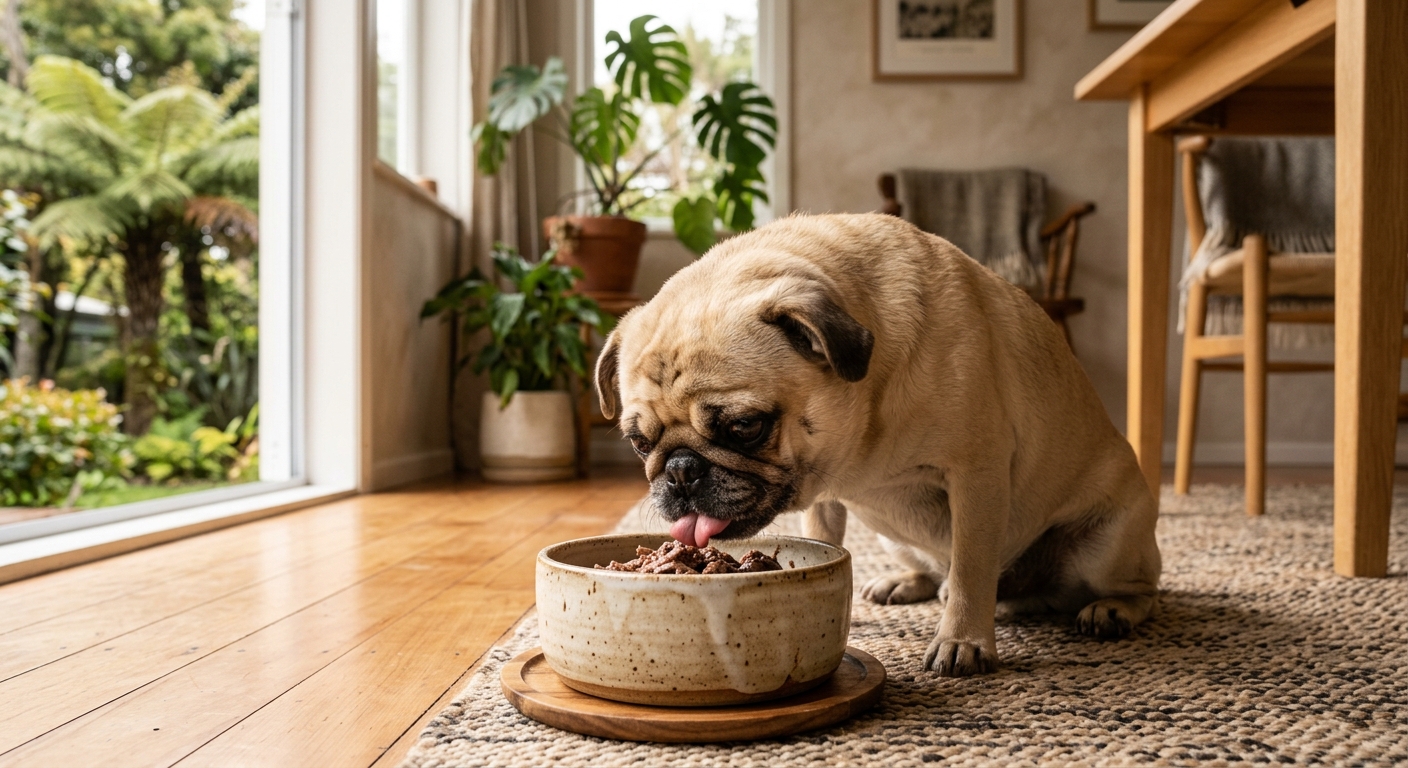
NZ pug feeding guide with quick picks for Royal Canin, ZIWI Peak, Black Hawk and ZamiPet support — focused on weight control, skin folds and flat-face kibble.
The short version
Every dog is different — talk to your vet if your pug has persistent skin, weight, or breathing problems before making significant diet changes.
Royal Canin Pug Adult is the place to start if your pug doesn’t have confirmed allergy issues — the doughnut-shaped kibble is engineered for flat faces and the formula directly targets weight control and skin health. If allergies or chronic skin fold problems are already present, go straight to ZIWI Peak Lamb: one protein, no grains, no ambiguity. For a budget-friendly middle ground that removes the most common allergens without the premium price, Black Hawk Grain Free Lamb is the call — around $2.50–3.50/day, available at Animates and PetStock nationwide.
Pug picks at a glance
| Pick | Best for | Why it suits pugs | Price check |
|---|
| Royal Canin Pug Adult | Default first try | Breed-shaped kibble, moderate calories, and a formula built around weight and skin support. | Check Royal Canin at VetSupply → |
| ZIWI Peak Lamb | Allergy-prone pugs | Single-protein, NZ-made, grain-free air-dried food when chicken or mixed-protein kibble is muddying the picture. | Check ZIWI Peak at VetSupply → |
| Black Hawk Grain Free Lamb | Value grain-free option | Removes chicken, wheat, corn and soy without jumping straight to premium air-dried pricing. | Check Black Hawk at VetSupply → |
| ZamiPet skin/gut support | Add-on support | Supplements are not food, but omega/probiotic support can be useful when folds, coat or digestion need backup. Talk to your vet first if symptoms persist. | Check ZamiPet at VetSupply → |
Affiliate links: PawPick may earn a commission from VetSupply if you buy through these links. VetSupply is an Australian retailer, so compare NZ stock, shipping, currency and landed cost before ordering.
Complete pug health ecosystem: Successful pug care combines proper nutrition with respiratory-friendly exercise equipment, health monitoring for activity tracking, digestive support for sensitive stomachs, skin and coat supplements, and comprehensive insurance covering breed-specific conditions like BOAS, obesity-related joint problems, and skin fold infections.
Start here if you have not chosen a brand yet: this breed guide narrows the decision for one type of dog. For the overall brand shortlist, budgets, and retailer comparison, use the main best dog food in NZ guide first.
Price-check the main picks
PawPick uses already-approved merchant links only. If a breed pick overlaps one of these VetSupply ranges, use it as an AU price check, then compare NZ stock, bag size, shipping, and your dog’s needs before buying:
Why pugs are a feeding challenge
Pugs were bred for companionship, not for anything that requires a functional airway. The features that make them look like tiny grumpy monks — the flat face, the deep skin folds, the compact body — create a specific and predictable set of nutritional problems.
Obesity risk is extreme. Pugs are among the most obesity-prone breeds in the world, and it’s a structural problem, not just a willpower problem. Their brachycephalic airways limit how much exercise they can safely do. They can’t run off excess calories. Their appetite, however, is enthusiastic and unlimited. The result: pugs gain weight easily, lose it slowly, and carry the consequences in their joints, spine, and breathing. Support healthy weight with a calorie-controlled diet and activity monitoring to ensure adequate daily movement without overexertion.
Aerophagia (air swallowing): Like all brachycephalic dogs, pugs gulp air when they eat. That air has to go somewhere — usually as gas, bloating, and occasional vomiting. The food isn’t always to blame, but slower eating and smaller meals make a real difference. Slow-feeding solutions reduce gulping and make mealtimes calmer for a breed that already has enough going on in the airway department.
Skin fold infections: Pug facial folds and body wrinkles trap moisture and bacteria. Food allergies and poor-quality ingredients worsen the inflammation you’ll see as redness, discharge, and a persistent sour smell around the folds. A diet low in common allergens and rich in skin-supporting fatty acids directly reduces this. Support fold health with specialized grooming care and omega-3 supplementation alongside dietary changes.
Allergy-prone skin and coat: Pugs have sensitive skin beyond just the folds. Food triggers — particularly chicken, beef, and wheat — often show up as itchy paws, recurring ear issues, and a dull coat. The folds amplify the problem because trapped bacteria plus skin inflammation is a miserable combination. For comprehensive allergen guidance, see our food allergy management guide.
Joint stress from excess weight: A pug carrying even 10–15% more weight than ideal puts significant additional stress on its already-compact skeleton. Hip dysplasia, patella luxation, and intervertebral disc disease are all exacerbated by overweight. Getting the diet right isn’t just about the skin and gut — it’s about protecting the joints. Support mobility with joint supplements and appropriate low-impact exercise with respiratory-friendly harnesses.
Respiratory considerations: Brachycephalic obstructive airway syndrome (BOAS) affects most pugs to some degree. This constrains exercise, affects heat regulation, and changes how they eat. Comprehensive pet insurance becomes essential for managing BOAS-related costs, which can include surgery for severe cases. Nutrition that maintains a lean body weight directly reduces the respiratory load — every extra kilogram makes breathing harder.
What to look for
Calorie density. This is the single most important factor for pugs. A food with 380–400kcal per 100g fed at appropriate portions is much easier to manage than a 450kcal food where a small measurement error creates a calorie surplus. Lower calorie density also means more food volume for the same calories, which helps a hungry pug feel full. Pair with a calorie management strategy and weigh every meal.
A moderate-to-low fat content (10–14%). High fat foods accelerate weight gain in a breed that can’t exercise it off. Some fat is essential for skin and coat health, but this isn’t a working breed with high energy demands. Look for fat on the lower end of the healthy range and supplement targeted omega-3s separately.
Fish oil, EPA, and DHA. Skin fold health depends on anti-inflammatory support from the inside. EPA and DHA from fish oil don’t just improve the coat — they reduce the inflammatory response that makes fold infections worse. Look for it in the ingredients list, or add a dedicated omega-3 supplement if the food doesn’t include meaningful amounts.
A brachycephalic-friendly kibble shape. Flat-faced dogs can’t pick up round kibble efficiently — they push it around the bowl rather than eating it, which leads to frustration and more air swallowing. Royal Canin’s breed-specific kibble has a doughnut shape designed for pug anatomy. It sounds like marketing until you watch a pug actually use it. Complement with slow-feeder bowls to further reduce gulping.
Limited or single protein sources. If your pug already has skin or gut symptoms, a limited-ingredient diet makes it much easier to identify the trigger. Chicken is the most common culprit in allergy-prone dogs; it’s also the most common ingredient in standard dog food. Lamb, fish, venison, or duck are cleaner starting points for allergy-prone pugs. For comprehensive allergen guidance, see our grain-free options guide.
No wheat or corn as primary carbohydrates. These aren’t the main allergen drivers, but they tend to appear in lower-quality foods alongside poor-quality proteins. Digestible carbs like sweet potato, potato, and rice are better tolerated and contribute to a cleaner overall ingredient profile. For more on digestive health, see our sensitive stomach dog food guide.
Top picks
🥇 Royal Canin Pug Adult
The one food engineered specifically for this breed. The doughnut-shaped kibble allows flat-faced pugs to pick it up with their lower jaw rather than pushing it around — a small thing that genuinely changes the eating experience for a brachycephalic dog. The formula includes L-carnitine to support fat metabolism and weight management, EPA and DHA for skin and fold health, and a fibre blend designed for pug digestion. If your pug doesn’t have confirmed allergies and you want a reliable, vet-endorsed starting point, this is it.
Available at vet clinics, PetDirect, and some Animates stores. A 7.5kg bag runs around $110–125 — roughly $3–4/day for a typical adult pug. Pet insurance can help manage ongoing specialist diet costs when medically necessary.
Supporting Royal Canin effectiveness:
The caveat: Royal Canin Pug Adult uses chicken as a protein source, so if your pug already has allergy symptoms, skip straight to the options below. Compare Royal Canin with other veterinary brands in our Hills vs Royal Canin analysis.
Check Royal Canin at VetSupply →
🥈 ZIWI Peak Lamb (or Mackerel & Lamb)
For pugs with confirmed or suspected food allergies, ZIWI’s single-protein air-dried recipes are the cleanest option on the NZ market. The Lamb formula has one animal protein (NZ grass-fed lamb), no grains, no cheap fillers, and green-lipped mussel for anti-inflammatory support — exactly what a fold-prone, allergy-prone breed needs when you’re trying to isolate a trigger.
The cost is significant: a 1kg bag is $40–45, and a typical adult pug needs around 130–160g/day of air-dried food (less than a Frenchie due to smaller size). That works out to roughly $6–8/day. Mixing ZIWI 50/50 with a grain-free kibble halves the cost while retaining most of the allergy benefit. Pet insurance often covers elimination diet costs when medically necessary.
Supporting ZIWI Peak for pugs:
Full breakdown in our ZIWI Peak dog food review. Compare with other premium options in our ZIWI Peak vs K9 Natural comparison.
Check ZIWI Peak at VetSupply →
🥉 Black Hawk Grain Free Lamb
Removes chicken, corn, wheat, and soy in one move — which handles the four most common pug allergens before any allergy testing is done. It includes prebiotics for gut health and fish oil for skin support. Protein sits at 28%, fat at 15%, which works well for pugs that need to stay lean without eating air.
A 7kg bag is around $75–85 at Animates or PetStock — roughly $2.50–3.50/day. That’s solid value for a grain-free formula that’s actively doing something useful for a breed with this profile.
Supporting Black Hawk for pugs:
For a broader look at the brand: Black Hawk dog food review. Worth comparing with Ivory Coat as another Australian grain-free option in our head-to-head brand comparison.
Check Black Hawk at VetSupply →
Budget pick: Ivory Coat Lamb & Sardine
Lamb and sardine as the primary proteins (no chicken), coconut oil for coat health, natural prebiotics. Australian-made, grain-free, available at Animates and PetStock. It’s not as refined as the options above but it’s a genuinely good food at a price most owners can sustain long-term — and avoiding chicken alone solves a lot of pug skin problems.
Around $65–75 for 6.5kg — roughly $2.50–3/day. If you’re choosing between this and Black Hawk, the head-to-head comparison is worth a read. Full ingredient breakdown in our Ivory Coat dog food review.
Budget-friendly pug support:
No affiliate link here: PawPick does not currently have verified Ivory Coat affiliate coverage. Compare local NZ retailers for current stock and bag sizes.
For severe, vet-diagnosed allergies: Hill’s Prescription Diet z/d
Hydrolysed protein — broken down so small the immune system doesn’t recognise it as an allergen. Not a food you’d choose under normal circumstances. It’s a medical diet for pugs where standard elimination diets haven’t resolved the symptoms. Available through vets only; requires a consultation. Around $130–140 for 7.98kg.
Supporting prescription diet success:
Compare prescription options in our Hills vs Royal Canin analysis.
Practical feeding notes for pugs
Weigh every meal. Pugs will eat past fullness every single time. A kitchen scale is non-negotiable. The feeding guide on the bag is a starting point calibrated for an average dog with average activity — pugs are not average. Start 10–15% below the recommended amount and adjust based on body condition, not how sad they look at the bowl.
Two small meals a day, minimum. Smaller portions reduce aerophagia and make digestion easier. A pug eating one large meal a day will swallow more air, produce more gas, and be more uncomfortable than the same pug eating the same amount across two sittings. Three meals is even better if your schedule allows.
Slow-feeder bowls from day one. Pugs eat fast and they eat flat-faced. The combination causes a lot of air swallowing. A slow-feeder bowl is one of the cheapest and most immediate improvements you can make — gas, bloating, and post-meal vomiting often drop significantly within days.
Treats count. A small pug on 450 calories a day can eat through a meaningful portion of that in treats without you realising it. Low-calorie treats, or small pieces of the regular food used as treats, keep the numbers honest. Avoid high-fat or high-calorie training treats as an everyday thing.
Avoid elevated food bowls. Unlike larger breeds, pugs don’t benefit from raised feeding stations. A floor-level bowl is fine. Elevation can actually increase air swallowing in brachycephalic breeds.
Room temperature food. Cold food straight from the fridge is harder to digest and less aromatic. If you’re feeding wet food or raw, take it out 15–20 minutes before mealtime.
The elimination diet approach
If your pug has skin or gut symptoms and food is suspected:
- Switch to a single novel protein they haven’t eaten before — venison, duck, or fish if they’ve mainly had chicken or beef
- Feed only this for 8–12 weeks with no treats from other sources
- If symptoms improve, you’ve identified the trigger category. Reintroduce proteins one at a time to confirm the specific culprit
- If nothing improves after 8–12 weeks, the issue is likely environmental, not dietary — see your vet about skin testing
The process only works if it’s clean. A single treat from the old protein, or a shared snack from a family member, is enough to invalidate weeks of effort. For comprehensive guidance, see our dog food allergies guide.
Raw feeding
Raw feeding can work for allergy-prone pugs, particularly when you need a very clean ingredient list. A 6–8kg adult pug needs roughly 120–180g/day of raw food.
NZ options that suit pugs:
- K9 Natural — freeze-dried lamb or beef, pre-balanced, just add water. Simple for allergy management.
- Raw Essentials — NZ raw food retailer with stores across the country. Good for custom protein selection.
One note: keep bone content modest. Pug digestive systems are compact and don’t handle high bone loads as well as larger breeds. Softer raw options (minced with ground bone) work better than whole raw meaty bones.
Where to buy
Most of these foods are available at Animates and PetStock nationwide. PetDirect is usually the most affordable NZ online option and ships to most of NZ quickly. Royal Canin Pug Adult is also stocked by most vet clinics, which is worth knowing if you’re already going in for a weight check. VetSupply is an affiliate-covered Australian price-check path for Royal Canin, ZIWI Peak, Black Hawk and ZamiPet; use it as a comparison point, not a reason to ignore faster local stock.
The decision
If your pug has no current symptoms and you want the simplest starting point: Royal Canin Pug Adult. The breed-specific kibble design and calorie management formula make it the easiest option to get right.
If you want to proactively remove the most common allergens without a diagnosis: Black Hawk Grain Free Lamb. Removes the four most common triggers, reasonable cost, widely available.
If allergies or chronic skin fold problems are already present: see your vet first, then consider ZIWI Peak single-protein or Hill’s z/d depending on severity and what the vet recommends.
For more on the NZ dog food landscape: the best dog food in NZ guide covers all the major brands side by side. If allergies are the primary concern, the hypoallergenic dog food guide goes deeper on elimination diets and limited-ingredient options. For other brachycephalic breeds with similar health needs, see our French Bulldog guide. And if you’re starting with a pug puppy, our best puppy food in NZ guide covers early nutrition requirements before they’re ready for an adult formula.
Best dog food by breed
Start with the main best dog food in NZ guide for the all-breed shortlist, then use these breed guides to adjust for size, weight, coat, digestion, and joint risk:
- Labrador Retriever — weight control, joint support, and measured meals.
- Golden Retriever — joint support, coat health, and sensible calories.
- Staffordshire Bull Terrier — muscle maintenance, skin support, and realistic budgets.
- French Bulldog — digestion, allergy triggers, and flat-face feeding.
- Border Collie — high-energy working-dog nutrition.
- German Shepherd — hip, joint, and digestive support.
- Poodle — coat, digestion, and size-specific feeding.
- Cavalier King Charles Spaniel — heart-aware feeding and weight management.
- Pug — you’re here; this guide covers weight control, skin folds, and flat-face kibble.
- Husky — high-protein fuel for active, lean dogs.
 PawPick