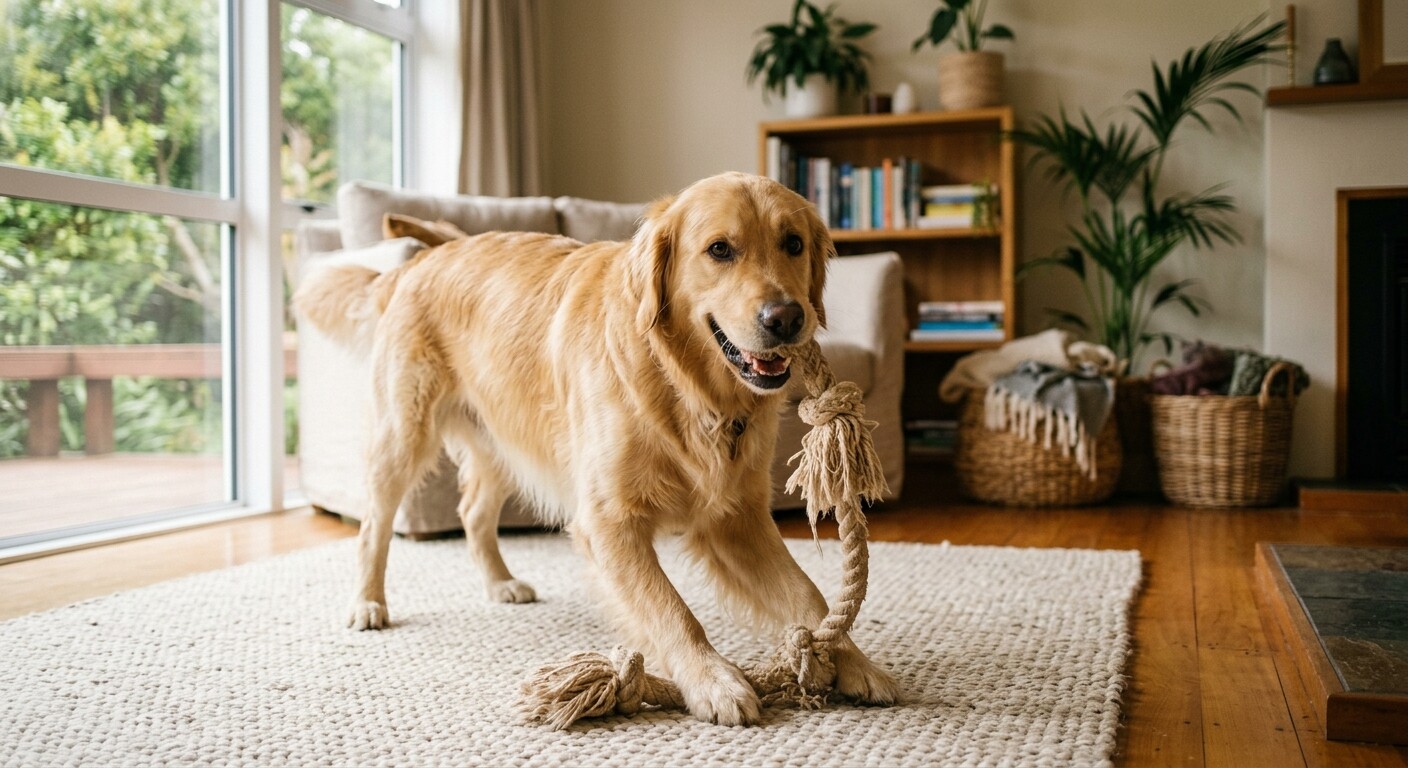
Stop boredom with the best interactive dog toys in NZ — Kong, puzzle feeders, and tug toys tested. Find what works for your dog and where to buy in NZ.
If your dog’s destructive or anxious behaviour persists despite adequate exercise and enrichment, ask your vet — sometimes there’s an underlying health or anxiety issue worth ruling out.
Your Border Collie is eating the couch despite being on quality nutrition and getting daily walks. Your German Shepherd has redesigned your garden into a lunar landscape, showing clear signs of under-stimulation. Your working breed is displaying “working” behaviours on everything except actual work, potentially indicating inadequate mental enrichment alongside their physical exercise.
The solution isn’t more walks. (Though don’t stop those—invest in a quality harness for safe, comfortable exercise.) The solution is giving that brilliant brain something productive to do when you’re not actively engaging them. Mental exhaustion often matters more than physical fatigue for intelligent breeds prone to anxiety and destructive behaviour.
The best interactive dog toys for NZ dogs in 2026: Kong Classic for most households — nearly indestructible, endlessly versatile, available everywhere, supports dental health through appropriate chewing. Nina Ottosson Level 1 puzzle for dogs new to brain games, perfect for Golden Retrievers and Labradors developing problem-solving skills. Snuffle mat for natural foraging behaviour, excellent for senior dogs needing gentle mental stimulation alongside senior nutrition. Licki Mat for anxiety and licking satisfaction, supporting dogs with digestive sensitivities who benefit from calm, repetitive activities.
For working breeds showing serious destructive behaviour: Kong Extreme (black) paired with Benebone Wishbone addresses both mental stimulation and appropriate chewing outlets while supporting behavioural wellness. Combine with comfortable bedding for recovery, GPS activity monitoring to track behavioural improvements, and health insurance for ongoing behavioural support costs. Cavalier King Charles Spaniels, French Bulldogs, and Staffies each require breed-specific approaches to mental enrichment based on their unique behavioural patterns and physical capabilities.
Complete behavioural management ecosystem: Mental stimulation works best when combined with proper nutrition, health supplements for anxiety support, automatic feeding systems for consistent meal timing, and comfortable environments for secure enrichment sessions.
Quick Comparison: Best Interactive Dog Toys NZ
| Product | Type | Price | Best For | Where to Buy |
|---|
| Kong Classic | Treat dispenser | $18-32 | Most dogs | Animates, PetStock, Mighty Ape |
| Kong Extreme | Heavy-duty treat dispenser | $22-38 | Destructive chewers | Animates, PetStock, vet clinics |
| Nina Ottosson Level 1 | Beginner puzzle | $35-55 | New to puzzles | Animates, PetStock, online |
| Snuffle Mat Large | Foraging mat | $25-45 | Natural scavengers | PetStock, The Warehouse, online |
| Licki Mat Classic | Licking mat | $12-25 | Anxiety, slow feeding | Animates, PetStock, pharmacies |
| Benebone Wishbone | Interactive chew | $18-35 | Power chewers | Animates, independent pet stores |
| Puzzle Feeder Bowl | Slow feeding | $15-30 | Fast eaters | PetStock, Animates, supermarkets |
Why Interactive Toys Matter (Beyond Stopping Destruction)
The Real Problem With Bored Dogs
Most behavioural issues stem from unmet mental stimulation needs, not inadequate physical exercise. A tired dog is a good dog, but a mentally satisfied dog is a great dog.
What boredom looks like in different breeds:
What appropriate mental stimulation provides for overall behavioural wellness:
- Calmer behaviour — mentally tired dogs settle more easily on comfortable bedding and respond better to training using appropriate equipment
- Problem-solving confidence — dogs learn to work through challenges rather than give up or act out, supporting overall health and reducing anxiety-related behaviours
- Independence — less velcro-dog behaviour when they have engaging solo activities, reducing separation anxiety that often affects German Shepherds and Border Collies
- Appropriate outlets — redirects natural behaviours (foraging, chewing, hunting) toward acceptable targets instead of household destruction, particularly important for Staffies with strong prey drives
- Reduced anxiety — mental stimulation releases endorphins, supporting emotional wellness alongside anti-anxiety supplements and omega-3 support
- Better sleep quality — mentally exhausted dogs rest more deeply on orthopedic bedding, supporting joint recovery and cognitive health
- Improved training response — engaged minds focus better during harness training and basic commands, especially important for intelligent breeds
- Enhanced digestion — calm, focused eating supports digestive health and probiotic effectiveness, particularly beneficial for dogs with sensitive stomachs
- Weight management support — mental stimulation can satisfy food motivation without excess calories, supporting weight loss efforts when combined with proper nutrition
- Preventive health benefits — reduced stress supports immune function and overall wellness, potentially reducing vet costs covered by pet insurance
The NZ Context: Indoor Dogs & Weather
New Zealand’s weather and urban living mean many dogs spend significant time indoors. Interactive toys become essential for apartment dogs, working professionals, and periods of heavy rain when outdoor exercise is limited.
Particularly important for:
- Intelligent breeds requiring specialized nutrition and enrichment — Border Collies with exceptional problem-solving abilities, German Shepherds prone to anxiety without adequate mental challenge, Australian Cattle Dogs, Kelpies, Belgian Shepherds needing high-energy nutrition alongside mental stimulation
- Working breeds in non-working homes — Huntaways, Heading Dogs, Terriers bred for pest control now requiring artificial enrichment and appropriate outlets for natural behaviours, supported by GPS monitoring for activity tracking
- Large breeds with joint considerations — Golden Retrievers, Labradors needing mental stimulation that doesn’t stress developing joints, supported by omega-3 supplements and orthopedic bedding
- Apartment dogs needing extra enrichment — Any breed in limited space needs compensatory mental enrichment alongside quality nutrition, comfortable sleeping areas, and indoor exercise alternatives
- Rescue dogs with complex needs — Often come with excess energy and stress-related behaviours requiring structured mental stimulation, anxiety management, comfortable secure spaces, and health monitoring for ongoing behavioural support
- Senior dogs maintaining cognitive function — Older dogs benefit from gentle mental challenges supporting brain health alongside joint supplements and comfortable recovery areas, with senior-appropriate nutrition for cognitive support
- Puppies developing healthy habits — Young dogs and large breed puppies learning appropriate outlets before destructive patterns establish, requiring safe chewing alternatives and secure environments
- Dogs with special health needs — French Bulldogs with breathing restrictions, Cavalier King Charles Spaniels with heart conditions, Staffies with powerful jaws requiring appropriate mental outlets alongside specialized nutrition and health monitoring
- Dogs with food sensitivities — Interactive feeding helps dogs with allergies or sensitive stomachs eat slowly and calmly, supported by probiotic supplementation
- Weight management support — Mental enrichment provides satisfaction for dogs on weight loss diets, using food motivation productively while supporting healthy weight maintenance
- Multi-pet households — Interactive toys help manage feeding competition when combined with separate feeding areas and automatic feeders for structured meal times
Top Interactive Dog Toys for NZ Dogs
1. Kong Classic — Best All-Round Interactive Toy
Price: $18–32 depending on size
Available at: Animates, PetStock, Mighty Ape, The Warehouse, most vet clinics
Best for: 90% of dogs — from puppies to seniors, small breeds to large
The Kong Classic isn’t glamorous, but it works. Hollow rubber design lets you stuff treats, wet food, peanut butter, or Kong’s own paste inside. Dog has to work to extract the food — 15–30 minutes of focused activity for most dogs.
Why it works so well:
- Versatile stuffing options — kibble, wet food, frozen treats, training rewards
- Adjustable difficulty — easy stuffing for beginners, frozen and packed tight for advanced dogs
- Nearly indestructible — most dogs can’t destroy the classic red Kong (though they’ll try)
- Dishwasher safe — easy cleaning after messy stuffing sessions
Sizing guide:
- Small (puppy/XS): Dogs under 9kg — $18–22
- Medium (classic): Dogs 9–25kg — $22–28
- Large/XL: Dogs over 25kg — $26–32
What to stuff it with:
- Beginner level: Dry treats, small pieces of cheese, high-quality kibble
- Intermediate: Wet food, mashed banana, peanut butter (xylitol-free only)
- Advanced: Frozen combinations, Kong paste, layers of different treats
- Health-focused: For dogs with food allergies, use hypoallergenic treats only
- Weight management: For dogs on weight loss diets, use measured portions of their regular kibble
- Senior support: Softer fillings for older dogs with dental issues, complementing senior nutrition
- Digestive support: For dogs with sensitive stomachs, use gentle ingredients like plain rice or pumpkin
Breed-specific considerations:
Where it falls short: Not challenging enough for extremely intelligent breeds after the novelty wears off. Pair with puzzle toys and other enrichment for working breeds. Combine with comfortable bedding for relaxed chewing sessions and activity monitoring to track engagement levels.
Buy Kong Classic at Animates → | Check PetStock pricing →
2. Kong Extreme (Black) — For Destructive Power Chewers
Price: $22–38 depending on size
Available at: Animates, PetStock, vet clinics, speciality pet stores
Best for: Dogs that destroy standard toys, aggressive chewers, large working breeds
Same concept as the Classic Kong, but made from ultra-tough black rubber formulated for the strongest jaws. If your dog has obliterated every other toy you’ve tried, this is where you start.
Designed for:
Same versatility as Classic Kong — stuff with treats, freeze for extended play, dishwasher safe — but built to withstand serious abuse.
Important note: Even “indestructible” toys aren’t guarantee-proof. Supervise initial sessions and remove if pieces break off. No toy is 100% destruction-proof for every dog.
Buy Kong Extreme at Animates → | Compare prices at PetStock →
3. Nina Ottosson Dog Puzzle Level 1 — Best Beginner Brain Game
Price: $35–55 for Level 1 puzzles
Available at: Animates, PetStock, online pet stores, Mighty Ape
Best for: Dogs new to puzzle toys, seniors, small breeds, building confidence
Nina Ottosson puzzles are the gold standard for canine brain games. Level 1 puzzles introduce the concept of moving pieces to access treats without overwhelming beginners.
Popular Level 1 options:
- Dog Brick — slide panels to reveal treats
- Dog Hide ‘n Slide — lift bones and slide compartments
- Dog Treat Maze — rotate layers to align treat holes
Why they work:
- Graduated difficulty — success builds confidence for harder puzzles
- Quality construction — sturdy plastic, dishwasher-safe, no small parts to swallow
- Clear problem-solving — dogs learn cause-and-effect thinking
- Appropriate challenge — difficult enough to engage, easy enough to succeed
How to introduce:
- Show the solution first — let dog see treats being placed and guide them through the movements, ensuring positive association
- High-value rewards — use irresistible treats for initial sessions, quality nutrition motivation works well
- Short sessions — 5–10 minutes initially, expand as interest grows while preventing mental fatigue
- Supervise closely — prevent frustration and ensure safe use, providing comfortable spaces for relaxed problem-solving
- Consistent timing — use automatic feeders for regular meal schedules, making puzzle time special
Level progression:
- Level 1: Simple sliding and lifting — most dogs master in 2–4 sessions, perfect for Golden Retrievers and Labradors building confidence
- Level 2: Multi-step sequences — for dogs who breeze through Level 1, suitable for German Shepherds and working breeds
- Level 3: Complex problem-solving — for border collies and other genius breeds requiring maximum mental challenge
Breed-specific considerations:
- Intelligent working breeds may need multiple Level 3 puzzles rotated to prevent boredom
- Brachycephalic breeds (French Bulldogs, Cavaliers) benefit from puzzles that don’t require heavy breathing or nose work
- Senior dogs should start with Level 1 regardless of previous intelligence, supporting cognitive health maintenance
- Anxious dogs need consistent success to build confidence, supporting behavioural wellness programs
Buy Nina Ottosson Level 1 at Animates → | Browse full range at PetStock →
4. Snuffle Mat — Natural Foraging Behaviour
Price: $25–45 for large mats
Available at: PetStock, The Warehouse pet section, online retailers, Animates
Best for: All dogs, particularly good for seniors, anxious dogs, natural scavengers
Mimics grass where dogs naturally forage. Hide kibble or treats throughout the fleece strips — dog uses nose and paws to “hunt” for food. Triggers natural scavenging instincts and provides calm, focused activity.
Benefits:
- Slows eating — turns mealtime into 15–20 minute activity
- Calming effect — sniffing and foraging releases endorphins
- Low-impact enrichment — perfect for senior dogs or those with mobility issues
- Weather-independent — excellent indoor activity during bad weather
How to use:
- Start easy — place treats on top initially, then gradually hide deeper to build confidence
- Use regular kibble — makes everyday quality meals more engaging and supports portion control
- Supervise initially — ensure dog doesn’t try to eat the fabric, providing safe spaces for foraging
- Wash regularly — machine washable, essential for hygiene especially for dogs with allergies
- Combine with feeding schedules — use automatic feeders for regular meals, snuffle mats for enrichment sessions
Breed-specific benefits:
What to look for:
- Size appropriate for your dog — small mats for toy breeds, large for bigger dogs like Staffies
- Quality fleece strips — should be securely attached, not easily pulled loose by powerful breeds
- Washable base — rubber backing that can handle frequent cleaning and won’t slide on comfortable flooring
- Non-toxic materials — especially important for dogs with food allergies or sensitivities
DIY alternative: Old towel with treats tied into knots — not as effective or durable, but useful for trial before purchasing. Consider for budget-conscious households testing enrichment concepts.
Buy Snuffle Mat at PetStock → | Check The Warehouse pet toys →
5. Licki Mat — Anxiety Relief & Slow Feeding
Price: $12–25 depending on size and pattern
Available at: Animates, PetStock, pharmacies, supermarkets, online
Best for: Anxious dogs, fast eaters, dogs that need calming activities
Textured silicone mat designed for spreading soft treats. Dog licks patterns to access food — promotes calm behaviour, releases endorphins, and extends eating time significantly.
Primary benefits:
- Anxiety reduction — repetitive licking is naturally calming for dogs
- Slow feeding — turns quick snacks into extended activities, helping prevent fast eating issues
- Dental health — textured surface helps clean teeth and stimulate gums
- Versatile use — bath distraction, crate entertainment, vet visit prep
What to spread on it:
- Peanut butter (xylitol-free only) — high value for most dogs
- Mashed banana, sweet potato, or pumpkin — natural options supporting digestive health
- Plain yoghurt or cottage cheese — probiotic benefits complementing digestive supplements
- Wet dog food thinned with water — use quality canned food for nutritional value
- Kong paste or squeezable treats — convenient commercial options
- Bone broth (homemade, no additives) — supports joint health and hydration
- Prescription diet paste — for dogs with allergies or weight management needs
Pattern types:
- Classic — basic dots and lines, good for beginners and senior dogs
- Buddy — more complex patterns for extended licking, suitable for intelligent breeds
- Playdate — designed for multiple textures in one session, perfect for anxious dogs needing variety
Practical tips:
- Freeze for longer engagement — especially good for hot weather and thick-coated breeds
- Start with thin layers — easier for dogs to succeed initially, building confidence
- Clean thoroughly — dishwasher safe, but rinse immediately after use to prevent bacteria growth
- Size matters — small mats for small dogs, large for big lickers
- Anxiety support — combine with calming supplements and comfortable environments for maximum stress relief
- Travel use — portable option for maintaining routine during travel or vet visits
- Multi-pet households — use separate mats to prevent food competition, supported by automatic feeding schedules
Buy Licki Mat at Animates → | Compare prices at PetStock →
6. Benebone Wishbone — Interactive Chewing
Price: $18–35 depending on size and flavour
Available at: Animates, independent pet stores, online retailers
Best for: Moderate to heavy chewers who need appropriate chewing outlets
Curved wishbone shape with different textures and flavours. Designed for extended chewing sessions while promoting dental health. Interactive because the shape requires dogs to manipulate it while chewing.
Why it works:
- Ergonomic design — easy for dogs to hold and position
- Flavour throughout — bacon, chicken, or peanut butter flavour integrated into the material
- Dental benefits — textured surface helps clean teeth during chewing
- Appropriate hardness — softer than antlers or bones, harder than soft toys
Size guide:
- Small — Dogs under 13kg (Cavaliers, toy breeds)
- Medium — Dogs 13–27kg (Border Collies, medium breeds)
- Large — Dogs over 27kg (German Shepherds, Golden Retrievers)
Flavour options:
- Bacon — most popular, strong scent appeal
- Chicken — good for dogs sensitive to pork
- Peanut Butter — often preferred by picky dogs
Safety considerations:
- Replace when worn down — small pieces can become choking hazards
- Supervise heavy chewers — some dogs can break off chunks
- Size appropriately — too small becomes swallowing risk
Not suitable for: Light chewers who prefer soft toys, or extreme power chewers who destroy everything.
Buy Benebone Wishbone at Animates → | Browse flavours online →
7. Puzzle Feeder Bowls — Slow Feeding Made Interactive
Price: $15–30 for quality options
Available at: PetStock, Animates, supermarkets, online retailers
Best for: Fast eaters, dogs who need mealtime enrichment, beginners to interactive feeding
Bowls with built-in obstacles that force dogs to work around maze-like patterns to access food. Turns normal meals into puzzle-solving sessions.
Benefits:
- Slows eating — reduces gulping and potential bloat risk, especially important for sensitive stomach dogs
- Makes meals engaging — adds mental stimulation to routine feeding with quality kibble
- Easy introduction — no learning curve, just replace regular bowl
- Supports digestive health — slower eating aids digestion, pairs well with probiotics
- Dishwasher safe — easy maintenance for daily use
Design types:
- Spiral patterns — most common, good for most dogs
- Maze designs — more complex, better for smart or large dogs
- Ridge patterns — gentler option for small dogs or seniors
What to look for:
- Non-slip base — prevents sliding during enthusiastic eating
- Appropriate depth — deep enough to slow eating, shallow enough for flat-faced breeds
- Food-grade materials — BPA-free plastic or stainless steel
- Easy cleaning — no sharp corners where food gets trapped
Size considerations:
- Small bowls — toy breeds and small dogs like Cavalier King Charles Spaniels
- Medium bowls — most dogs, holds 2–3 cups of kibble, perfect for Labrador portion sizes
- Large bowls — big dogs with large meal portions, ideal for breeds like German Shepherds
Alternatives to consider:
- Licki Mats for wet food — spread meals across textured surface
- Kong Wobbler — free-standing dispenser that moves as dog plays
- Snuffle mats for dry kibble — more challenging than puzzle bowls
- Automatic feeders — for consistent meal timing with puzzle integration
Buy Puzzle Feeder at PetStock → | Check Animates range →
Interactive Toys by Dog Type
For High-Energy Working Breeds
Border Collies, German Shepherds, Australian Cattle Dogs, Kelpies
These dogs need multiple types of enrichment rotated regularly to prevent boredom:
Daily essentials:
- Kong Extreme for powerful jaws and high food motivation, stuffed with high-protein kibble appropriate for working breeds
- Nina Ottosson Level 2–3 puzzles — Level 1 becomes too easy quickly for intelligent breeds requiring complex challenges
- Snuffle mat for calm foraging between high-energy sessions with quality kibble, supporting natural behaviours
Rotation options:
- Multiple puzzle types — slide puzzles, lift puzzles, rotating puzzles to prevent boredom in Border Collies and similar intelligent breeds
- Treat-dispensing balls — toys that release nutritious kibble as they’re pushed around, providing physical and mental exercise
- Hide-and-seek games — teach “find it” commands with hidden toys around the house or in their favourite sleeping spots
- Exercise integration — use after walks with quality harnesses for complete mental and physical satisfaction, tracking activity with GPS monitors
Managing working breeds:
Budget approach: Rotate three different puzzle types weekly rather than buying everything at once. Working breeds get bored with single toys quickly, especially high-intelligence breeds like Border Collies who need varied mental challenges. Consider budget-friendly nutrition to offset toy costs while maintaining quality.
For Anxious or Reactive Dogs
Rescue dogs, dogs with separation anxiety, stress-reactive dogs
Focus on calming, predictable activities that build confidence:
Calming options:
Confidence-building:
- Nina Ottosson Level 1 — ensure success to build problem-solving confidence, supporting behavioural wellness programs
- Easy treat puzzles — simple sliding games rather than complex problems, building self-esteem gradually
- Routine integration — use automatic feeders for predictable meal times, reducing food-related anxiety
Anxiety management:
Breed considerations for anxiety:
- German Shepherds — prone to separation anxiety, benefit from structured routines and mental challenges
- Border Collies — need appropriate mental outlets to prevent anxiety-driven behaviours
- Rescue dogs — require gentle confidence-building approaches with patient introduction to new activities
Avoid: Frustrating puzzles, squeaky toys, or anything that might increase stress levels. Monitor for signs of overwhelm and provide comfortable retreat spaces.
For Senior Dogs
Dogs over 7 years, dogs with mobility issues
Low-impact mental stimulation that doesn’t require vigorous physical manipulation:
Senior-appropriate options:
Modifications for senior comfort:
- Shorter sessions — 10–15 minutes rather than extended play to prevent mental fatigue
- Easier access — don’t make puzzles too challenging for arthritic paws, support with joint supplements
- Comfortable positions — place mats and toys where dog can lie down while playing on orthopedic bedding
- Consistent timing — use automatic feeders for regular meal schedules supporting senior digestion
Health considerations for senior interactive feeding:
- Cognitive support — mental stimulation helps maintain brain function, complement with omega-3 supplements for cognitive health
- Gentle movement — avoid activities requiring jumping or stretching, supporting joint comfort
- Digestive support — slower eating helps senior digestion, pair with probiotics if needed
- Monitoring — track engagement levels with health apps to assess cognitive changes
- Professional care — maintain pet insurance for senior health management including cognitive support
Breed-specific senior considerations:
For Small Breeds & Toy Dogs
Cavaliers, Chihuahuas, toy breeds under 10kg
Appropriately sized toys that don’t overwhelm small mouths:
Size considerations:
- Small Kong Classic — proportional to mouth size for Cavaliers and toy breeds
- Mini puzzle feeders — designed for small kibble and appropriate portions supporting healthy weight management
- Small snuffle mats — easier for short legs to navigate, perfect for gentle mental stimulation
Safety priorities for small breeds:
- No small parts — nothing that becomes choking hazards for delicate airways, especially important for French Bulldogs with breathing restrictions
- Softer materials — avoid hard toys that could damage delicate mouths and teeth
- Supervised play — smaller dogs more vulnerable to toy accidents, ensure safe environments for interactive play
- Appropriate nutrition — pair with small breed kibble designed for tiny mouths and higher metabolic rates
- Portion control — use automatic feeders for precise portions preventing overfeeding in small breeds
Small breed enrichment considerations:
- Heart health — Cavalier King Charles Spaniels need gentle activities that don’t stress cardiovascular systems
- Breathing support — French Bulldogs require toys that don’t cause respiratory distress
- Joint protection — small breeds need comfortable surfaces for interactive play to protect delicate joints
- Temperature regulation — small breeds benefit from appropriate clothing during cooler weather enrichment sessions
- Health monitoring — track small breed health with pet insurance covering breed-specific conditions
- Anxiety management — small breeds often benefit from calming supplements alongside mental enrichment
- Dental care — interactive toys support dental health particularly important in small breeds prone to dental issues
How to Introduce Interactive Toys Successfully
Week 1: Building Interest
Day 1–3: Make it easy
- Show dog how toy works by demonstrating yourself
- Use irresistible treats — cheese, chicken, whatever drives your dog crazy
- Help them succeed initially rather than letting them struggle
Day 4–7: Independent exploration
- Let dog work on toy alone for 5–10 minutes
- Stay nearby but don’t help unless they’re getting frustrated
- End sessions on success — better to stop early than let dog give up
Week 2: Increasing Challenge
Once dog understands the concept:
- Make puzzles slightly more difficult
- Use less exciting treats — regular kibble instead of cheese
- Extend session length to 15–20 minutes
Signs of appropriate challenge:
- Dog engages for 10+ minutes without giving up
- Shows focused attention rather than frantic pawing
- Successfully solves puzzle 70–80% of the time
Week 3+: Rotation and Variety
Prevent boredom:
- Rotate between 3–4 different interactive toys weekly
- Introduce new puzzle types monthly
- Combine different enrichment — snuffle mat Monday, Kong Wednesday, puzzle Friday
Long-term success:
- Don’t leave toys out permanently — novelty maintains interest
- Match difficulty to dog’s current ability — too easy = bored, too hard = frustrated
- Use interactive toys strategically — before leaving house, during crate time, when you need dog occupied
- Combine with comfort items — pair with comfortable beds for relaxed problem-solving sessions
DIY Interactive Toys That Actually Work
Before investing in expensive toys, try these proven DIY options:
Muffin Tin Puzzle
What you need: Standard muffin tin, tennis balls, treats
How it works: Place treats in muffin holes, cover each hole with tennis ball. Dog removes balls to access treats.
Cost: Under $10 if you have tennis balls
Good for: Testing if your dog likes puzzle-solving before buying commercial puzzles
Toilet Paper Tube Treats
What you need: Cardboard toilet paper tubes, treats, scissors
How it works: Fill tubes with treats, fold ends closed. Dog destroys tube to access treats.
Cost: Free
Good for: Dogs who like destroying things — gives them appropriate destruction target
Towel Hide-and-Seek
What you need: Old towel, treats
How it works: Lay treats along towel, roll up towel. Dog unrolls to find treats.
Cost: Free
Good for: Testing foraging interest before buying snuffle mat
Water Bottle Puzzle
What you need: Plastic water bottle (label removed), treats
How it works: Put treats inside bottle, remove cap. Dog manipulates bottle to get treats out.
Cost: Free
Safety note: Supervise closely — remove bottle if pieces break off
When DIY makes sense: Testing whether your dog engages with interactive toys before investing in quality commercial options.
When to upgrade to commercial toys: DIY options aren’t durable or safe for unsupervised use. If your dog loves the concept, invest in proper interactive toys designed for dog safety.
Common Mistakes & How to Avoid Them
Making Puzzles Too Difficult Too Quickly
The mistake: Buying Level 3 Nina Ottosson puzzle for first-time puzzle dog, or stuffing Kong so tightly that treats are impossible to extract.
Why it fails: Dog gets frustrated, gives up, develops negative association with interactive toys.
The fix: Start embarrassingly easy. Let dog succeed multiple times before increasing difficulty. Build confidence first, challenge second.
Not Using High-Value Rewards Initially
The mistake: Stuffing Kong with regular kibble for dog who’s never encountered interactive feeding.
Why it fails: Low motivation means dog doesn’t persist through learning phase.
The fix: Use irresistible treats for first 5–7 sessions. Once dog understands the game, you can dial back to regular kibble.
Leaving Interactive Toys Out Permanently
The mistake: Providing Kong or puzzle toys as constant availability rather than special enrichment sessions.
Why it fails: Novelty wears off quickly. Toys become furniture rather than engaging activities.
The fix: Rotate toys weekly. Interactive toys should be special events, not permanent fixtures.
Not Supervising Initial Sessions
The mistake: Giving dog new puzzle toy and walking away, assuming it’s self-explanatory.
Why it fails: Dog doesn’t understand how toy works, gets frustrated, potentially damages toy or hurts themselves.
The fix: Stay present for first 3–5 sessions. Guide dog through solution if they’re struggling. Ensure safety and positive association.
Expecting One Toy to Solve All Behaviour Problems
The mistake: Buying single interactive toy and expecting it to eliminate all destructive behaviour.
Why it fails: Mental stimulation is part of overall behaviour management, not magic solution.
The fix: Combine interactive toys with adequate physical exercise (using a quality harness for walks), training, and addressing underlying causes of problem behaviours.
Where to Buy Interactive Dog Toys in NZ
Physical Stores
Animates — Best selection of premium interactive toys
30+ locations across NZ
Strengths: Wide range of Nina Ottosson puzzles, Kong products, knowledgeable staff
Pricing: Generally RRP, but frequent sales and loyalty programme discounts
PetStock — Strong mid-range selection with competitive pricing
Major centres throughout NZ
Strengths: Good basic range, often cheapest for Kong products, regular promotions
Pricing: Typically 10–15% below Animates for same products
The Warehouse — Limited but budget-friendly basic options
Nationwide
Strengths: Convenient locations, basic puzzle feeders and simple toys under $20
Pricing: Cheapest for entry-level products, limited premium selection
Independent pet stores — Often stock unique or specialty interactive toys not available at chains
Strengths: Personalised advice, sometimes carry boutique brands
Pricing: Variable, but often competitive for specialty items
Online Retailers
Pet Circle — Ships from Australia
Strengths: Excellent range, competitive pricing, free shipping over $49
Considerations: 7–10 day shipping, occasionally out of stock on popular items
Mighty Ape — Fast NZ-based shipping
Strengths: Quick delivery, good prices on Kong and basic puzzles
Considerations: Smaller selection than specialty pet retailers
PetDirect — Online pet specialist
Strengths: Largest selection, detailed product information, subscription options
Considerations: Higher shipping costs than competitors, but most complete range
Best Value Strategy
- Try DIY options first to identify what types of interaction your dog prefers
- Start with Kong Classic — nearly every dog benefits, available everywhere, reasonable price
- Add Nina Ottosson Level 1 puzzle if dog shows interest in problem-solving
- Expand based on success — buy additional puzzles, advanced Kong toys, or specialty items
Budget tip: Buy during PetStock or Animates sales events. Kong toys and puzzle feeders frequently go 20–30% off during quarterly sales.
Advanced Interactive Enrichment
For Dogs Who Master Basic Toys Quickly
Multi-step puzzles: Combine multiple toys — hide puzzle treats inside Kong, put Kong inside snuffle mat
Rotation schedules: Weekly toy rotation maintains novelty longer than permanent access
DIY advancement: Create custom puzzles using cardboard boxes, plastic containers, and creativity
Training Integration
“Find it” games: Hide interactive toys around house, teach dog to search for them
“Wait” commands: Build impulse control by making dog wait before engaging with interactive toy
Problem-solving rewards: Use interactive toys as jackpot rewards for training success
Health integration: Mental stimulation supports overall wellness, complement with joint supplements for active dogs using puzzle toys
Seasonal Adaptations
Summer cooling: Freeze Kong contents, use Licki Mats with frozen treats during hot weather, especially beneficial for thick-coated breeds like Golden Retrievers
Winter enrichment: Extend indoor mental stimulation when outdoor exercise is limited by weather (even with a good winter coat), consider pet insurance for year-round health protection
Holiday management: Interactive toys provide structure during disrupted routines
Treatment assistance: Stuffed Kongs help distract dogs during flea treatments or worming procedures
Frequently Asked Questions
How long should my dog play with interactive toys each day?
Most dogs benefit from 15–30 minutes of interactive toy time daily, split across 2–3 sessions. High-energy breeds like Border Collies or German Shepherds may need 45–60 minutes total. Start with shorter sessions (5–10 minutes) and increase gradually as your dog develops focus and problem-solving skills. Always supervise initial play sessions and rotate toys weekly to maintain interest.
Are expensive interactive toys worth it compared to DIY options?
Quality interactive toys like Kong Classics ($18–32) and Nina Ottosson puzzles ($35–55) are worth the investment for safety and durability. They’re designed for dog use with appropriate materials and no small parts that could be swallowed. However, DIY options (muffin tin puzzles, towel hide-and-seek) work well for testing whether your dog enjoys different types of enrichment before investing in premium toys.
Which interactive toys work best for destructive dogs?
For destructive dogs, prioritise nearly-indestructible options: Kong Extreme (black) for $22–38, Benebone Wishbone for $18–35, and heavy-duty puzzle feeders. Avoid soft plush puzzle toys or anything with small removable parts. Focus on food-dispensing toys that redirect chewing energy productively rather than traditional chew toys that might encourage destruction.
How do I know if an interactive toy is too difficult for my dog?
If your dog gives up within 2–3 minutes consistently, or shows frustration signs (excessive panting, whining, aggressive pawing), the toy is too advanced. Start with Level 1 puzzles, ensure initial success with high-value treats like cheese or chicken, and gradually increase difficulty only after your dog masters the current level. Most dogs need 3–5 successful sessions before they’re ready to advance to the next difficulty level.
Can interactive toys replace daily walks for mental stimulation?
Interactive toys provide excellent mental stimulation but cannot replace physical exercise and outdoor exploration. Use them as part of a balanced routine: daily walks for physical exercise, socialisation, and environmental enrichment, plus interactive toys for mental stimulation during indoor time, before you leave the house, or when weather limits outdoor activities.
What’s the difference between puzzle feeders and interactive toys?
Puzzle feeders are designed specifically for mealtime, slowing eating and providing mental stimulation through food dispensing. They replace regular food bowls and are used 2–3 times daily. Interactive toys are broader — including puzzle feeders but also toys for specific play sessions, treat dispensing between meals, and problem-solving activities that don’t involve complete meals. If you want a dedicated comparison of the best dog puzzle feeders in NZ, I’ve reviewed them separately with difficulty ratings and NZ pricing.
How often should I clean interactive dog toys?
Clean food-dispensing toys like Kongs and Licki Mats after each use with warm soapy water to prevent bacteria buildup. Non-food interactive toys should be cleaned weekly or when visibly dirty. Most Kong toys and puzzle feeders are dishwasher-safe (top rack recommended). Replace any toys showing wear that could create choking hazards — cracked rubber, loose pieces, or sharp edges.
My dog gets possessive over interactive toys. How do I manage this?
Resource guarding around high-value items like stuffed Kongs is common. Practice “drop it” and “wait” commands during non-meal times first. Feed interactive toys in a separate area where your dog won’t be disturbed, perhaps near their comfortable bed. For multiple dog households, provide interactive toys separately to avoid competition. If guarding behaviour is severe, consult a professional dog trainer for management strategies.
The Bottom Line on Interactive Dog Toys
Start simple, build complexity. Most NZ dogs do best with Kong Classic ($18–32) as the foundation, adding Nina Ottosson Level 1 puzzles ($35–55) and snuffle mats ($25–45) based on individual interest and energy needs. Support interactive enrichment with quality nutrition for sustained engagement and comfortable environments for relaxed problem-solving.
Mental stimulation isn’t luxury enrichment — it’s basic welfare for intelligent animals living in human environments. Particularly crucial for working breeds common in New Zealand (Border Collies, German Shepherds, Huntaways) who were bred to problem-solve and make independent decisions.
Budget-conscious approach that works: Try DIY options first (muffin tin puzzles, toilet paper tube treats) to identify what your dog enjoys. Then invest in quality commercial toys for safety and durability. Three well-chosen interactive toys rotated weekly provide more value than a dozen toys available constantly. Balance toy costs with affordable quality nutrition to keep overall care within budget.
The real test: Your dog should engage with interactive toys for 10+ minutes without giving up, and settle more calmly on comfortable bedding afterward. If you’re not seeing improved behaviour and reduced destructiveness within 2–3 weeks of consistent use, either the toys are too difficult, not rewarding enough, or your dog needs additional physical exercise alongside mental stimulation using appropriate equipment.
The bigger picture: Interactive toys work best as part of a balanced routine including adequate physical exercise, training, social interaction, and health management. Support mental stimulation with behavioural supplements, consistent feeding schedules, and health monitoring for optimal outcomes.
Success indicators beyond behaviour improvement:
Breed-specific success metrics:
Most importantly: Interactive toys are powerful tools for managing behaviour and improving welfare, but they work best integrated with health management, quality nutrition, health insurance for ongoing support, and environmental comfort for overall wellness.
Get the basics right first — Kong Classic, appropriate difficulty puzzles, consistent rotation, and health support — and you’ll have the foundation for a mentally satisfied, better-behaved dog thriving in the NZ environment.
Complete Dog Care Ecosystem:
Essential Comfort & Equipment:
Breed-Specific Behavioral & Nutritional Support:
Nutritional Foundation & Feeding Systems:
Health & Behavioral Support:
Complementary Enrichment & Care:
Health Monitoring & Safety:
Brand Comparisons for Informed Decisions:
 PawPick