 PawPick
Will my cat actually use an automatic feeder?
Most cats adapt within 3-7 days, especially if you introduce it gradually and use their regular food. Timid cats may need longer.
Compare automatic cat feeders NZ owners can actually use: PetSafe timers, SureFeed microchip bowls, smart feeders and wet-food trays for busy homes.
Last updated
 By Jess Aldridge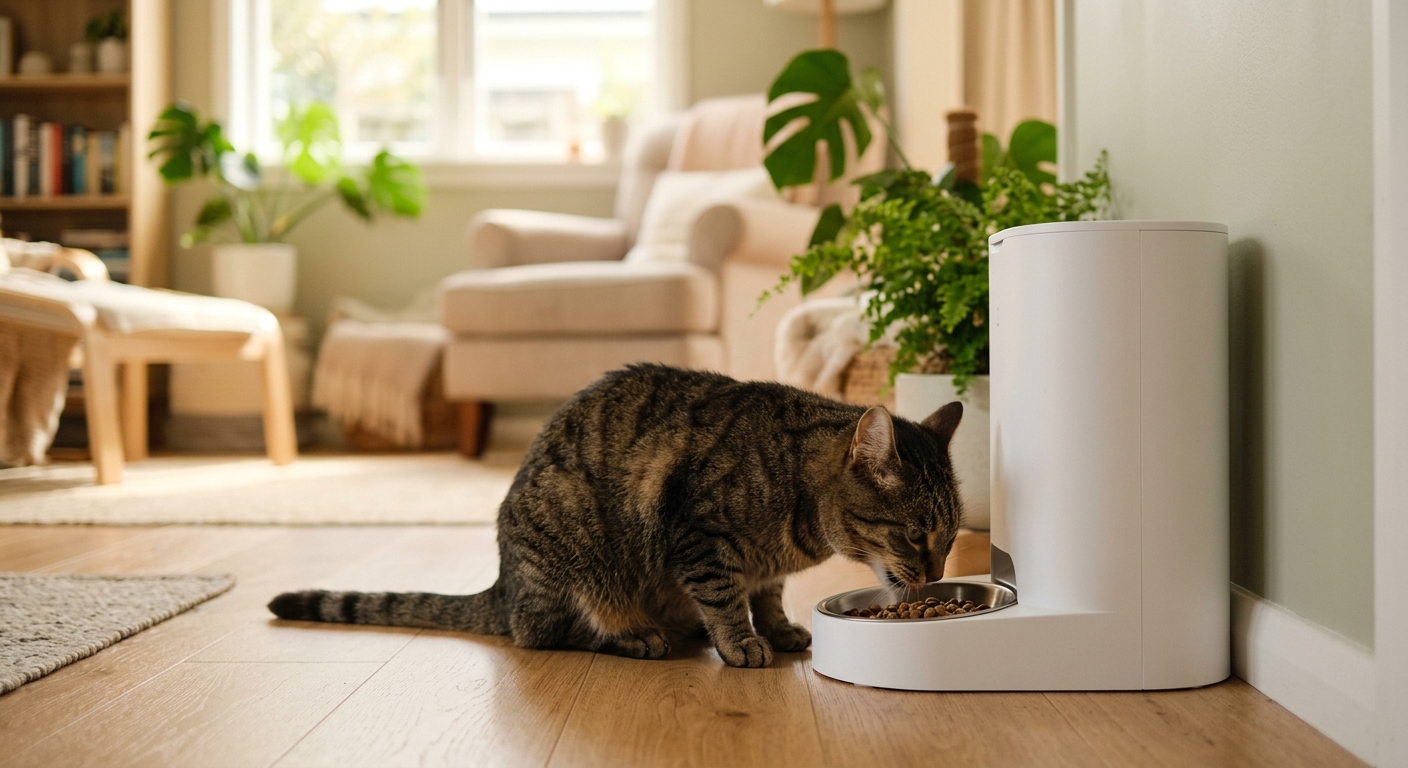
For most NZ cat owners, the best automatic cat feeder is the PetSafe Simply Feed if you want reliable dry-food scheduling, or the SureFeed Microchip Pet Feeder if you have multiple cats or diet theft. Smart feeders like PETLIBRO Air are useful for app control, but they are harder to warranty locally; wet-food homes should start with Cat Mate C200 or SureFeed instead.
Automatic cat feeders solve real problems. You’re working late, stuck in traffic, or away for the weekend — and your cat is home demanding dinner at precisely 5:47pm like they have for the past four years. If your cat has a health condition requiring specific portion control or a special diet, talk to your vet before changing their feeding routine. Pōhu has me trained to the minute. Whether you’re managing cat feeding schedules for weight control or dealing with separation anxiety when you’re away, automated feeding provides consistency.
The good ones eliminate food anxiety (yours and theirs), manage portion control, and work when you’re not there. The bad ones jam, run out of batteries, or dump a week’s food on the floor while you’re in Queenstown.
I’ve compared the feeders that actually make it to NZ shelves, plus the overseas options worth importing. Here’s what’s worth buying.
Best automatic cat feeder for most NZ homes: PetSafe Simply Feed — the lowest-drama dry-food timer if your cat is the only one eating from it.
Best for multi-cat homes: SureFeed Microchip Pet Feeder — not cheap, but it stops the food thief problem that normal automatic feeders do not solve.
Best smart feeder: PETLIBRO Air Smart Feeder — useful app control, but check warranty and seller support before importing.
Best wet-food option: Cat Mate C200 — basic timer trays with ice packs. Not glamorous. Actually useful.
Best manual theft-prevention bowl: SureFeed Sealed Pet Bowl — for homes where the feeding schedule is fine but one cat keeps stealing dinner.
| Feeder | Best for | Food type | What to watch | NZ buying note |
|---|---|---|---|---|
| PetSafe Simply Feed | Reliable scheduled dry feeding | Dry kibble | No wet food, no microchip lockout | PetSafe is the affiliate manufacturer; buy local if warranty matters, or check PetSafe AU shipping first |
| SureFeed Microchip Pet Feeder | Multi-cat homes and prescription diets | Wet or dry | One unit per cat gets expensive | Usually available through NZ pet retailers and vet clinics |
| PETLIBRO Air Smart Feeder | App control and remote feeding checks | Dry kibble | Import warranty risk | Often import/TradeMe; check seller support before buying |
| SureFeed Sealed Pet Bowl | Stopping food theft without timed feeding | Wet or dry | Manual filling only | Cheaper than multiple full automatic feeders |
| Cat Mate C200 | Simple wet-food timing | Wet food | Two meals max, ice-pack prep | Basic, affordable, and easier to clean than smart feeders |
Browse PetSafe automatic feeders AU →
Affiliate note: PawPick may earn a commission from PetSafe. PetSafe is an Australian merchant; its own shipping policy is Australia-focused, so check whether checkout currently supports your NZ address, GST/import costs, plug type and warranty support before buying.
Cats do not need a vague “small meal” button. They need repeatable portions. Look for gram-based or cup-fraction settings, then test the feeder over several meals with your actual kibble. Some feeders are accurate with round biscuits and hopeless with flat, flaky pieces.
If your cat is overweight, losing weight, diabetic, or on a prescription feeding plan, treat the feeder as a helper rather than the decision-maker. Confirm target portions with your vet first, then use the feeder to keep the routine boringly consistent.
Dry food jams happen. The best automatic cat feeders use a conveyor or anti-jam sensor that stops, reverses, or alerts you instead of silently failing. Cheap gravity feeders are the worst of both worlds: no true scheduling and no portion control.
Kibble shape matters too. Very small pellets, dusty supermarket food, and crumbly freeze-dried pieces can block the chute. If your cat eats a premium air-dried food, test a few trial cycles before trusting the feeder for a weekend away.
Mains power plus battery backup is the safest setup. Battery-only feeders are fine for occasional use, but you need a visible low-battery warning and enough runway that one flat battery does not become a skipped meal. Smart feeders should still dispense scheduled meals if WiFi drops.
Airtight storage keeps kibble fresh. Open hoppers turn premium food stale within days. Your $80/bag ZIWI Peak becomes cardboard. I’ve covered cat food recommendations in detail in my best cat food in NZ.
If you have multiple cats, standard feeders become a dinner-theft operation. You need microchip activation, separate rooms, or physical barriers. This is especially critical if you’re managing cats with different dietary needs — from weight management to urinary health requirements. Multi-cat homes also hammer litter trays harder, so pair the feeding setup with the best cat litter NZ guide for odour control, clumping and tracking trade-offs.
Automatic feeders are small appliances living beside food dust, water bowls and cats who enjoy pushing objects off ledges. Local warranty support matters. For PetSafe, the AU affiliate range can be useful when NZ stock is thin, but compare the landed price with Animates, Petstock, Pet Direct and Mighty Ape before ordering across the Tasman.
Price: ~$280-320 (NZ)
Type: Microchip-activated wet/dry feeder
Capacity: 400ml food bowl
Power: 4 x C batteries (lasts 6+ months)
The SureFeed is expensive but solves every multi-cat household problem. The bowl only opens for the cat whose microchip (or SureFeed collar tag) is detected. Other cats can’t steal food, eat the wrong prescription diet, or inhale someone else’s breakfast.
Works with wet food, dry food, and treats. The sealed bowl keeps wet food fresh for hours without going rank. Perfect for cats on different diets or feeding schedules — whether that’s senior cat nutrition, indoor cat formulas, or kitten food.
Why I rate it:
Downsides:
Best for: Multi-cat homes, cats on prescription diets, wet food feeding, households with food thieves.
Check current NZ pricing at major pet retailers.
Price: ~$180-220 (NZ)
Type: Timer-based dry food dispenser
Capacity: 2.8L (holds 1.2kg dry food)
Power: Mains + 3 x D batteries backup
The Simply Feed does one thing well — dispenses dry food on schedule. Program up to 12 meals per day in portions from 12g to 180g. The conveyor system rarely jams, and the food hopper keeps kibble reasonably fresh.
No app, no WiFi, no microchip nonsense. Just reliable timer-based feeding that works when the power goes out.
Why I rate it:
Downsides:
Best for: Single cats, dry food only, owners who want simple timer-based feeding without app complexity.
Browse PetSafe automatic feeders AU →
PetSafe AU is useful for manufacturer-direct range checking, but NZ buyers should still compare local stock for warranty, delivery speed and total landed cost.
Price: ~$250-300 (NZ via import/TradeMe)
Type: App-controlled WiFi feeder
Capacity: 4L (holds 1.7kg dry food)
Power: Mains + emergency battery backup
The PETLIBRO Air brings smartphone control to cat feeding. Schedule meals, adjust portions, get feeding notifications, and even talk to your cat via two-way audio (they’ll ignore you remotely).
The app actually works well — unlike some Chinese smart feeders that brick after firmware updates. Food storage is airtight, and the portion accuracy is genuinely ±5g.
Why I rate it:
Downsides:
Best for: Tech-savvy owners, single cats, monitoring feeding when away, portion control tracking. Perfect for households already using pet cameras or other smart pet tech.
Price: ~$180-220 (NZ)
Type: Microchip-activated food bowl (manual filling)
Capacity: 340ml bowl
Power: 4 x C batteries
Not technically an automatic feeder, but solves the multi-cat feeding chaos that drives people to automation. You manually fill the bowl, but it only opens for the right cat’s microchip.
Ideal for multi-cat households where each cat needs different food but you want to feed them simultaneously rather than on schedules.
Why I rate it:
Downsides:
Best for: Multi-cat homes, prescription diets, manual feeding with theft protection.
Check current NZ pricing at major pet retailers.
Price: ~$120-150 (NZ)
Type: Timer ice-pack wet food dispenser
Capacity: 2 x 400ml compartments
Power: 1 x AA battery
The C200 handles wet food storage and dispensing — something most automatic feeders can’t do. Two compartments with removable ice packs keep food cool, and a timer mechanism opens each compartment on schedule.
Basic but functional. The ice packs keep wet food safe for 8+ hours, perfect for breakfast and dinner feeding while you’re at work.
Why I rate it:
Downsides:
Best for: Wet food feeding, simple schedules, budget-conscious owners.
Check current NZ pricing at major pet retailers.
Cat Mate C200 and basic two-meal tray feeders live here. They work for simple schedules but offer no smart features or multi-cat controls.
Good for: Single cats with simple feeding schedules.
PetSafe timer feeders, PETLIBRO Air and similar smart hoppers live here. This is the sweet spot for one-cat dry-food homes: enough build quality to trust, without paying for microchip hardware you do not need.
Good for: Tech-savvy owners who want feeding monitoring and remote control.
SureFeed feeders, prescription diet solutions and multi-cat systems live here. Expensive, but they solve problems cheaper feeders cannot touch. Consider pet insurance for these higher-value purchases, especially if your cat has health issues requiring specialised feeding.
Good for: Multi-cat homes, prescription diets, households with food aggression.
Standard automatic feeders don’t work with multiple cats. The fast eater hoovers their food then steals from the slow eater. The result: one fat cat, one skinny cat, and vet bills. This feeding imbalance can lead to cat obesity in dominant cats and anxiety-related behaviors in submissive ones.
SureFeed feeders only open for the programmed cat. Expensive (need one per cat) but completely effective.
Feed cats in separate rooms with timer-based feeders. Requires training but works with any feeder type.
Some cats won’t climb or squeeze through gaps. Strategic feeder placement can reduce theft.
Reliable, basic functionality. Schedule meals, get feeding notifications, view history. No fancy features but doesn’t crash.
More features than PetSafe — two-way audio, detailed feeding analytics, multiple device support. Occasional connectivity hiccups but generally solid.
Feature-heavy but buggy. Great when it works, frustrating when it doesn’t. Recent updates have improved stability.
Reality check: Smart feeder apps are convenient but not essential. If app control matters to you, buy feeders with proven app stability, not the newest features.
Works with all feeders. Use quality kibble that doesn’t crumble — cheap supermarket food creates dust and jams dispensing mechanisms.
Size matters: Large kibble (8mm+) flows better than small pellets. ZIWI Peak, Black Hawk, and Acana work well. Avoid tiny pellet foods.
Limited feeder options. Cat Mate C200 handles wet food with ice packs. SureFeed feeders work with wet food but don’t cool it.
Storage time: Wet food spoils within 4-8 hours at room temperature. Don’t leave it longer.
Most feeders can’t handle sticky or moist foods. They’re designed for free-flowing dry kibble only.
Cause: Usually food jams or wrong kibble size. Fix: Use larger kibble, clean dispensing mechanism, check for damaged parts.
Cause: Microchip placement, weak chip signal, or training needed. Fix: Check chip placement with vet, retrain with high-value cat treats, ensure chip is RFID (not just ID number). Some cats need behavioural training to accept new feeding routines.
Cause: WiFi polling, faulty sensors, or old batteries. Fix: Use quality batteries, check WiFi signal strength, replace sensor components if needed.
Cause: Open hoppers, humid conditions, or poor-quality storage. Fix: Choose feeders with airtight storage, store extra food properly, don’t overfill hoppers.
Pro tip: Buy locally for feeders over $200 unless the imported saving is genuinely meaningful. Warranty support matters when technology fails, and a feeder failure is not a cute inconvenience if your cat relies on it while you’re away.
Patience is key — some cats adapt immediately, others need weeks. Consider pairing training with interactive toys to create positive associations with the feeding area.
| Situation | Buy this | Why |
|---|---|---|
| One cat, dry food, workday scheduling | PetSafe Simply Feed | Reliable portions without app dependence |
| One cat, dry food, want app alerts | PETLIBRO Air or PetSafe Smart Feed | Remote changes and feeding history are useful when you travel |
| Two cats and one steals food | SureFeed Microchip Pet Feeder | Microchip lockout beats another timer |
| Wet food while you are at work | Cat Mate C200 | Ice packs and separate trays are safer than a dry-food hopper |
| Senior or prescription-diet cat in a mixed household | SureFeed, bought locally | Support and setup matter more than saving a few dollars |
If you have one cat: PetSafe Simply Feed for budget reliability, or PETLIBRO Air for smart features.
If you have multiple cats: SureFeed Microchip Feeders. Expensive but the only solution that actually works. Particularly important if cats have different dietary needs — check my senior cat food guide for age-specific feeding requirements.
If you feed wet food: Cat Mate C200 with ice packs, or SureFeed for short-term wet food storage.
If you want the best regardless of price: SureFeed Microchip Pet Feeder. No contest.
The reality is most automatic feeders solve convenience, not necessity. Your cat survived thousands of years without scheduled kibble dispensing. But if you’re working long hours, traveling regularly, or managing multiple cats with different diets, a good automatic feeder eliminates daily stress for both you and them.
Automatic feeders are particularly valuable for indoor cats who depend entirely on scheduled feeding, especially if they tend to overeat when free-fed. I’ve covered weight management feeding strategies in my indoor cat food guide.
Buy for your specific problem, not the marketing features. And remember — no automatic feeder replaces fresh water, clean litter boxes, or actual human interaction. They’re tools, not cat-parenting replacements.
Q: Will my cat actually use an automatic feeder? Most cats adapt within 3-7 days, especially if you introduce it gradually and use their regular food. Timid cats may need longer.
Q: What if the power goes out? Buy feeders with battery backup. All the options I recommend include backup power for at least 24-48 hours.
Q: Can I use any dry food? Use quality kibble that doesn’t crumble. Avoid tiny pellets or dusty cheap foods that jam mechanisms. Check my best cat food guide for recommended dry food options that work well in automatic feeders.
Q: How often should I clean the feeder? Weekly for dry food feeders, immediately after each use for wet food feeders. Food residue attracts bacteria and pests.
Q: Do smart feeders work with NZ internet? Most work fine with NZ broadband. Use 2.4GHz WiFi networks for best compatibility.
Q: What about multiple cats with different feeding schedules? You need separate feeders or microchip-activated bowls. No single feeder can handle multiple cats on different schedules reliably.
Most cats adapt within 3-7 days, especially if you introduce it gradually and use their regular food. Timid cats may need longer.
Buy feeders with battery backup. All the options I recommend include backup power for at least 24-48 hours.
Use quality kibble that doesn't crumble. Avoid tiny pellets or dusty cheap foods that jam mechanisms. Quality dry foods like those in my [best cat food guide](/guides/best-cat-food-nz/) work well in automatic feeders.
Weekly for dry food feeders, immediately after each use for wet food feeders. Food residue attracts bacteria and pests.
Most work fine with NZ broadband. Use 2.4GHz WiFi networks for best compatibility.
You need separate feeders or microchip-activated bowls. No single feeder can handle multiple cats on different schedules reliably.