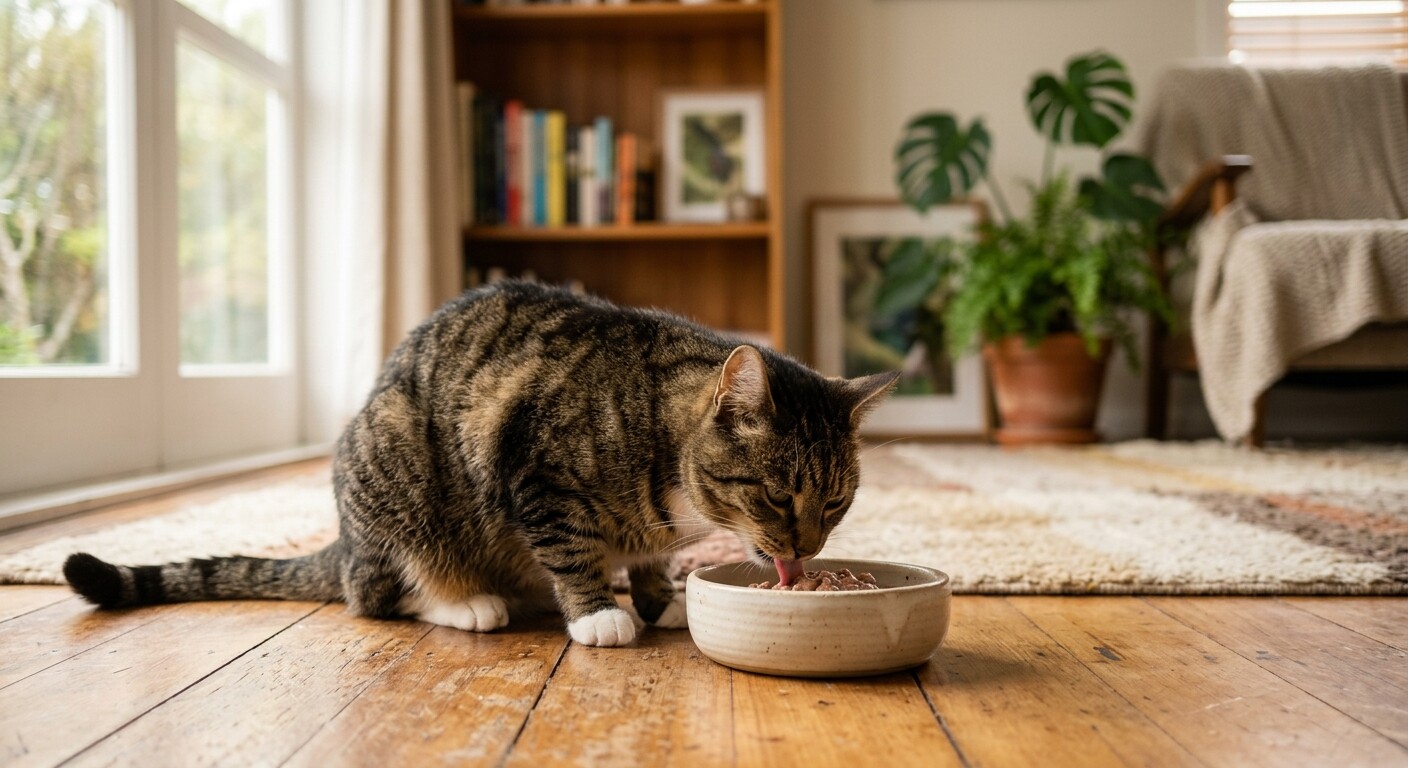
The best indoor cat food in New Zealand compared — weight management, hairball control, and urinary health. Honest picks and real NZ pricing for indoor cats.
The short version
Hill’s Science Diet Indoor is the best all-round food for indoor cats in NZ — proven formulation, solid hairball control, available everywhere. If you want the full ingredient and vet-channel caveat, read the Hill’s Science Diet cat food review. Royal Canin Indoor 27 is a close second, especially if urinary health is on your radar. For premium NZ-made, ZIWI Peak is excellent when you’re strict with portions. And Black Hawk Indoor is the best value pick that doesn’t quietly compromise on ingredients.
Why indoor cats need different food
Indoor cats live a fundamentally different life. They move less, hunt nothing, and burn fewer calories — but most owners feed them the same food, in the same amounts, as a cat that roams a full section. Just like how Border Collie nutrition differs from less active breeds, indoor cats need specialized nutrition to match their lifestyle. That’s where the trouble starts.
Lower calorie needs
An active outdoor cat might burn 300+ calories a day. A typical indoor cat: closer to 180–220. That gap is large enough to matter. Indoor-specific formulas run 10–20% lower in calories per serve, which sounds small until you realise those extra calories accumulate every single day.
Hairball problems
Indoor cats groom more. Partly boredom, partly the fact that outdoor activity naturally wears off loose fur. The result is more ingested fur, more hairballs, and more of whatever that sounds like at 3am. Indoor formulas use higher fibre to move hair through the digestive tract rather than back out the other direction.
Urinary health
Indoor cats tend to drink less water — no puddles, no dew, no garden drips. Reduced activity also affects bladder health. Indoor-specific formulas manage mineral levels (particularly magnesium and phosphorus) to reduce the risk of crystal formation, which is a genuine issue in less active cats.
Boredom eating
Nobody talks about this enough. Indoor cats eat because they’re bored. It’s not hunger — it’s the feline version of opening the fridge for the fourth time even though nothing’s changed. Controlled portions and enrichment feeding (puzzle feeders, scatter feeding) matter as much as what’s in the bowl. A good automatic cat feeder can help manage portions precisely while providing predictable scheduled meals — useful for indoor cats who have turned boredom eating into a hobby.
Environmental enrichment solutions: Interactive puzzle feeders provide mental stimulation during meals, treat-dispensing toys encourage natural hunting behaviors, and cat trees create vertical territory for climbing and perching. Window perches satisfy their need to observe the outside world, while scratching posts provide essential claw maintenance and stress relief.
Technology for indoor wellness: Pet cameras allow monitoring when away, automatic water fountains encourage hydration, and motion-activated toys provide solo entertainment. Air purifiers maintain clean indoor air quality essential for confined cats.
NZ’s indoor cat trend
More NZ cats are living fully or mostly indoors than ever before, and it’s not just lifestyle preference — it’s increasingly policy. Several councils have introduced or are considering cat containment rules:
- Environment Canterbury has been at the forefront of cat containment for native bird protection
- Wellington City Council and Hutt City Council have explored overnight containment bylaws
- New subdivisions in some districts include containment covenants as standard
The reason is straightforward: NZ’s native birds evolved without mammalian predators, and cats are efficient hunters. Containment protects kiwi, kākā, tūī, and dozens of other native species.
One thing containment doesn’t solve: indoor cats can still pick up fleas through visiting pets, returning dogs, or on shoes. Year-round flea treatment for cats is still relevant for most indoor households. Worming treatments remain important as indoor cats can still be exposed to parasites through contaminated shoes, other pets, or prey items brought inside.
Indoor health management: Indoor cats may benefit from probiotics for digestive health and supplements to support their reduced activity levels. Joint supplements become especially important for less active cats, while dental care requires more attention without natural prey to help maintain oral health.
Indoor monitoring essentials: Use digital pet scales for regular weight monitoring, health tracking apps to document behavioral and health changes, and maintain pet insurance coverage as indoor cats can develop different health issues than outdoor cats. Veterinary costs for indoor cats often focus on weight management, dental care, and behavioral issues rather than injury treatment.
Our top picks
🥇 Best overall: Hill’s Science Diet Indoor
- Type: Dry kibble (wet options also available)
- Protein: ~32% (dry)
- Calorie density: ~345 kcal/cup
- Price: ~$2.50–3.50/day for a 4 kg cat
- Available at: Animates, PetStock, PetDirect, some vet clinics
- Best for: Most indoor cats — reliable, well-researched formulation
Hill’s Science Diet has more feeding trials and veterinary research behind it than almost any other brand available in NZ. The Indoor formula is purpose-built: lower calories, higher fibre for hairball control, and a protein-to-fat ratio that supports lean muscle in less active cats.
The fibre blend — beet pulp and cellulose — genuinely moves hair through the digestive system rather than back up onto your floor. The inclusion of L-carnitine supports fat metabolism, which helps indoor cats stay at a healthy weight even when their daily exercise is “staring at the wall, then the bird feeder, then back at the wall.” This is particularly important for breeds prone to weight gain, just as Cavalier King Charles Spaniel nutrition requires careful calorie management for a smaller, less active breed.
Why it tops the list: It does what it says. Indoor-specific nutrition isn’t a marketing exercise when the formulation actually adjusts the calories, fibre, and mineral balance. Hill’s does this properly and you can buy it at your local Animates on a Tuesday evening.
Feeding optimization: Use automatic cat feeders to maintain consistent meal schedules, slow feeding bowls to prevent gulping, and elevated feeders to improve eating posture. Monitor intake with digital pet scales and track progress with health monitoring apps.
Supporting indoor wellness: Combine proper nutrition with comfortable bedding positioned near windows for entertainment, scratching posts for physical activity, and interactive toys to prevent boredom eating. Air purification maintains healthy indoor environments for confined cats.
Check price at Pet Direct →
Related: Best Cat Food in NZ — comprehensive nutrition guide for all life stages
🥈 Best for urinary health: Royal Canin Indoor 27
- Type: Dry kibble
- Protein: ~27%
- Calorie density: ~348 kcal/cup
- Price: ~$2.50–3.50/day for a 4 kg cat
- Available at: Animates, PetStock, PetDirect, vet clinics
- Best for: Indoor cats prone to urinary issues, multi-cat households
Royal Canin Indoor 27 is the other vet-backed option, and it leads on urinary health. The formulation manages mineral levels to reduce the risk of urinary crystal formation — a real concern for cats that drink less water because their access to it is a bowl in the kitchen rather than half the neighbourhood.
The kibble is sized and shaped for indoor cats’ eating patterns (more frequent, smaller meals rather than the big-feast style of a hunting cat), and the fibre content addresses hairball reduction. There’s also specific attention to stool odour — less of a vanity feature than it sounds when the litter tray is inside your house.
Honest note: The protein level at 27% is lower than some competitors. For most indoor cats this is perfectly fine — they’re not burning protein through high activity. But if your cat is naturally lean and active even indoors, a higher-protein formula may suit better. For cats with sensitive digestion, consider specialized cat food for urinary health principles that focus on easily digestible protein sources and mineral balance.
Urinary health support ecosystem: Encourage water intake with cat water fountains, monitor litter box changes that indicate urinary issues with appropriate cat litter, and maintain clean environments with automatic litter boxes for consistent hygiene. Pet health tracking helps document urination patterns for vet consultations.
Multi-cat household considerations: Use microchip feeders to ensure each cat gets their specific diet, multiple feeding stations to reduce competition stress, and pet gates to separate feeding areas when managing different dietary needs.
🇳🇿 Best premium NZ-made: ZIWI Peak (portion-controlled)
- Type: Air-dried
- Protein: 36%+ (varies by recipe)
- Price: ~$4–6/day for a 4 kg indoor cat (with careful portioning)
- Available at: Pet stores nationwide, PetDirect, specialty retailers
- Best for: Owners who want the highest-quality NZ-made food and will actually manage portions
ZIWI Peak isn’t marketed as an indoor cat food. It doesn’t need to be. It’s nutritionally dense, high-protein, and made from ethically sourced NZ ingredients. The reason it works for indoor cats is simple: because it’s so nutrient-dense, they need significantly less of it.
A 4 kg indoor cat needs roughly 25–35 grams of ZIWI air-dried per day. That’s not much in the bowl, but it’s nutritionally complete. High protein supports lean muscle; quality ingredients mean less filler moving through the system. Many owners report better coat condition and smaller, less pungent litter tray contributions.
The catch: it’s expensive, and you need to be disciplined. ZIWI is calorie-dense. Free-feeding it to an indoor cat is a reliable path to an overweight cat. Weigh every serve. If you’re not going to do that, pick something else.
Read our full review: ZIWI Peak Cat Food Review — NZ pricing, feeding amounts, and whether the premium is justified for indoor cats
💰 Best value: Black Hawk Indoor
- Type: Dry kibble
- Protein: ~30%
- Price: ~$1.80–2.50/day for a 4 kg cat
- Available at: Animates, PetStock, PetDirect
- Best for: Budget-conscious owners who still want indoor-specific nutrition
Black Hawk is an Australian brand that consistently punches above its price. The Indoor formula hits all the key indoor requirements — reduced calories, fibre for hairball control, balanced minerals — at a price that’s noticeably less than Hill’s or Royal Canin.
The ingredient quality is solid: real chicken as the first ingredient, no artificial colours or flavours, and the addition of glucosamine and chondroitin for joint support — which is unusual at this price point and a thoughtful inclusion for an indoor cat carrying a bit of extra weight. Joint health becomes increasingly important for less active pets, similar to considerations in senior dog nutrition where mobility support is crucial.
It’s not backed by the same volume of research as Hill’s. The packaging is less polished. But the food inside the bag is genuinely good for what it costs.
Check price at Pet Direct →
🌿 Best grain-free indoor option: Ivory Coat Indoor
- Type: Dry kibble (grain-free)
- Protein: ~34%
- Price: ~$2–3/day for a 4 kg cat
- Available at: Animates, PetStock, PetDirect
- Best for: Indoor cats with grain sensitivities, owners who prefer grain-free diets
Ivory Coat’s Indoor formula is grain-free with higher protein than most indoor foods — which suits cats that need calorie control without losing muscle mass. Turkey and duck as primary proteins, no wheat, corn, or soy, natural fibre sources for hairball management, and probiotics added for digestive health.
Worth noting on grain-free: Cats are obligate carnivores and have no biological need for grains. That said, most cats tolerate grains fine, and grain-free isn’t automatically better nutrition. Choose it if your cat has a documented sensitivity — not because the marketing sounds cleaner. For pets with genuine food allergies, allergy-friendly dog food principles often apply to cats as well, focusing on limited ingredient formulas. If you’re committed to grain-free feeding, our best grain-free cat food in NZ guide covers the top NZ-available options across dry, wet, and air-dried formats.
Wet vs dry for indoor cats
The answer matters more for indoor cats than outdoor ones.
The case for wet food
- Hydration: Indoor cats often don’t drink enough. Wet food is ~75% moisture and significantly increases daily water intake
- Urinary health: More water means more dilute urine, which means less risk of crystals and UTIs
- Satiety: More filling per calorie — useful for weight management
- Palatability: Most cats prefer it, which matters for fussy eaters
The case for dry food
- Convenience: Doesn’t spoil, easier to measure and store
- Cost: Noticeably cheaper per day than wet food
- Enrichment: Dry kibble works in puzzle feeders and treat balls, which is genuinely valuable for bored indoor cats
The practical answer
Run both. Dry food as the base, wet food added daily or a few times a week for hydration and variety. Indoor cats don’t drink enough water — wet food bridges that gap without requiring them to become the kind of cat that uses a fountain. If you’re feeding dry only, make sure fresh water is always available, and consider a fountain; many cats drink more from moving water.
Hydration optimization: Cat water fountains encourage drinking with moving water, multiple water stations throughout the home increase access, and wet food warmers make wet meals more appealing. Monitor water intake with measuring bowls to track hydration patterns.
Feeding technology: Automatic wet food dispensers maintain fresh wet meals when away, portion control feeders prevent overeating, and timed feeding systems coordinate wet and dry meal schedules. Food storage solutions maintain freshness for both wet and dry options.
Health monitoring: Track their health with regular pet insurance coverage since indoor cats can develop different health issues than outdoor cats. Health tracking apps help document eating patterns, water intake, and weight changes for vet consultations. Digital pet scales provide accurate monitoring of weight changes over time.
Feeding amounts and weight management
The feeding guides on most bags are calibrated for average activity — which means outdoor cats. For indoor cats, you typically need to feed 10–20% less than the bag says.
Daily calorie guide for indoor cats
| Cat weight | Daily calories (maintenance) |
|---|
| 3 kg | ~150–180 kcal |
| 4 kg | ~180–220 kcal |
| 5 kg | ~210–250 kcal |
| 6 kg | ~240–280 kcal |
These figures are for a healthy-weight indoor cat at maintenance. If your cat is already carrying extra weight, talk to your vet about a gradual reduction plan.
Practical tips
- Weigh the food. Digital pet scales provide accurate measurement — kitchen scales work but pet-specific ones track progress over time. Scoops are inaccurate and you’ll consistently overfeed.
- Split meals. Two or three small meals rather than one big feed or free-feeding. Automatic cat feeders maintain consistent schedules even when you’re away.
- Count the treats. Treats should be no more than 10% of daily calories. Those Temptations add up faster than you’d think. Use healthy cat treats and training treats that support nutrition goals.
- Use puzzle feeders. Make your cat work for part of their dry food — puzzle feeders slow eating and provide the mental stimulation indoor cats genuinely need. Combine with interactive cat toys designed for safe solo play when you’re not home to supervise.
Technology for portion control: Microchip feeders ensure only designated cats access specific foods, portion control bowls limit overeating, and food tracking apps monitor daily intake. Smart feeders allow remote feeding control and portion monitoring when away from home.
Exercise and enrichment: Cat exercise wheels provide cardio for confined cats, laser pointers encourage hunting behavior, and feather wands stimulate natural play. Cat trees create vertical exercise opportunities in limited space.
Signs your indoor cat is overweight
NZ vets report over 40% of indoor cats they see are overweight or obese. Here’s how to check:
The rib test
Run your hands along your cat’s sides. You should feel individual ribs without pressing hard. If you can’t feel ribs, or you’re pressing through a noticeable layer of padding, your cat is likely overweight.
The waist test
Look from above. There should be a visible narrowing behind the ribs. If your cat is the same width at the belly as at the ribs — or wider — they’re carrying excess weight.
The belly test
A small belly pouch is normal (the “primordial pouch” — it’s genetic). But if the belly swings visibly when your cat walks, or hangs significantly below the body line, that’s fat, not anatomy.
What to do
Don’t crash-diet them. Rapid weight loss in cats can cause hepatic lipidosis (fatty liver disease), which is serious. Talk to your vet about a gradual reduction plan — typically 10–15% fewer calories per day combined with more play. This is genuinely a case where the vet conversation is worth having before you start. Budget for ongoing vet costs and consider pet insurance to help manage weight-related health complications.
Weight management support ecosystem: Use digital pet scales for weekly weigh-ins, body condition scoring guides for visual assessment, and health tracking apps to document progress for vet consultations. Automatic feeders with portion control help maintain consistent calorie reduction.
Exercise solutions for indoor cats: Interactive laser toys encourage movement, cat exercise wheels provide cardio opportunities, and climbing trees create vertical exercise. Motion-activated toys provide solo exercise when you’re not available for play sessions.
Dental care for overweight cats: Indoor cats need specialized dental care as they lack natural prey to help maintain oral health. Dental treats suitable for weight management and dental care tools become especially important for less active cats.
NZ retailer comparison
Approximate monthly cost to feed a 4 kg indoor cat (March 2026):
- Hill’s Science Diet Indoor (2 kg bag): ~$30–35/bag, lasts ~3–4 weeks → ~$35–45/month
- Royal Canin Indoor 27 (2 kg bag): ~$30–35/bag, lasts ~3–4 weeks → ~$35–45/month
- ZIWI Peak Air-Dried (1 kg bag): ~$55–65/bag, lasts ~4 weeks → ~$55–65/month
- Black Hawk Indoor (2.5 kg bag): ~$28–32/bag, lasts ~5 weeks → ~$25–35/month
- Ivory Coat Indoor (2 kg bag): ~$28–35/bag, lasts ~3–4 weeks → ~$30–40/month
Where to buy:
- PetDirect — usually the cheapest online, regular sales, auto-delivery discounts
- Animates — widest in-store range, loyalty programme
- PetStock — competitive pricing, strong Hill’s and Royal Canin stock
- Pet Circle — ships from Australia, free NZ delivery over $49, sometimes cheapest for premium brands
Litter matters too
Food is only part of an indoor cat setup. A clean, comfortable litter situation is just as important for a cat that never goes outside. Some indoor cats also benefit from supervised outdoor time using secure harness systems adapted for feline use, allowing safe exploration while maintaining containment policies.
Complete indoor environment setup: Automatic litter boxes maintain consistent cleanliness, litter tracking mats keep homes clean, and odor control solutions manage indoor air quality. Litter disposal systems make waste management convenient and hygienic.
Air quality management: Air purifiers for pets remove allergens and odors, ventilation fans improve air circulation in litter areas, and humidity control prevents moisture buildup that can affect health.
Indoor enrichment essentials: Cat trees create vertical territory, window perches provide entertainment and sunlight, scratching posts maintain claw health, and hiding spots offer security in confined spaces.
Related: Best Cat Litter in NZ — clumping cat litter, crystal, pine, and tofu options compared with NZ pricing.
Senior indoor cats
Indoor cats frequently live longer than outdoor cats — 15–20 years isn’t unusual. That means they’ll eventually need senior-specific nutrition: joint support, kidney health, easier-to-digest protein. If your indoor cat is over 7, it’s worth looking at a senior cat food formula. Regular grooming also becomes more important with age, and nail clipping tools designed for small pets can help maintain their claws when natural wearing isn’t available.
Senior indoor cat support ecosystem: Orthopedic cat beds ease arthritic joints, elevated feeders reduce neck strain during meals, and easy-access litter boxes accommodate reduced mobility. Heating pads for cats provide comfort for aging joints.
Health monitoring for seniors: Digital pet scales track weight changes that indicate health issues, health monitoring apps document symptoms and behavioral changes, and regular vet checkups become more important. Pet insurance for seniors helps manage increasing healthcare costs.
Cognitive support: Puzzle feeders maintain mental stimulation, interactive toys adapted for reduced mobility, and calming supplements help with age-related anxiety. Senior cat supplements support joint health, cognitive function, and overall wellness.
Related: Best Senior Cat Food in NZ — comprehensive nutrition for aging cats
Bottom line
- Cat is still a kitten → Skip indoor-specific food for now. See our kitten food guide — kittens need more calories and different nutrients before settling into an adult formula.
- Want proven, research-backed nutrition → Hill’s Science Diet Indoor
- Concerned about urinary health → Royal Canin Indoor 27
- Want the best NZ-made option → ZIWI Peak (with strict portion control)
- Best value → Black Hawk Indoor
- Need grain-free → Ivory Coat Indoor
- Cat is already overweight → Start with Hill’s or Royal Canin Indoor, get your vet involved on portions
The most important variable isn’t which brand you choose — it’s feeding the right amount. An indoor cat on a mediocre food at the correct portion will be healthier than an indoor cat on premium food that’s overfed. Weigh the food, manage the treats, and make your cat move. Create comfortable resting spots around your home with quality cat beds sized appropriately for cats to encourage healthy sleep patterns in their contained environment.
Complete indoor cat wellness ecosystem: Successful indoor cat management combines proper nutrition with environmental enrichment, health monitoring, feeding technology, exercise solutions, and comfortable environments. The investment in comprehensive care improves quality of life while preventing common indoor cat health issues.
Preventive indoor health: Maintain success with regular parasite prevention, dental care, weight monitoring, and stress management. Consider pet insurance to support ongoing indoor cat health management throughout their extended lifespans.
Comprehensive indoor cat care guides:
- Best Cat Food in NZ — overall nutrition with indoor considerations
- Best Kitten Food in NZ — before transitioning to indoor-specific nutrition
- Best Senior Cat Food in NZ — age-specific indoor nutrition
- Best Cat Food for Urinary Health in NZ — managing urinary issues common in indoor cats
- Best Cat Food for Weight Management in NZ — specialized weight control
Indoor environment and enrichment:
- Best Cat Litter in NZ — essential indoor hygiene management
- Best Automatic Litter Boxes in NZ — convenience and cleanliness
- Best Cat Trees in NZ — vertical territory and exercise
- Best Cat Scratching Posts in NZ — claw maintenance and stress relief
- Best Cat Toys for Indoor Cats in NZ — mental stimulation and exercise
- Best Cat Exercise Wheels in NZ — cardio for confined spaces
Feeding technology and management:
- Best Automatic Cat Feeders in NZ — portion control and consistent schedules
- Best Cat Water Fountains in NZ — encouraging hydration
- Best Puzzle Feeders for Cats in NZ — mental stimulation during meals
- Best Microchip Cat Feeders in NZ — multi-pet household management
- Best Cat Food Storage in NZ — maintaining freshness and organization
Health monitoring and management:
- Best Pet Scales in NZ — weight tracking for indoor cats
- Best Pet Health Apps in NZ — monitoring behavior and health patterns
- Best Pet Insurance in NZ — covering indoor cat health needs
- Vet Costs in NZ — budgeting for indoor cat healthcare
- Best Cat Dental Care in NZ — oral health without natural prey
Indoor wellness support:
- Best Cat Beds in NZ — comfortable resting areas
- Best Cat Treats in NZ — healthy rewards for indoor enrichment
- Best Cat Supplements in NZ — supporting indoor health needs
- Best Air Purifiers for Pets in NZ — indoor air quality management
- Best Cat Harnesses in NZ — safe supervised outdoor time
Preventive health for indoor cats:
- Best Flea Treatment for Cats in NZ — preventing indoor parasite issues
- Best Worm Treatment for Cats in NZ — indoor parasite prevention
- Best Cat Nail Clippers in NZ — maintaining claw health indoors
- Best Cat Brushes in NZ — grooming support for less active cats
Senior indoor cat care:
- Best Senior Cat Supplements in NZ — supporting aging indoor cats
- Best Orthopedic Cat Beds in NZ — joint support for less active seniors
- Best Elevated Cat Bowls in NZ — easier eating for aging cats
- Best Heating Pads for Cats in NZ — comfort for arthritic joints
Multi-pet household indoor management:
- Best Pet Gates in NZ — separating feeding and resting areas
- Best Dog Food in NZ — for households with both cats and dogs
- Best Small Dog Food in NZ — managing different sized pets indoors
This guide is updated as products change and new options enter the NZ market. Last reviewed March 2026.
 PawPick