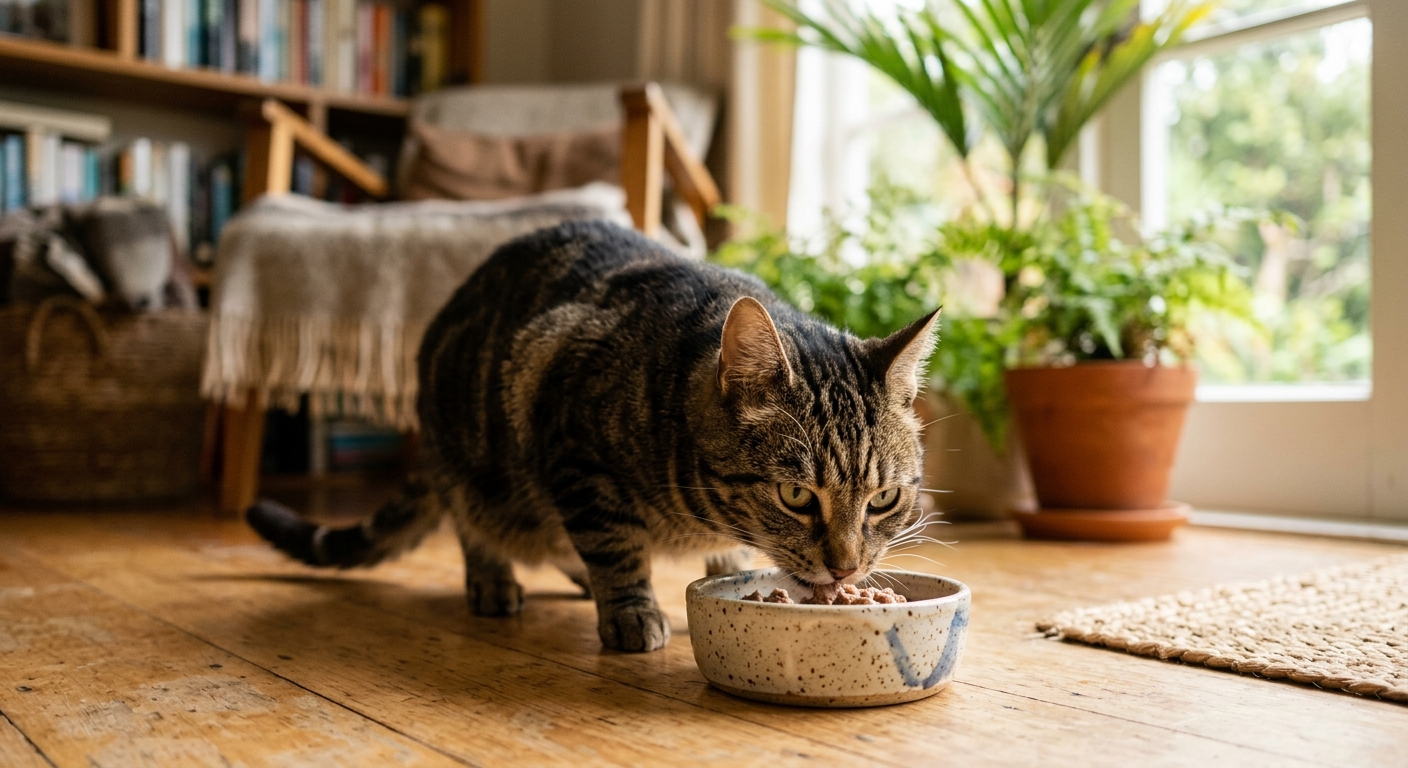
The best wet cat food in NZ for 2026 — Feline Natural, ZIWI Peak, Royal Canin, Fancy Feast & more compared with NZ pricing, pros, and cons.
The short version
For pure ingredient quality, Feline Natural canned is the top pick for wet cat food in NZ — NZ-made in Christchurch, 95%+ meat content, no grain fillers, and genuinely suitable for cats with allergies or sensitive digestion. ZIWI Peak canned is the close runner-up: also NZ-made (Mount Maunganui), high meat content, widely stocked, and slightly more affordable per can.
If you want a vet-formulated option or your cat has a diagnosed health condition, Royal Canin or Hill’s Science Diet wet varieties are the most evidence-backed choices and available at vet clinics across NZ. For everyday budget feeding, Fancy Feast is honest value — it’s not premium, but it’s better than dry-only for hydration and palatability.
The right answer depends on your cat’s life stage, health history, and budget. This guide breaks each pick down with NZ pricing and where to buy.
If you’re still deciding whether wet food is right for your cat at all, start with our wet vs dry cat food comparison — that article covers the decision; this one covers the buying.
Why wet food matters
Cats are obligate carnivores that evolved as desert predators. Their primary moisture source was prey — small animals with around 70% water content. As a result, cats have a naturally low thirst drive and don’t compensate well for dry food by drinking more water. A cat eating dry food exclusively may be chronically mildly dehydrated without showing obvious signs, and over years that takes a toll on the kidneys and urinary tract.
Wet food’s main advantages:
- Hydration — each 85g can or pouch delivers ~60–70ml of water. A cat eating two cans daily gets most of their fluid requirement from food
- Urinary health — more dilute urine means lower risk of crystal formation and blockages, particularly important for male cats. See our best cat food for urinary health guide for the full picture
- Protein density — quality wet foods carry 40–50% protein on a dry matter basis with low carbohydrate content, better matching feline metabolism than carb-heavy kibble
- Palatability — fussy eaters and cats with reduced appetite (common in seniors) are far more likely to eat wet food consistently
- Suitable for indoor cats — indoor cats have lower activity levels and are prone to weight gain on calorie-dense dry food; wet food’s lower calorie density helps. Our best indoor cat food guide covers this in more depth
For senior cats especially, wet food isn’t optional — it’s the most practical tool for supporting kidney function as they age. Read more in our best senior cat food guide.
What to look for in NZ wet cat food
Named meat as the first ingredient
The first ingredient by weight should be a named protein — chicken, beef, lamb, salmon, tuna. “Meat by-products” as the lead ingredient is a flag for lower-quality sourcing. “Meat meal” in wet food is unusual but should also specify the species.
High protein, low carbohydrate
Look for wet foods with 40%+ protein on a dry matter (DM) basis and under 10% carbohydrates. Most quality wet foods sit below 5% carbs; budget options can reach 15–20% through thickeners and plant starch.
Minimal thickeners and fillers
Carrageenan, guar gum, and xanthan gum are common thickeners in wet cat food. Small amounts are generally considered safe, but some cats have digestive sensitivity to carrageenan in particular. If your cat has food sensitivities, a limited-ingredient or thickener-free wet food is worth seeking out.
AAFCO (or equivalent) complete and balanced statement
NZ doesn’t have a local AAFCO equivalent, but most reputable brands sold here are formulated to AAFCO standards. Look for “complete and balanced” on the label — this means the food meets minimum nutritional requirements as a sole diet, not just a topper.
Life stage labelling
Check whether the food is labelled for adult maintenance, all life stages, or a specific life stage. Kittens and seniors have different requirements. A food labelled “all life stages” meets the higher kitten requirements, making it suitable across ages.
Top picks
🥇 Best overall premium: Feline Natural canned
- Made in: Christchurch, NZ
- Protein (dry matter): ~50%
- Moisture: ~72%
- Can sizes: 85g, 185g
- NZ price: ~$2.80–3.80 per 85g can; ~$5.50–7.00 per 185g can
- Available at: PetDirect, Animates, Petstock, selected vet clinics
- Best for: Cats with allergies or sensitivities, high-meat diet priorities, all life stages
Feline Natural’s canned range is the most ingredient-pure wet cat food widely available in NZ. Typical recipes run 95%+ animal content — muscle meat, organ meat, green mussel, and bone broth — with no grains, no plant protein fillers, and no carrageenan. The ingredient list is short and readable.
The Christchurch provenance matters: NZ-sourced meats, no long import chain, and a company with a track record in the NZ market. The beef, chicken, lamb, and venison varieties give good rotation options for cats prone to developing food sensitivities.
Tradeoffs: The premium is real — ~$85–110/month for an average cat fed exclusively on the 185g cans. This is the most expensive option in this guide on a per-serve basis. For cats who need it (allergies, IBD, high-protein dietary goals), the cost is justified. For healthy cats, mixing with a quality dry food reduces the monthly outlay significantly. Full breakdown in our Feline Natural cat food review.
| |
|---|
| Pros | 95%+ meat content, NZ-made, no grains, no carrageenan, single-protein options |
| Cons | Most expensive option; not all retailers stock the full range |
🥈 Best all-life-stages / high-meat: ZIWI Peak canned
- Made in: Mount Maunganui, NZ
- Protein (dry matter): ~42–46%
- Moisture: ~78%
- Can sizes: 85g, 185g
- NZ price: ~$2.50–3.50 per 85g can; ~$4.80–6.00 per 185g can
- Available at: PetDirect, Animates, Petstock, selected supermarkets, vet clinics
- Best for: All life stages, cats who need high moisture, rotation feeding
ZIWI Peak’s canned food sits just below Feline Natural on protein density but above it on moisture content (~78%), making it one of the best options specifically for hydration. The recipes use the same NZ-sourced, ethically raised meats as the air-dried range — lamb, beef, venison, mackerel and lamb, free-range chicken — with green-lipped mussels included for natural glucosamine.
ZIWI is more widely distributed than Feline Natural, which makes it the more practical premium pick for owners outside the main centres. It’s also slightly more affordable per can, which makes rotation feeding (cycling through proteins to reduce sensitivity risk) easier to sustain.
Tradeoffs: Still premium-priced by NZ standards. Cats who are sensitive to fishy aromas may reject the mackerel varieties initially. Full breakdown in our ZIWI Peak cat food review.
| |
|---|
| Pros | High meat content, NZ-made, excellent hydration, widely available, multiple proteins |
| Cons | Premium price; some cats reject the mackerel/lamb variety |
- Origin: France (imported — NZ import premium applies)
- Protein (dry matter): ~35–45% depending on variety
- Can/pouch sizes: 85g pouches (jelly/gravy), 195g cans
- NZ price: ~$2.50–3.50 per 85g pouch; ~$4.50–5.50 per 195g can
- Available at: PetDirect, Animates, Petstock, vet clinics
- Best for: Cats with specific health conditions, life stage targeting, picky eaters
Royal Canin’s wet range — Instinctive varieties (by age), Sensory varieties (by texture preference), and prescription wet diets — is the most clinically backed option available in NZ. If your cat has a vet-diagnosed condition such as CKD, urinary disease, or digestive sensitivity, Royal Canin’s prescription wet diets (Renal, Urinary S/O, Gastrointestinal) are usually what your vet will recommend. See our Hill’s Science Diet guide for a comparison of vet-brand wet options.
The Instinctive range covers kitten, adult, and ageing 12+ in both jelly and gravy formats — useful for palatability matching in finicky cats. The jelly and gravy options tend to work better for seniors whose appetite has decreased.
Tradeoffs: Ingredient quality is lower than Feline Natural or ZIWI — meat by-products feature more prominently, and some varieties include thickeners. The import premium means Royal Canin is comparable in price to NZ-made brands without the same meat content. For healthy cats without specific diagnoses, Feline Natural or ZIWI Peak provide better nutritional value per dollar.
| |
|---|
| Pros | Vet-trusted, life-stage specific, prescription options available, good palatability |
| Cons | Imported (price premium), lower meat content than NZ-made alternatives |
Best budget / supermarket: Fancy Feast
- Origin: USA (imported)
- Protein (dry matter): ~40–50% (Classic varieties)
- Can size: 85g
- NZ price: ~$1.40–2.00 per 85g can
- Available at: Countdown, New World, Pak’nSave, The Warehouse, PetDirect, Animates
- Best for: Budget feeding, supplementing dry food with wet, healthy adult cats without specific health needs
Fancy Feast Classic (the pâté range, not the flaked or gravy varieties) has a surprisingly decent protein profile for its price point. The Classic varieties typically lead with a named meat and hit 40%+ protein DM with relatively low carbs. This is the rare case where a supermarket wet food performs better nutritionally than its price suggests.
The honest tradeoffs: some varieties include carrageenan, and the flaked/gravy range in particular uses more fillers and plant protein. The import premium means prices have crept up — at ~$1.50/can, it’s not the bargain it once was, but it’s still the most accessible wet food in NZ supermarkets.
For a healthy adult cat with no specific health concerns, Fancy Feast Classic is a reasonable wet food choice that beats dry-only feeding on every hydration metric. For cats with urinary issues, kidney concerns, or allergies, the ingredient quality doesn’t hold up and a step up is worth it.
| |
|---|
| Pros | Widely available (supermarkets nationwide), lowest price point, Classic pâté has decent protein |
| Cons | Carrageenan in some varieties, flaked/gravy range has more fillers, import premium |
Best for fussy eaters: Applaws or Sheba
Applaws (NZ price: ~$2.00–2.80 per 70g can) is a single-ingredient wet food — typically just tuna, chicken, or salmon — with no thickeners, no fillers, and a very short ingredient list. The simplicity is actually what makes it work for fussy eaters: highly palatable, strong aroma, nothing to put a sensitive cat off. It’s complementary food rather than a complete diet on its own, so it works well as a topper or meal enhancer alongside a nutritionally complete food.
Sheba (NZ price: ~$1.50–2.00 per 85g pouch) sits between Fancy Feast and mid-range — the gravy varieties are particularly attractive to cats that reject pâtés. Available at most NZ supermarkets. Nutritionally it’s mid-pack, but if palatability is the primary challenge, Sheba’s texture range often succeeds where other foods fail.
Best for kittens: Royal Canin Kitten Instinctive
- NZ price: ~$2.80–3.50 per 85g pouch
- Available at: PetDirect, Animates, Petstock, vet clinics
- Best for: Weaning kittens through to 12 months
Royal Canin Kitten Instinctive provides the elevated protein, calcium, phosphorus, and DHA ratios kittens need for growth and neurological development. The pouch format in jelly suits kittens transitioning from mother’s milk — soft texture, high palatability, easy to portion for small stomachs.
Feline Natural canned is also suitable for kittens (labelled all life stages) if you prefer a higher-meat, grain-free option. For the full breakdown of kitten-specific options across wet and dry, see our best kitten food guide.
Best for seniors: Wet food in general, then Royal Canin Ageing 12+
There isn’t one stand-out senior-specific wet food in NZ — the case for wet food in senior cats is more about format than brand. As cats age past 10, kidney function declines, teeth deteriorate, and appetite becomes unreliable. Wet food addresses all three.
Royal Canin Ageing 12+ wet pouches (jelly and gravy) are the most widely available senior-targeted wet food in NZ — controlled phosphorus, enhanced aroma, soft texture. For cats over 12 with early kidney concerns, this is a practical starting point before a vet recommends a prescription renal diet.
Full details including brand-by-brand comparisons in our best senior cat food guide.
Also worth considering
Addiction canned — NZ-designed, made with novel proteins (brushtail, venison, salmon). A strong option for cats with chicken or beef allergies. More detail in our Addiction cat food review.
Purina Pro Plan wet — Higher-end wet from a major manufacturer with genuine research investment. Better ingredient quality than Fancy Feast, available at PetDirect and Animates. A solid mid-range option if you want a reliable international brand without the full premium of ZIWI or Feline Natural.
Advance wet — Australian brand, available at Petstock and some vet clinics. Good mid-range formulation, reasonable NZ pricing (~$2.50–3.00 per 85g pouch).
Hill’s Science Diet wet — Strong mid-range option with genuine nutritional research behind it. See our Hill’s Science Diet guide for NZ-specific pricing and availability.
Quick comparison
| Brand | Origin | Protein % DM | Price per 85g (approx) | Carrageenan | Best for |
|---|
| Feline Natural | NZ (Christchurch) | ~50% | ~$2.80–3.80 | No | Allergies, premium, high-protein |
| ZIWI Peak | NZ (Mount Maunganui) | ~42–46% | ~$2.50–3.50 | No | Hydration, all life stages, rotation |
| Royal Canin | France (imported) | ~35–45% | ~$2.50–3.50 | Some varieties | Vet conditions, life stage |
| Fancy Feast Classic | USA (imported) | ~40–50% | ~$1.40–2.00 | Some varieties | Budget, healthy adults |
| Applaws | UK (imported) | ~70%+ | ~$2.00–2.80 | No | Fussy eaters, topper |
| Sheba | Varies | ~35–45% | ~$1.50–2.00 | Some | Palatability challenges |
| Addiction | NZ-designed | ~42–48% | ~$2.80–3.60 | No | Allergies, novel protein |
| Royal Canin Kitten | France (imported) | ~38–44% | ~$2.80–3.50 | Some | Kittens |
Wet vs dry: a quick recap
This guide focuses on wet food buying, but the full wet-vs-dry decision is worth understanding first. The short version: wet food wins on hydration, protein quality, and long-term kidney health. Dry food wins on cost, convenience, and free-grazing. Most NZ vets recommend a combination — wet as the primary meal, dry available for grazing.
The detailed comparison — including cost-per-day tables, dental health nuance, and specific scenarios — is in our wet vs dry cat food guide.
One practical note for owners considering automatic cat feeders: most standard automatic feeders don’t handle wet food well. Ice packs can extend safe window times, but if you rely on an automatic feeder, dry food or freeze-dried toppers are more practical. Our best automatic cat feeder guide covers the options.
How much wet food should I feed?
A general starting point for an average 4kg adult cat:
| Cat weight | Wet food only (per day) | Wet + dry mix (wet portion) |
|---|
| 3kg | ~1.5 × 85g cans | ~1 × 85g can |
| 4kg | ~2 × 85g cans | ~1–1.5 × 85g cans |
| 5kg | ~2.5 × 85g cans | ~1.5–2 × 85g cans |
| 6kg (overweight) | ~2 × 85g cans + vet advice | ~1 × 85g can + controlled dry |
These are approximate — caloric density varies considerably between brands. A 85g can of Fancy Feast Classic has roughly 70–80 kcal; a Feline Natural 85g can runs closer to 90–110 kcal due to higher fat and protein content.
The practical check: If your cat is maintaining a healthy weight and eating willingly, the amount is right. If they’re consistently leaving food or putting on weight, adjust down. If they’re finishing meals quickly and pestering for more, adjust up or split into more frequent smaller servings.
Kittens need more meals per day (3–4), smaller portions each time. Seniors often do better on smaller, more frequent servings as appetite and digestive efficiency decline.
Wet food left out in NZ summers (particularly in the North Island) will spoil within 1–2 hours. Refrigerate unused portions and warm to room temperature before serving — cold wet food straight from the fridge is often rejected, especially by fussy eaters. A pet water fountain alongside wet food feeding helps cover the hydration bases.
Where to buy wet cat food in NZ
| Retailer | Feline Natural | ZIWI Peak | Royal Canin | Fancy Feast | Applaws | Online / delivery |
|---|
| PetDirect | ✅ | ✅ | ✅ | ✅ | ✅ | Yes — best prices, auto-ship |
| Animates | ✅ | ✅ | ✅ | Limited | ✅ | Yes + in-store |
| Petstock | ✅ | ✅ | ✅ | Limited | Limited | Yes + in-store |
| Countdown / New World | ✗ | Limited | Limited | ✅ | ✗ | Countdown online |
| Pak’nSave / The Warehouse | ✗ | ✗ | ✗ | ✅ | ✗ | In-store only |
| Vet clinics | Some | Some | ✅ | ✗ | ✗ | Varies by clinic |
Price notes:
- PetDirect generally has the best online pricing for Feline Natural and ZIWI Peak, with frequent subscription discounts
- Animates and Petstock are competitive and useful for in-store browsing, especially when trialling a new brand for a fussy cat
- Royal Canin prescription wet diets (Renal, Urinary S/O) are vet-clinic only in NZ — not available OTC
- Import brands (Fancy Feast, Applaws) have all had price increases since 2024 due to the NZ dollar and shipping costs — expect further movement
The bottom line
For most NZ cat owners, the best wet cat food in NZ is whichever high-quality option your cat will eat consistently. That sounds like a hedge, but palatability genuinely matters — the best food in NZ is useless if your cat walks away from the bowl.
Starting points by situation:
- Healthy adult cat, no budget constraints: Feline Natural canned or ZIWI Peak canned, rotated across proteins
- Healthy adult cat, mid-range budget: Royal Canin Instinctive or Purina Pro Plan wet as primary, Fancy Feast Classic as backup
- Budget household: Fancy Feast Classic supplementing quality dry food — better than dry-only
- Fussy eater: Try Applaws single-ingredient or Sheba gravy varieties first, then transition to a complete food
- Kitten: Royal Canin Kitten Instinctive or Feline Natural (all life stages) — see our kitten food guide
- Senior cat (10+): Royal Canin Ageing 12+ wet pouches; increase wet food proportion with age — see our senior cat food guide
- Cat with urinary issues: Wet food as the primary diet is non-negotiable; Royal Canin Urinary S/O or Hill’s c/d under vet guidance — see our urinary health guide
- Allergies / sensitivities: Feline Natural single-protein, Addiction novel protein, or Applaws single-ingredient — see our cat food allergies guide
- Indoor cat: Wet food’s lower calorie density helps weight management alongside the lower activity levels — see our indoor cat food guide
Whatever you choose, feeding at least some wet food daily is one of the easiest and most evidence-backed things you can do for your cat’s long-term kidney and urinary health. The full breakdown of NZ cat food options across wet and dry is in our best cat food NZ pillar guide.
For anything that looks like a health issue — weight loss, increased thirst, changes in urination — talk to your vet before adjusting food. Diet can help, but it’s not a substitute for a diagnosis.
One thing that’s easy to overlook when you’re focused on food: if your cat has fleas, they almost certainly have flea tapeworm too. Wet food doesn’t cause or prevent that, but it’s worth keeping the full health picture in view — our best flea treatment for cats guide covers what NZ owners actually need.
NZ pricing and retailer availability last reviewed April 2026. Import brand prices in particular are subject to change with exchange rates and shipping costs.
 PawPick