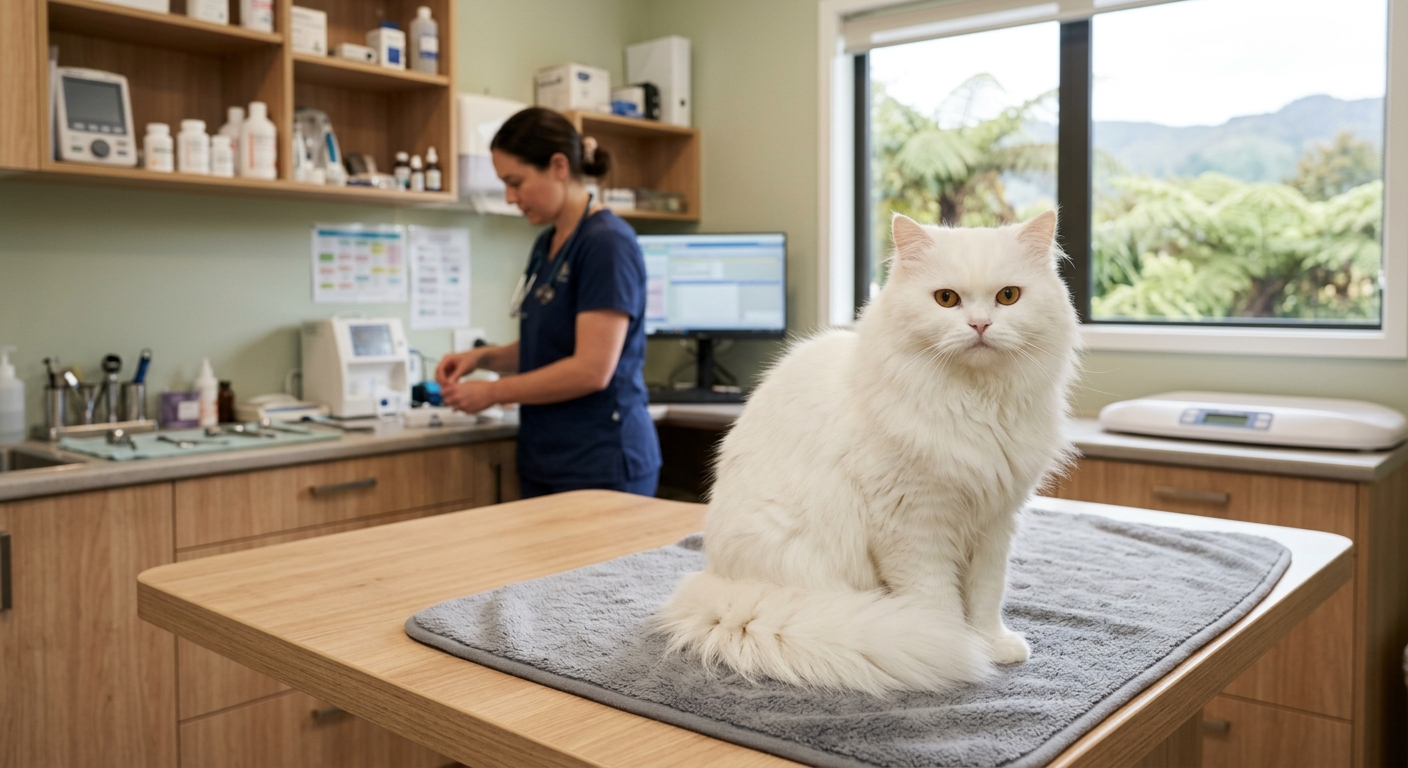
Honest NZ review of Hill's Science Diet cat food — ingredients analysed, pricing compared, and the real reason vets recommend it. Worth the premium?
Quick Take: Hill’s Science Diet is genuinely decent mid-range cat food. The therapeutic prescription ranges (urinary, kidney, liver) are well-researched and the legitimate choice when your vet recommends them. The general adult range? It’s fine — but the vet recommendation reflects Hill’s marketing investment as much as ingredient quality. Healthy cats can eat better at similar price points. For context, check my best cat food NZ guide.
What Is Hill’s Science Diet?
Hill’s Pet Nutrition was founded in 1939 in the US and is now owned by Colgate-Palmolive. It’s one of the biggest pet food companies in the world, and it’s built its reputation almost entirely on the veterinary channel.
In New Zealand, Hill’s Science Diet is stocked at most vet clinics, Animates stores, and Petstock. It’s one of the few brands where you’re more likely to encounter it at your vet than at a supermarket.
The two Hill’s lines you’ll encounter in NZ:
- Science Diet — the general wellness range (what most people buy)
- Prescription Diet — therapeutic food requiring vet recommendation (c/d, k/d, z/d, etc.)
This review focuses primarily on the Science Diet range, with notes on the prescription line where relevant.
NZ Range Available
| Range | Best For | Format |
|---|
| Adult Optimal Care | Healthy adult cats | Dry, wet |
| Adult 7+ | Senior cats | Dry, wet |
| Indoor | Indoor-only cats | Dry |
| Urinary Hairball Control | Hairball + mild urinary support | Dry |
| Perfect Weight | Overweight cats | Dry |
| Science Plan Kitten | Kittens up to 1 year | Dry, wet |
| Prescription Diet c/d | Urinary crystals/struvite (vet only) | Dry, wet |
| Prescription Diet k/d | Kidney disease (vet only) | Dry, wet |
The prescription ranges require an actual vet recommendation in NZ — you can’t simply buy them off the shelf.
Ingredient Reality Check
This is where honesty matters. Hill’s Science Diet is not a bad food, but its ingredients don’t always match the premium positioning.
Adult Optimal Care (Chicken recipe) — first five ingredients:
Chicken, Whole Grain Wheat, Corn Gluten Meal, Pork Fat, Chicken Meal
What’s good:
- Chicken as the first ingredient is a positive sign — it’s a named whole protein
- Chicken meal (a concentrated protein source) appears in the top five
- Controlled mineral levels (relevant for urinary health)
- Consistent quality control — Hill’s manufacturing standards are high
What’s worth flagging:
- Whole grain wheat and corn gluten meal are the second and third ingredients — these are carbohydrate fillers
- Corn gluten meal is a plant-based protein that inflates the overall protein percentage without being as bioavailable as animal protein
- Cats are obligate carnivores and have limited ability to digest plant starches efficiently
Science Plan Kitten (Chicken recipe) — first five ingredients:
Chicken, Corn Gluten Meal, Pork Fat, Dried Beet Pulp, Chicken Meal
The kitten formula leads with chicken but has corn gluten meal as the second ingredient — a notable ingredient for a food marketed for growing kittens.
Prescription Diet c/d Urinary Stress (wet) — first five ingredients:
Water, Pork, Chicken Liver, Chicken, Corn Starch Modified
The prescription wet food is actually a cleaner ingredient list for the therapeutic ranges — the formulation priorities are different there.
Honest summary: For a food at this price point and with this level of vet endorsement, you’d hope for more meat and fewer plant fillers in the general range. The prescription ranges have a clearer clinical justification.
Nutritional Analysis
| Nutrient | Hill’s Adult (dry, as fed) | AAFCO Minimum | Verdict |
|---|
| Protein | 18.5% (as fed) / ~35% DM | 26% DM | Meets minimum |
| Fat | 12% (as fed) / ~23% DM | 9% DM | Good |
| Fibre | 2.5% | - | Adequate |
| Moisture | 6.5% | - | Standard for kibble |
| Ash | 5.5% | - | Moderate |
Caloric density: ~355 kcal/100g (typical for dry food)
The protein percentage on a dry matter basis is adequate but sits at the lower end compared to premium alternatives. The plant-based protein ingredients mean bioavailable animal protein is lower than the headline figure suggests.
The research question: Hill’s has funded significant research into pet nutrition — some of the foundational studies on renal diets, urinary health, and weight management were Hill’s-backed. Critics rightly note this creates publication bias. That said, the therapeutic formulations have genuinely helped cats with specific health conditions, and independent vets continue to recommend them because they see the results.
Price Comparison
| Product | Size | NZ Price (approx) | Per Day (4kg cat) |
|---|
| Hill’s Adult Optimal Care dry | 1.6kg | $30–35 | ~$1.70 |
| Hill’s Adult Optimal Care dry | 3.5kg | $50–60 | ~$1.40 |
| Hill’s Adult wet (can) | 156g | $3.50–5.00 | $7–10 (wet only) |
| Hill’s Prescription Diet c/d dry | 1.5kg | $55–70 | ~$3.00+ |
| Royal Canin Adult dry | 2kg | $35–45 | ~$1.60 |
| Addiction dry | 1.8kg | $35–45 | ~$1.80 |
| Feline Natural freeze-dried | 320g | $38–42 | $12–17 |
Hill’s sits in the mid-range on price. The prescription diets are significantly more expensive — but if your cat genuinely needs them, the cost is justified and often partially offset by reduced vet bills.
Where to buy in NZ:
- Most vet clinics (best place for prescription ranges)
- Animates (most locations)
- Petstock
- Pet Direct (often competitive pricing on non-prescription ranges)
- Some independent pet stores
How It Compares to the Competition
Hill’s vs Royal Canin
Both brands occupy similar market positions: heavily vet-promoted, mid-range pricing, manufactured offshore (Hill’s in the US, Royal Canin primarily in France). Both have strong prescription/therapeutic ranges. Both also contain plant fillers in their general wellness lines.
Royal Canin leans harder into breed-specific formulations (which is mostly marketing). Hill’s leads on the weight management and urinary research. Neither is transparently outstanding on ingredient quality in their standard ranges.
I compare them in detail in my Hill’s vs Royal Canin article.
Hill’s vs Feline Natural / ZIWI Peak
These aren’t really comparable products — they target different priorities. Feline Natural and ZIWI are NZ-made, high-meat-content foods with minimal plant ingredients. They cost significantly more per day. If budget allows and your cat is healthy, those are better ingredients. If your cat has a diagnosed condition that a Hill’s prescription diet addresses, stick with the Hill’s.
Hill’s vs Addiction
Addiction Pet Foods is also NZ-made and sits at a similar price point to Hill’s standard range. Addiction uses exotic proteins (venison, brushtail, kangaroo) which makes it genuinely useful for cats with common protein allergies. Ingredient quality in Addiction’s dry food is comparable to or marginally better than Hill’s general range.
Pros & Cons
Pros
- Strong therapeutic range — the prescription diets (c/d, k/d, z/d) are backed by real research and genuinely help cats with specific health conditions
- Wide NZ availability — stocked at nearly every vet, Animates, and Petstock
- Consistent quality control — manufactured to high standards with tight batch testing
- Good urinary mineral balance — all Science Diet formulations are designed with urinary pH in mind
- Senior range (7+) is a reasonable option for ageing cats — see my best senior cat food NZ guide
- Hairball control formulations work — the added fibre does help move hair through the gut
Cons
- Plant fillers in general range — corn, wheat gluten, and corn gluten meal inflate the ingredient list
- Lower bioavailable protein than the headline percentage suggests
- Vet recommendation creates false equivalence — general wellness range gets credit it hasn’t necessarily earned on ingredients alone
- Manufactured in the US — not NZ-made
- Prescription ranges are expensive — can be $55–70+ for a 1.5kg bag
- Hill’s funds much of its own research — worth keeping in mind when evaluating health claims
Who Should Consider Hill’s Science Diet?
Genuinely the right choice for:
- Cats with diagnosed urinary issues — the c/d prescription range has a strong evidence base. See my best cat food for urinary health NZ guide.
- Cats with kidney disease — the k/d prescription diet is a well-established option; discuss with your vet
- Cats with confirmed food allergies to common proteins — the z/d hydrolysed protein diet is useful for elimination trials
- Cats needing weight management under vet guidance — the metabolic range is clinically validated
- Multi-cat households where accessibility and consistency matter more than optimising every ingredient
Probably over-indexed on brand reputation:
- Healthy adult cats with no specific health concerns
- Owners who want high meat content as a priority
- Cats doing fine on a different quality food
My Verdict: Solid Mid-Range, Prescription Ranges Are the Real Story
PawPick rating: 6.5/10 (general range) | 8/10 (prescription therapeutic ranges)
Hill’s Science Diet is a competent, consistently formulated cat food. The vet recommendation is real — it’s not snake oil. But the reason vets recommend it is more complicated than “it’s the best food.”
Hill’s has invested decades in veterinary education, research funding, and clinic relationships. That investment produced genuine therapeutic innovations in the prescription range. It also produced a general wellness line that benefits from the halo effect of the prescription ranges without necessarily deserving it on ingredient quality alone.
For healthy cats: the general Science Diet range is fine. But at this price point, you can find foods with better meat content and fewer plant fillers — Addiction is comparable in price, Feline Natural and ZIWI are better ingredients if budget stretches.
For cats with health conditions: if your vet has recommended a Hill’s prescription diet, that recommendation is grounded in evidence. Follow it, and consult your vet before switching.
Bottom line: Don’t buy Hill’s because your vet stocks it. Buy it because it fits your cat’s specific needs — and if your cat has a diagnosed condition that the therapeutic range addresses, it’s a legitimate choice.
Where to Buy Hill’s Science Diet in NZ
Physical stores:
- Vet clinics — best for prescription ranges; vet can advise on which formula
- Animates — most locations carry the full Science Diet range
- Petstock — good range, regular promotions
Online:
- Pet Direct — often competitive on non-prescription pricing
- Mighty Ape — fast shipping, occasional bundle deals
Money-saving tips:
- Buy the largest bag size that your cat will eat before it goes stale (store in an airtight container)
- Pet Direct and Animates run regular 20% off promotions — worth subscribing to their newsletters
- Prescription diets are sometimes cheaper through your vet clinic than through retailers — ask
More NZ cat food guides:
This review is based on ingredient analysis, published nutritional research, and feedback from NZ cat owners. I’m not a vet — if your cat has a health condition, please consult yours before changing their food.
 PawPick