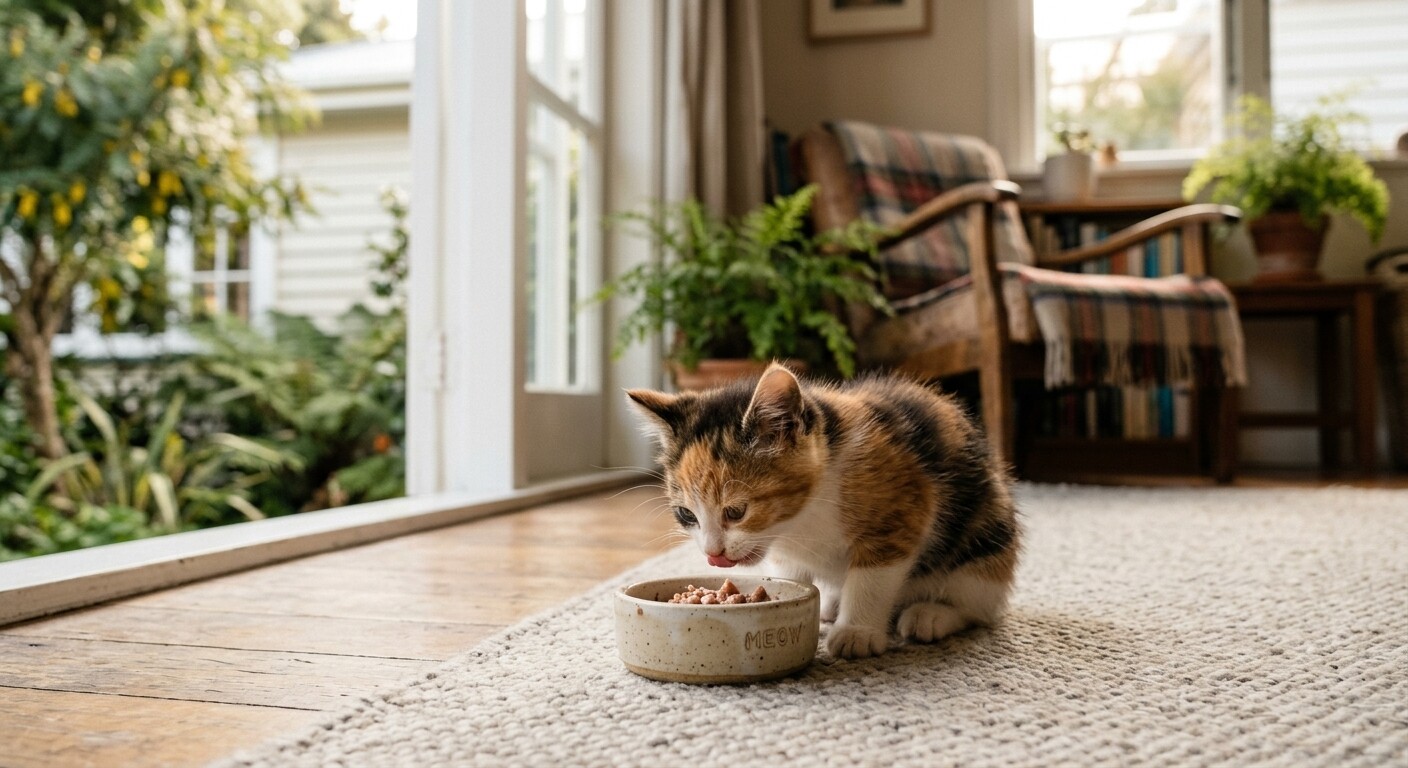
Royal Canin, Hill's, Feline Natural or IAMS? A no-fuss NZ kitten food guide — what your kitten actually needs, top picks by budget, and where to buy.
The short version
Royal Canin Kitten is the pick for most NZ owners. Kibble sized for small mouths, DHA for brain development, available at Animates, PetStock, and most vet clinics. Hill’s Science Diet Kitten is the alternative if your vet carries it instead. For something made in New Zealand, Feline Natural Chicken & Venison is excellent — just brace yourself for the price. On a tighter budget, IAMS Kitten is genuinely good and stocked at most supermarkets.
Feed wet food alongside dry. Don’t overthink it. The gap between a good kitten food and a great one is much smaller than the price difference suggests.
What kittens actually need
A kitten will roughly triple its weight in its first few months. That kind of growth burns through nutrients fast, and the requirements are meaningfully different from adult cats:
- Protein — 30% minimum, 35%+ is better. Kittens need more protein per kilogram than adult cats, full stop.
- Fat — around 18–20%. Fat is concentrated energy for growth and supports brain development.
- DHA — the omega-3 that builds brains and eyes. Check the label; decent kitten foods include it. For additional omega-3 support throughout life, our comprehensive guide to omega-3 supplements for dogs covers joint health benefits that also apply to cats, while pet supplements in NZ provides broader nutritional support options.
- Calcium and phosphorus — in roughly a 1.2:1 ratio for bone development. Any labelled kitten food will handle this; it matters if you’re tempted to improvise with raw or homemade. For comparison, large breed puppy food uses similar controlled mineral ratios to prevent joint issues during rapid growth phases.
- Taurine — cats can’t make this themselves. Deficiency causes blindness and heart disease. Every commercial kitten food includes it, but it’s worth knowing why it matters. For additional heart and digestive support in cats, probiotics for pets can be beneficial alongside proper nutrition, particularly during stressful transitions.
- Calories — kittens need roughly twice the calories per kilogram of body weight compared to adults. Don’t restrict-feed a growing kitten.
When to switch: 12 months is the standard. Some larger, slower-developing cats benefit from staying on kitten food until 18 months — your vet is the right person to advise if you’re unsure. For guidance on adult cat food, see our comprehensive guide to NZ brands and formulations. If your kitten has sensitive stomach issues, specialized formulations can help during the transition period. Similar considerations apply to dog food for allergies and sensitive stomach dog food where careful ingredient selection supports digestive health. For weight management as cats mature, see dog food for weight loss for portion control principles that translate across species.
Our top picks
🥇 Best overall: Royal Canin Kitten
- Type: Dry kibble (wet pouches and loaf also available)
- Protein: 36%
- Fat: 18%
- Price: ~$2.50–3.50/day
- Available at: PetDirect, Animates, PetStock, vet clinics
- Best for: Most kittens, especially if you’re a first-time cat owner who just wants a reliable default
Royal Canin Kitten earns its shelf space in every NZ vet clinic. The kibble is shaped for small kitten mouths, DHA is included for brain development, and the nutrient balance is properly calculated for growth — not approximated.
It’s not the cheapest. But it’s consistent, widely available, and if your vet is recommending it, that’s signal worth listening to. Pair the dry with Royal Canin Kitten wet pouches (jelly or gravy) for variety and hydration.
Check price at Pet Direct →
🥈 Best premium NZ-made: Feline Natural Chicken & Venison
- Type: Freeze-dried (rehydrate with water) and canned
- Protein: 48%+ (freeze-dried, before rehydration)
- Fat: 31%+
- Price: ~$5–8/day
- Available at: Pet stores, PetDirect, specialty retailers
- Best for: Owners who want NZ-sourced, short-ingredient food and don’t mind the cost
Made in New Zealand by the same company behind K9 Natural. The ingredient list is short: chicken, venison, organs, green-lipped mussel, and a handful of fruit and vegetables. Suitable for all life stages, kittens included. For comparison with other premium NZ-made brands, see our reviews of ZIWI Peak and the comprehensive ZIWI Peak vs K9 Natural comparison which examines both brands’ all-life-stage formulations.
The freeze-dried format is easy — add warm water, wait two minutes. Cats love it. The expense is the honest downside; feeding this as a sole diet to a rapidly growing kitten adds up. It works well as the wet component alongside a quality dry food. Similar premium approaches are found in raw dog food delivery in NZ, though cats have different raw feeding requirements.
🥉 Best value: IAMS Kitten
- Type: Dry kibble
- Protein: 33%
- Fat: 21%
- Price: ~$1.50–2/day
- Available at: Countdown, New World, The Warehouse, PetDirect
- Best for: Budget-conscious owners who still want decent nutrition
IAMS doesn’t have the branding of Royal Canin but the kitten formula is properly put together. Real chicken first ingredient, DHA from fish oil, appropriate vitamin and mineral levels for growth. It does what it says.
The supermarket availability is genuinely useful — you can grab it at Countdown on your regular shop instead of making a separate pet store run.
Check price at Pet Direct →
Also worth considering
Hill’s Science Diet Kitten — Effectively level with Royal Canin in quality and vet backing. Chicken-based, DHA included, well-balanced. Some vets prefer it. Around ~$3/day. Available at PetDirect, Animates, and most vet clinics. For a detailed breakdown, see the Hill’s Science Diet cat food review which covers the full range including kitten formulations.
Purina Pro Plan Kitten — Mid-range with solid protein levels and DHA. The wet version (Kitten Chicken in Jelly) is particularly popular and kittens tend to eat it eagerly. Available at most NZ pet retailers. See our full Pro Plan dog food review for brand context, though cat formulations follow different approaches.
ZIWI Peak Chicken — Air-dried, all life stages including kittens. Outstanding nutrition, but at ~$8–12/day for a growing kitten it’s a significant spend. Better used as a meal topper than a sole diet unless budget isn’t a constraint. For similar premium quality at different price points, consider ACANA dog food or Black Hawk, though these are dog-specific formulations.
Advance Kitten — Australian brand, available at PetStock and Animates. Decent formulation at a budget-to-mid price. Not as refined as Royal Canin, but a solid choice if you’re between brands. Other Australian premium options include Ivory Coat and the Black Hawk vs Ivory Coat comparison for broader brand context.
Wet vs dry vs both
Feed both. That’s the honest answer.
Dry food: convenient, doesn’t spoil if left out during the day, does a modest job on teeth. For dedicated dental health, dental chews for cats provide additional oral care support.
Wet food: provides hydration (cats are notoriously bad at drinking enough water), more palatable, closer to a cat’s natural diet.
A practical routine: dry food available during the day, wet food at set meal times morning and evening. Your kitten gets the benefits of both without you overthinking portion maths. For consistent meal schedules, especially with multiple daily feedings, an automatic cat feeder can be helpful for maintaining precise portion control. As your kitten explores, consider GPS tracking for safety, especially during the adventurous juvenile phase. For multi-pet households, compare dog harnesses for outdoor safety equipment that complements indoor feeding routines, while dog crates provide secure spaces for separate feeding if needed.
How much to feed
Kitten food packaging will include feeding guides — use those as your baseline. Rough framework:
| Age | Meals per day | Notes |
|---|
| 8–12 weeks | 4 | Small, frequent meals. Kittens this age are tiny. |
| 3–6 months | 3 | Growth is rapid. They’ll eat more than you expect. |
| 6–12 months | 2 | Settling into adult meal rhythm. Portions increasing. |
Don’t restrict-feed kittens. Unlike adult cats, they genuinely need the calories for growth. If your kitten is hungry, feed them. You can start being more measured about portions from around 6 months. During this growth phase, establish preventive care routines including flea treatment and worming schedules as recommended by your vet. This controlled growth approach parallels large breed puppy nutrition where careful calorie management prevents joint issues, though cats have different feeding requirements.
Once your kitten is settled in, the next purchases most NZ owners consider are litter, comfort items, and long-term adult food. Our guides to the best cat litter in NZ and best cat food in NZ cover nutrition and hygiene, while cat beds and interactive toys support comfort and mental stimulation. For indoor cats specifically, our guide to indoor cat food in NZ covers the lower-calorie needs that come with life inside. Long-term health planning with pet insurance becomes valuable as your kitten grows into an adult with potential health care needs. For comparison, similar comfort and safety considerations apply to popular dog breeds like Border Collies, Golden Retrievers, German Shepherds, Labradors, French Bulldogs, Cavalier King Charles Spaniels, and Staffies which all benefit from appropriate beds, toys, and health monitoring. For additional comfort, dog beds and indestructible toys provide similar enrichment benefits as cats mature into active adults.
Common mistakes
Feeding adult cat food to kittens. Adult food doesn’t carry enough protein, fat, or DHA for growth. Use kitten-specific food until 12 months, full stop.
Feeding dog food. Cats need taurine; dogs don’t. Dog food will cause serious health problems in cats.
Giving regular cow’s milk. Most cats are lactose intolerant after weaning. Regular milk causes diarrhoea. If you want to give milk as a treat, pick up kitten milk (KMR or similar) from a pet store.
Changing food too fast. Mix the new food with the old over 7–10 days. A sudden switch causes upset stomachs — nobody wants to deal with that in week one of kitten ownership. If digestive issues persist during transitions, probiotics for pets can support gut health recovery, while pet supplements provide additional digestive support options. Similar gradual transition principles apply when switching grain-free dog food to prevent digestive upset.
Leaving wet food out. Wet food spoils at room temperature quickly. Don’t leave it sitting for more than 30 minutes. For hygiene maintenance, dental chews support oral health as kittens develop adult teeth, while dog nail clippers and pet grooming supplies become essential for ongoing health maintenance routines.
The bottom line
Royal Canin Kitten or Hill’s Science Diet Kitten. Wet food alongside dry. Done.
Your kitten will grow into a healthy adult on any of the brands listed here. The differences between them are smaller than the price gap implies. Pick one, stick with it, and don’t switch unless you have a reason to.
Related guides:
- Best Cat Food in NZ — our main cat food buying guide
- Best Senior Cat Food in NZ — for the later-life version of this problem, ideally much later
- Best Cat Food for Urinary Health in NZ — specialized nutrition for common cat health issues
- Best Cat Litter in NZ — because feeding is only half the kitten setup
- Best Flea Treatment for Cats in NZ — the cat-specific parasite guide, not the dog workaround
- Best Worm Treatment for Cats in NZ — worming schedule, Drontal vs Milbemax, and all-in-one options
- Best Flea Collar for Dogs in NZ — alternative parasite prevention methods
- Bravecto vs NexGard in NZ — comprehensive parasite treatment comparison
- NexGard Spectra vs Simparica Trio — advanced all-in-one parasite protection
- Best Puppy Food in NZ — comparable growth nutrition guidance for dogs
- Best Dog Food in NZ — our comprehensive dog nutrition guide
 PawPick