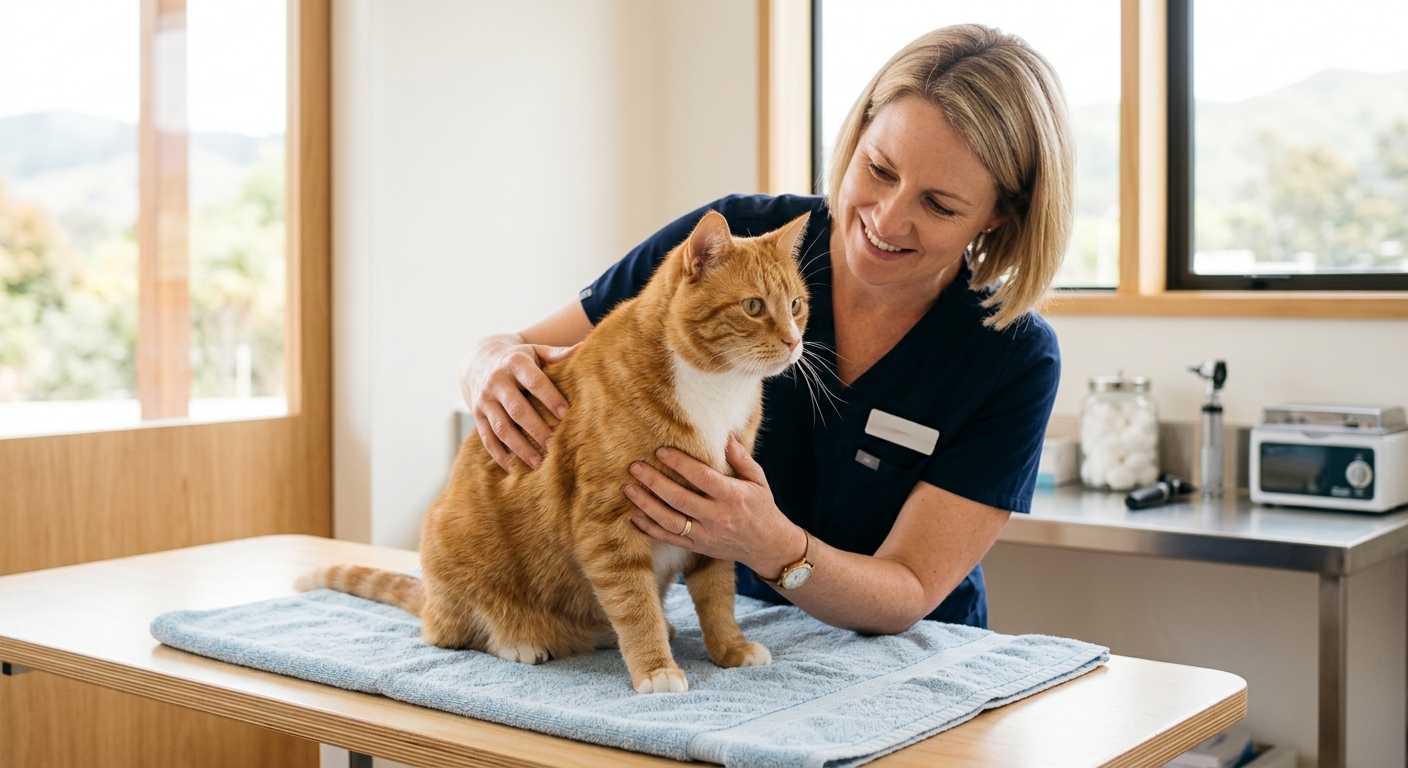
The best cat worm treatments in NZ — Drontal, Milbemax, Revolution Plus, and Bravecto Plus compared with the NZ worming schedule every cat owner needs.
The short version
For most NZ cat owners, Drontal Cat or Milbemax Cat is the right dedicated wormer — quarterly for indoor cats, every 4–6 weeks for outdoor hunters. Both cover roundworm, hookworm, and tapeworm, and cost around $5–12 per dose depending on cat size.
If you want worms and fleas handled in one product, Bravecto Plus is the strongest all-in-one option — it covers fleas for 3 months and also covers roundworm, hookworm, and ear mites, though like most topicals it misses tapeworm. Revolution Plus is the monthly alternative with a similar coverage profile.
The short version: dedicate a quarterly wormer and your cat is covered. The rest is convenience.
Quick picks
Cat worm treatment quick picks
Browse cat wormers at VetSupply →
Affiliate links: PawPick may earn a commission from VetSupply. VetSupply is Australian, so compare landed cost, shipping time, NZ availability and vet-approval requirements against local options. Talk to your vet before starting prescription spot-ons, treating pregnant/nursing cats, or choosing kitten treatment.
Worms that affect NZ cats
New Zealand has a specific parasite profile for cats, and it differs from what you’ll read on Australian or UK product pages.
Roundworm (Toxocara cati)
The most common intestinal worm in NZ cats. Kittens pick it up through their mother’s milk and from the environment. Adults get it from contaminated soil and from hunting — particularly from eating infected prey animals like mice and rats. It’s also transmissible to humans, so this is a genuine public health reason to treat, not just a cat health one.
More prevalent in warmer northern regions but present throughout NZ. Hookworms attach to the intestinal wall and feed on blood — a heavy burden can cause anaemia, especially in kittens. The cat hookworm species is different from the dog one, so dog treatments cannot be cross-used.
Tapeworm (Dipylidium caninum and Echinococcus granulosus)
Two types are relevant in NZ:
- Flea tapeworm — by far the most common tapeworm in NZ cats. Cats swallow infected fleas while grooming and pick up tapeworm that way. Those dried, rice-grain-shaped segments around the base of the tail are the giveaway. This is why flea control and worming are linked — treat both together.
- Hydatid tapeworm (Echinococcus granulosus) — outdoor cats that hunt near livestock or eat rodents in farm environments can be exposed. Unlike dogs, cats are considered a dead-end or low-risk host and rarely shed dangerous numbers of eggs. The primary hydatid concern in NZ is dogs, not cats — but outdoor farm cats are still worth regular worming with a tapeworm-covering product.
Lungworm
Not established in New Zealand. The Aelurostrongylus abstrusus species that causes lungworm in cats in the UK and Europe is not a recognised risk here. You can ignore it for NZ-specific treatment decisions.
NZ worming schedule
Kittens
| Age | Frequency |
|---|
| 2 weeks | First dose |
| 4 weeks | Second dose |
| 6 weeks | Third dose |
| 8 weeks | Fourth dose |
| 3–6 months | Monthly |
| 6+ months | Every 3 months (adult schedule) |
Kittens carry higher worm burdens early in life and their immune systems are not yet up to managing it alone. The early doses matter more than most owners realise. For nutrition alongside the worming schedule, see the best kitten food in NZ guide — a well-nourished kitten handles treatment better. Supporting gut health with probiotics can also help maintain healthy digestion during the intensive early schedule.
Adult cats
- Indoor cats with no hunting access: Every 3 months. Lower exposure, but not zero — fleas (and therefore flea tapeworm) can still be picked up from visiting animals, shoes, and common areas. See the best indoor cat food guide for indoor cat health support alongside regular worming.
- Outdoor or hunting cats: Every 4–6 weeks. Hunting cats are continuously reinfected from prey animals. Regular worming is the only practical control.
- Outdoor cats near livestock areas: Every 4–6 weeks with a praziquantel-containing product to cover tapeworm specifically.
- Senior cats: Every 3 months at a minimum. Older cats have less immune resilience and may be more susceptible to higher worm burdens. The best senior cat food guide covers nutritional support for older cats — good nutrition and parasite control work together.
Pregnant and nursing queens
- Worm before mating
- Consult your vet regarding safe products during pregnancy — not all wormers are cleared for use in pregnant cats
- Worm at 2 and 4 weeks after queening alongside kittens’ early doses
Top picks
🥇 Best dedicated wormer: Drontal Cat and Milbemax Cat
These two are the NZ clinic standards for cat worming, and for good reason. Both cover roundworm, hookworm, and tapeworm in a single dose. The choice between them often comes down to what your vet stocks and which your cat will swallow.
Drontal Cat uses praziquantel and pyrantel. Tablets are film-coated to make them slightly easier to administer. It has a long track record in NZ vet practice and is widely stocked.
Milbemax Cat uses milbemycin oxime and praziquantel. It also covers some additional parasites in markets where lungworm is a concern, though in NZ that extra coverage is largely academic. Milbemax tablets are small, which can make dosing easier for smaller cats.
Practical difference: For most NZ cats, either will do the job equally well. Ask your vet which they carry and go with that — both are solid, evidence-backed choices.
NZ pricing:
- Drontal Cat (up to 4kg): ~$7–10 per tablet
- Milbemax Cat (small, up to 2kg): ~$8–10 per tablet
- Milbemax Cat (large, 2–8kg): ~$9–12 per tablet
- Available from vet clinics; Drontal is also available at PetDirect and some pet stores
If you only buy one worming product, either of these is it. Cheap, effective, covers all three major NZ cat worms.
🥈 Best all-in-one (fleas + worms): Revolution Plus
Revolution Plus is a monthly spot-on that covers fleas, ticks, ear mites, heartworm prevention, roundworm, and hookworm in one application. For owners who want to reduce the number of products in the rotation, it makes good sense.
It does require vet approval in NZ, and the monthly dose costs more than a quarterly wormer — but you’re also getting flea protection built in, which for many cats removes a separate product entirely.
The gap to know about: Revolution Plus does not cover tapeworm. If your cat has a flea problem (which creates flea tapeworm risk), you’ll need a separate praziquantel tablet alongside it — something like a quarterly Drontal or Milbemax closes that gap cleanly. See the flea treatment guide for cats for more on managing the flea-tapeworm connection.
NZ pricing: ~$24–35 per monthly dose. Talk to your vet — it’s a prescription product.
Best for: Cats that need flea protection anyway, multi-cat homes, owners who prefer one application per month.
🥉 Best all-in-one alternative: Bravecto Plus
Bravecto Plus is a 3-monthly spot-on covering fleas, roundworm, hookworm, ear mites, and heartworm prevention. The longer dosing window is its headline feature — once every 3 months rather than monthly, which suits the reality that many owners are better at quarterly reminders than monthly ones.
Like Revolution Plus, it does not cover tapeworm. For outdoor cats or any cat with flea exposure, adding a praziquantel tablet at the 3-month mark when you apply Bravecto Plus is a clean solution.
NZ pricing: ~$38–55 per dose (roughly $13–18/month equivalent). Vet prescription or approval required.
Best for: Outdoor cats, owners who want fewer applications per year, multi-pet homes where consistent coverage matters more than monthly flexibility.
Best for kittens: Milbemax Cat (small)
The small Milbemax tablet is the most practical option for the early kitten schedule. The small tablet size allows accurate dosing for kittens from 0.5kg and can be split if needed for very young animals. Drontal also has a small-cat formulation, but Milbemax’s small tablet tends to be favoured in NZ clinics for the 2–8 week schedule.
Check with your vet for the correct dose — accurate weight-based dosing matters more in kittens than adults. Good kitten nutrition from the best kitten food guide supports immune development alongside the worming schedule.
Dedicated wormer vs all-in-one: which approach?
Two sensible strategies, and neither is wrong.
Strategy 1: Quarterly dedicated wormer
- Best for: Indoor cats, lower-exposure cats, budget-conscious owners
- Cost: ~$28–48/year (four quarterly doses)
- Covers: Roundworm, hookworm, tapeworm — all three NZ cat worms
Quarterly Drontal or Milbemax is the simplest and cheapest approach for most NZ indoor cats. No flea cover, but if fleas aren’t a recurring problem, that’s fine.
Strategy 2: Monthly all-in-one spot-on + quarterly tapewormer
- Best for: Outdoor cats, hunting cats, multi-pet households, owners who want fleas handled too
- Cost: ~$290–420/year for Revolution Plus + ~$28–48 for quarterly tapeworm tablets
- Covers: Fleas, ticks, most intestinal worms — add the quarterly praziquantel for tapeworm
The all-in-one route is significantly more expensive annually. The premium is really a flea-and-tick convenience fee. For an indoor cat with no flea history, quarterly Drontal is all that’s needed. For an outdoor hunter, the broader cover is genuinely useful.
For multi-pet homes that also have dogs, see the best worm treatment for dogs in NZ guide — the dog and cat worming schedules can be aligned to make reminders simpler.
How to tell if your cat has worms
Most cats with worms show no obvious signs — which is exactly why the preventative schedule exists. When symptoms do appear:
- Visible worms in faeces or around the rear end — roundworms look like short spaghetti fragments; tapeworm segments are small, flat, and look like rice grains when dried
- Scooting or excessive grooming of the rear end — often a tapeworm sign
- Diarrhoea or persistently soft stools (chronic digestive symptoms may also suggest food sensitivities)
- Vomiting, sometimes with visible worms
- Weight loss despite eating normally — consider whether nutrition quality is also a factor
- Pot-bellied appearance in kittens, combined with poor coat condition
- Dull coat and lethargy in heavier infections
If you’re seeing these signs, worm now and see your vet. A faecal float test from your vet can confirm which worms are present and helps you target treatment more precisely.
Where to buy worm treatment for cats in NZ
| Retailer | Drontal Cat | Milbemax Cat | Revolution Plus | Bravecto Plus | Notes |
|---|
| Vet clinic | ✅ | ✅ | ✅ | ✅ | Can prescribe all products; often most expensive |
| PetDirect | ✅ | Limited | Limited | ✅ | Good prices online, auto-ship available |
| Animates | ✅ | Limited | Limited | Limited | In-store and online |
| Petstock | ✅ | Limited | Limited | Limited | In-store and online |
| Vet Warehouse | ✅ | ✅ | ✅ | ✅ | Online, competitive pricing |
| VetSupply | ✅ | ✅ | ✅ | ✅ | Australian online retailer stocking Drontal, Milbemax, Revolution Plus, and Bravecto Plus; compare landed cost and vet-approval requirements |
Prescription products (Revolution Plus, Bravecto Plus) require vet approval regardless of where you purchase. Drontal Cat is the most widely available OTC option at NZ pet retailers.
The bottom line
For most NZ indoor cats: Drontal Cat or Milbemax Cat every 3 months. It covers all three major NZ cat worms — roundworm, hookworm, tapeworm — costs under $50 a year, and doesn’t require a prescription. Simple.
For outdoor cats and hunters: step up to every 4–6 weeks. Hunting cats are continuously reinfected from prey, and the worm burden builds quickly without regular treatment. If fleas are also a concern — which they often are for outdoor cats, and flea tapeworm follows fleas closely — Bravecto Plus or Revolution Plus gives you flea and worm cover in one application, with a quarterly praziquantel tablet to close the tapeworm gap.
Kittens need the intensive early schedule. The 2, 4, 6, 8 week doses aren’t overkill — they’re doing the heavy lifting when the immune system is least able to cope. Nutrition and parasite control together give kittens the best start: pair a good kitten food with the worming schedule from the beginning. Good cat nutrition generally supports immune response to parasites throughout a cat’s life.
Whatever schedule you choose, consistency matters more than perfection. A quarterly reminder in your calendar and a packet of Drontal in the cupboard will do more good than the best product in the world sitting forgotten on the shelf.
NZ pricing and retailer availability last reviewed April 2026. Talk to your vet before starting prescription products or if your cat is pregnant, unwell, or under 6 weeks of age.
 PawPick