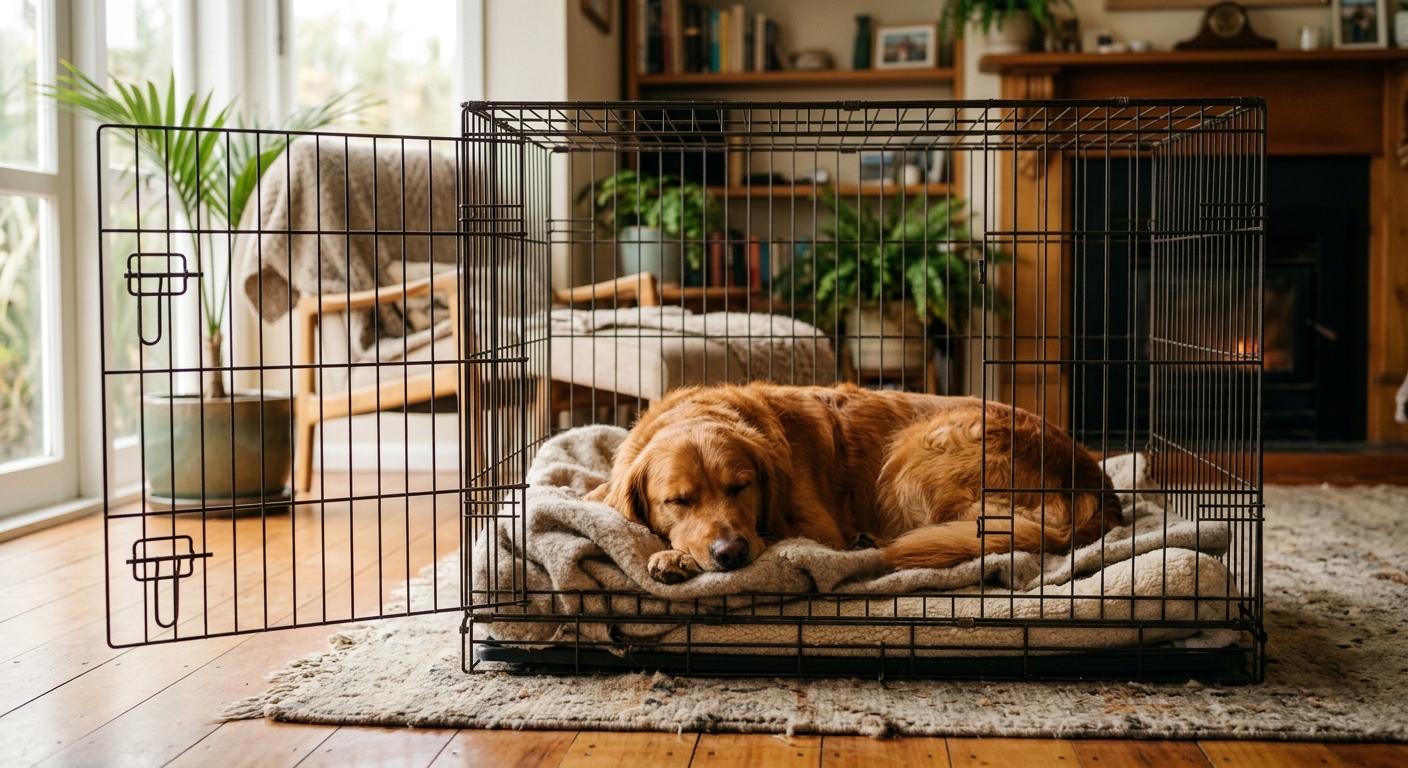
From puppy toilet training to airline travel, find the best dog crates available in NZ. I review wire, plastic, and soft crates for every need and budget.
A good dog crate is one of the smartest investments you’ll make as a dog owner in New Zealand. Whether you’re toilet training a puppy, creating a safe space for an anxious dog, or preparing for travel, the right crate makes life easier for both you and your dog.
Like choosing the best dog food or selecting proper parasite prevention, crate selection requires understanding your dog’s specific needs. A crate isn’t just containment — it’s part of a broader care approach that includes proper nutrition for growing puppies and health monitoring.
After researching dozens of crates available through NZ retailers and testing the most popular options, here are the best crates for different needs and budgets.
Quick Picks:
- Best Overall: Midwest Life Stages Wire Crate — grows with your puppy, excellent value
- Best for Travel: Petmate Sky Kennel — IATA approved, bombproof construction
- Best Portable: Sherpa Original Deluxe Soft Crate — lightweight, easy setup
- Budget Winner: Warehouse Essentials Wire Crate — basic but functional under $100
Types of Dog Crates Explained
Wire Crates (Most Popular)
Best for: Puppy training, everyday use, dogs who like to see out
- Excellent ventilation
- Usually foldable for storage
- Often include divider panels for growing puppies
- Easy to clean
Downsides: Not airline approved, can be noisy when dog moves around
Plastic/Hard Crates
Best for: Travel (especially air travel), den-loving dogs, noise reduction
- IATA airline approved (when properly sized)
- More enclosed “den” feel
- Quieter than wire crates
- Better for dogs who prefer privacy
Downsides: Less ventilation, heavier, take up more storage space
Soft Crates
Best for: Travel, temporary use, well-trained dogs
- Lightweight and portable
- Quick setup and takedown
- Good for camping or visiting friends
Downsides: Not suitable for destructive dogs, limited durability
Best Dog Crates Available in NZ
1. Midwest Life Stages Wire Crate (Best Overall)
Why this works for most NZ dog owners:
- Divider panel included (grows with your puppy)
- Double-door design (front and side access)
- Foldable for storage with carry handles
- Available in 6 sizes (22” to 54”)
Key features:
- Zinc-coated steel construction
- Rounded corners (safer for dogs and humans)
- Removable leak-proof plastic pan
- Set up in 5 minutes, no tools required
Sizing available:
Cost: $129-299 depending on size
Where to buy: Animates, PetStock, Pet Essentials, Amazon NZ
The honest verdict: Not the cheapest, but excellent value. The divider panel alone saves you buying a second crate as your puppy grows. Combine with proper puppy nutrition for the best start.
Check price at Pet Direct →
2. Petmate Sky Kennel (Best for Travel)
For dog owners who travel or might relocate:
- IATA airline approved for international travel
- Heavy-duty plastic construction
- Ventilation on 3 sides plus top
- Chrome-plated steel door with secure latching
Key features:
- Meets airline pet transport requirements
- Easy assembly with wing nuts (no screws to lose)
- Built-in food and water cups
- Available in 8 sizes
Popular sizes for NZ breeds:
- Size 200 (32”L): Medium dogs up to 22kg (Border Collies, Staffies)
- Size 300 (36”L): Large dogs up to 32kg (Golden Retrievers, Labradors)
- Size 400 (40”L): Extra large dogs up to 41kg (German Shepherds)
Cost: $179-399 depending on size
Best for: Anyone who might fly with their dog domestically or internationally
Travel tip: Measure your dog carefully — airlines are strict about sizing requirements. The crate must be large enough for your dog to stand, turn around, and lie down comfortably.
Check price at Pet Direct →
3. Sherpa Original Deluxe Soft Crate (Best Portable)
Perfect for:
- Camping and holiday travel
- Visiting friends/family
- Dogs who are already crate trained
- Temporary containment needs
Key features:
- Sets up in 60 seconds
- Weighs under 5kg even in large sizes
- Multiple mesh windows for ventilation
- Shoulder strap and carry case included
Available sizes:
- Small (19”L): Dogs up to 7kg
- Medium (23”L): Dogs up to 13kg
- Large (27”L): Dogs up to 18kg
Cost: $89-149 depending on size
Important: Only suitable for non-destructive dogs. A determined dog can tear through soft walls.
Check price at Pet Direct →
4. Warehouse Essentials Wire Crate (Budget Pick)
For budget-conscious dog owners:
- Single door wire construction
- Foldable design with plastic carrying case
- Removable plastic tray
- Available in 4 basic sizes
What you get:
- 24”: Small dogs up to 10kg - $79
- 30”: Medium dogs up to 18kg - $89
- 36”: Large dogs up to 27kg - $99
- 42”: Extra large dogs up to 36kg - $119
Cost: $79-119
Where to buy: The Warehouse stores nationwide
Honest assessment: Basic but functional. No frills, no divider panel, single door only. But it’ll contain your dog safely and costs half what premium crates do.
Best for: Dog owners on tight budgets, temporary needs, or dogs who only occasionally need crating.
Check price at Pet Direct →
5. Carlson Pet Products Secure and Compact (Best Single Door)
For dogs who only need occasional crating:
- Single door design (simpler, fewer failure points)
- Compact fold-down storage
- Rounded corners and safe latching
- Good build quality at mid-range price
Key features:
- Tool-free setup in under 3 minutes
- Removable floor pan for easy cleaning
- Available in 5 sizes
- Lifetime manufacturer warranty
Sizes:
- 24”: $109
- 30”: $129
- 36”: $149
- 42”: $179
- 48”: $199
Best for: Dogs who are past the destructive puppy phase, owners who want quality but don’t need the premium features of Midwest crates.
Check price at Pet Direct →
Crate Sizing Guide for Popular NZ Breeds
Small Breeds (24” crates)
- Cavalier King Charles Spaniel: 24-30” depending on individual size
- French Bulldog: 30” (they’re stockier than they look)
- Pug: 24-30”
- Jack Russell Terrier: 24”
Medium Breeds (36” crates)
- Border Collie: 36”
- Cocker Spaniel: 30-36”
- Bull Terrier: 36”
- Brittany Spaniel: 36”
Large Breeds (42” crates)
- Labrador Retriever: 42”
- Golden Retriever: 42”
- German Shorthaired Pointer: 42”
- Boxer: 42”
- German Shepherd: 48” (some large males need 54”)
- Rottweiler: 48-54”
- Great Dane: 54” (sometimes custom sizing needed)
- Newfoundland: 54”
Measuring tip: Measure your dog from nose to tail base, then add 10cm. For height, measure from floor to top of head when standing, add 5cm. Use the larger dimension to determine crate length.
Puppy Crate Training Tips
Week 1-2: Introduction
- Feed meals inside the crate (door open)
- Throw treats inside randomly throughout the day
- Never force your puppy into the crate
- Start with 10-15 minute periods with the door closed
Week 3-4: Building Tolerance
- Gradually increase time with door closed
- Begin leaving for short periods (30-60 minutes)
- Use a comfort item (blanket, toy) with your scent
- Ignore whining — only release when quiet
Week 5+: Independence
- Work up to 4-hour periods (maximum for young puppies)
- Establish routine: crate after meals, when you leave, overnight
- Continue using positive associations (treats, special toys)
Golden rule: Never use the crate as punishment. It should be your dog’s safe space, not a prison.
Crate Setup for Success
Location Matters
- Good spots: Living room where family spends time, bedroom for overnight
- Avoid: Laundry, garage, or isolated areas — dogs are social animals
Making It Comfortable
- Bedding: Start with just a towel (puppies often destroy expensive beds)
- Water: Not usually needed for short periods, can create accidents
- Toys: One safe chew toy, nothing with small parts
Temperature Control
- Summer: Ensure good airflow, consider a small fan nearby
- Winter: Away from drafts, blanket over wire crates for warmth
- Year-round: Never place in direct sunlight
Common Crate Training Mistakes
1. Wrong Size
Too big: Puppy will toilet in one end, sleep in the other
Too small: Uncomfortable, creates negative associations
Right size: Dog can stand up, turn around, lie down comfortably, but not much extra space
2. Using It as Punishment
Sending your dog to their crate when they’re naughty teaches them the crate is bad. Use time-outs in the bathroom instead.
3. Leaving Too Long
Puppies: Maximum 1 hour per month of age (3-month puppy = 3 hours max)
Adult dogs: 4-6 hours maximum for work days
4. Giving Up Too Early
First week of whining is normal. Consistency is key — if you release them every time they whine, you’ve taught them that whining works.
When You Might Need a Crate
Puppy Training (Most Common)
- Toilet training — dogs won’t soil their sleeping area
- Preventing destructive chewing when unsupervised (alongside appropriate toys)
- Teaching independence and preventing separation anxiety
Proper puppy nutrition supports training success. Growing puppies need breed-appropriate nutrition — large breed puppies have specific dietary requirements that support healthy development. Combine crate training with puppy-safe treats for positive reinforcement.
Adult Dog Management
- New rescue dogs — safe space while they adjust to new nutrition and household routines
- Multi-dog households — managing dynamics during feeding (see our best dog food guide for feeding multiple dogs)
- Dogs with allergies — controlled environment while transitioning to hypoallergenic diets
- Recovery — post-surgery or injury rest (consult your vet about joint support supplements)
Travel and Transport
- Car travel — safer than loose dogs, especially for long trips (combine with secure harnesses for ultimate safety)
- Accommodation — many holiday rentals require dogs to be contained
- Moving house — reduces stress during transition periods (maintaining familiar bedding helps)
- Emergencies — earthquakes, floods, evacuations (ensure identification tags are current)
Alternatives to Traditional Crates
Exercise Pens
Good for: Longer containment periods, giving more space to move
- Fold-up panels create enclosed area
- Available in various heights and panel numbers
- Dogs can see out in all directions
Best NZ option: Midwest Exercise Pen ($89-159)
Baby Gates
Good for: Room containment without full enclosure
- Keeps dogs in kitchen/living room
- They can still interact with family
- Easier for quick in/out access
Best NZ option: Carlson Pet Gate ($69-129) — for a deeper look at gate options, see my best pet gate in NZ guide.
Furniture-Style Crates
Good for: Dogs who need permanent crating setup
- Look like end tables or TV stands
- Usually wooden construction
- More expensive but better aesthetics
Availability in NZ: Limited — mostly custom furniture makers
Cleaning and Maintenance
Weekly Cleaning
- Remove and wash fabric bedding
- Wipe down crate surfaces with pet-safe disinfectant
- Check for rust spots on wire crates
- Ensure latches work smoothly
Deep Cleaning (Monthly)
- Disassemble if possible for thorough cleaning
- Soak plastic parts in warm soapy water
- Check for damage: bent wires, loose bolts, sharp edges
- Replace worn components before they become safety hazards
Odor Prevention
- Clean accidents immediately with enzymatic cleaner
- Ensure good ventilation around crate area
- Wash bedding weekly, replace as needed (quality dog beds last longer)
- Regular grooming prevents odor buildup (dog shampoo guide)
- Baking soda sprinkle before vacuuming helps absorb odors
Budget Considerations
New vs Second-Hand
Good second-hand buys: Wire crates in good condition, no rust or damage
Avoid used: Soft crates, anything with odors, damaged latches
Where to find used: Trade Me, Facebook Marketplace, pet rescue organizations
Cost Breakdown by Size
- Small (24”): $79-179 new
- Medium (36”): $99-229 new
- Large (42”): $119-299 new
- XL (48”+): $149-399 new
Money-saving tip: Look for sales during Easter and Christmas holidays — pet stores often discount crates by 20-30%.
Which Dog Crate Should You Buy in NZ?
For most NZ dog owners, the Midwest Life Stages Wire Crate offers the best combination of features, durability, and value. The included divider panel and double-door design justify the higher price over basic options.
If you’re planning to travel with your dog, invest in the Petmate Sky Kennel from the start — it’s airline approved and will handle years of use. For small dogs on day trips or hiking, a dedicated dog carrier backpack is a separate option worth knowing about — see the Kurgo G-Train dog carrier backpack review for a detailed look at a popular NZ-available model.
For budget-conscious owners, The Warehouse Essentials crate gets the job done for basic containment needs.
Most important: Choose the right size, introduce the crate positively, and be consistent with training. A well-chosen crate becomes your dog’s favorite safe space and makes your life as a dog owner much easier.
Complete dog care approach: Combine proper crating with quality nutrition, preventive health care, regular grooming, and appropriate exercise gear. Consider pet insurance for solid protection, especially during the puppy training phase when accidents are more common.
This guide covers crates available in New Zealand as of March 2026. Product availability and pricing can change. Always measure your dog before purchasing and consider their individual needs and temperament.
 PawPick