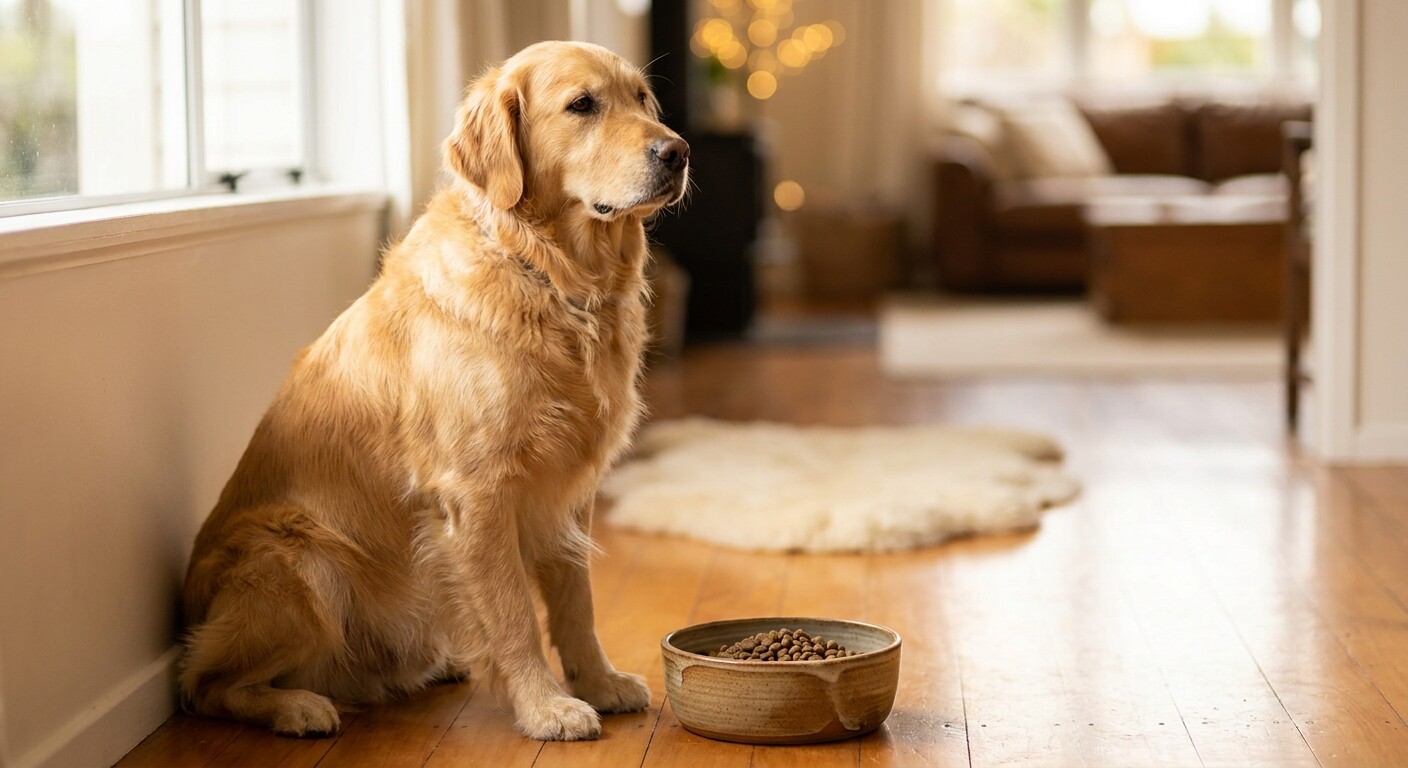
NZ Golden Retriever food picks for joint support, coat health, sensible calories, and large-breed puppy feeding — with realistic local buying notes.
The short version
Black Hawk Adult Lamb & Rice is the pick for most adult Golden Retrievers in NZ — quality protein, fish oil for that coat, roughly $3.00–4.50/day for a 30 kg dog. If joint support is the priority (and with this breed, it should be from middle age), Advance Adult Large Breed includes glucosamine and chondroitin without a significant price jump. Budget no object? ZIWI Peak Lamb is made in NZ, includes green-lipped mussel, and is as good as commercial dog food gets.
For puppies: Advance Puppy Large Breed. The calcium-to-phosphorus ratio matters more for this breed than most — don’t just grab whatever’s on special.
Start here if you have not chosen a brand yet: this breed guide narrows the decision for one type of dog. For the overall brand shortlist, budgets, and retailer comparison, use the main best dog food in NZ guide first.
Price-check the main picks
PawPick uses already-approved merchant links only. If a breed pick overlaps one of these VetSupply ranges, use it as an AU price check, then compare NZ stock, bag size, shipping, and your dog’s needs before buying:
Why Goldens need more thought than most breeds
Golden Retrievers are easy to love and easy to overfeed. That’s where the trouble usually starts.
- Joints are the breed’s weak point. Hip dysplasia, elbow dysplasia, cruciate ligament tears — Goldens have elevated rates of all of them. What you feed during growth and from middle age onwards is one of the few variables you can actually control.
- They’ll eat until they’re ill. Researchers have identified a POMC gene mutation common in Goldens (and Labradors) that genuinely impairs satiety signalling. They’re not being dramatic — they actually feel less full than other breeds. This is not a reason to give them more food.
- The coat tells you things. A dull, dry Golden coat is often the first visible sign of a nutritional gap, usually omega-3s. A healthy one is thick, shiny, and sheds enough to fill a small pillow every week.
- Cancer rates are the highest of any breed. Diet won’t prevent it, but feeding quality food without unnecessary additives is one of the few controllable factors.
- DCM risk means grain-free needs justification. Golden Retrievers are among the breeds flagged in the FDA’s investigation into diet-associated dilated cardiomyopathy (DCM). Unless your vet has a specific reason to recommend grain-free, stick with grain-inclusive formulas.
What to look for
Protein
Named animal protein as the first ingredient — lamb, fish, or chicken. Most Goldens handle chicken fine. Aim for 24–30% protein for adults. Higher isn’t better for a breed prone to weight gain; unnecessary protein just adds calories.
Joint support
This deserves your attention more than anything else on the label:
- Glucosamine and chondroitin — increasingly standard in large-breed formulas
- Green-lipped mussel — a NZ ingredient and one of the most effective natural sources of joint-supporting omega-3s and glycosaminoglycans
- Fish oil (EPA and DHA) — anti-inflammatory, good for joints and coat simultaneously
- Controlled calcium and phosphorus — critical in puppies, where too-rapid bone growth causes lasting joint problems
Omega fatty acids
Fish oil from whole fish or as an added ingredient is what keeps a Golden coat looking right. It also contributes to joint health and skin condition — it does a lot of work for one nutrient.
Calorie density
Moderate fat (12–16%) suits Goldens better than calorie-dense food. A reasonable portion at moderate calories beats a small portion of something rich — these dogs don’t experience satiety the way others do, and a tiny bowl means more begging and less satisfaction.
What to avoid
- Grain-free formulas — the DCM concern is genuine enough to skip these unless your vet says otherwise
- Fat content over 18% — this breed gains weight easily
- Artificial colours, flavours, and BHA/BHT preservatives — unnecessary; look for natural preservation (tocopherols/vitamin E)
The picks
Best all-round: Black Hawk Adult Lamb & Rice
Lamb first, rice as the grain, added fish oil — ticks the main boxes for Goldens at a reasonable price. It’s stocked at Animates and PetStock across NZ and holds up well nutritionally. What it doesn’t include is specific joint-support additives, so for older Goldens or those already showing stiffness, either pair it with a supplement or move to Advance Large Breed instead.
- Protein: ~26% | Fat: ~15%
- Daily cost: ~$3.00–4.50 for a 30 kg dog (20 kg bag)
- Where to buy: Animates, PetStock, Pet.co.nz, independent pet stores
For the full breakdown, see our Black Hawk dog food review.
Check price at Pet Direct →
Best for joint health: Advance Adult Large Breed
Made in Australia by Mars Petcare and formulated specifically for large breeds — glucosamine and chondroitin are in the recipe, not added as a supplement. The kibble is sized for larger jaws, which slows the gulping that Goldens are notorious for. For a breed with this joint profile, this is the practical choice at a realistic price.
- Protein: ~25% | Fat: ~14%
- Daily cost: ~$3.00–4.00 for a 30 kg dog
- Where to buy: Animates, PetStock, some vet clinics
Check price at Pet Direct →
Best for coat health: Ivory Coat Lamb & Sardine
If your Golden’s coat is flat or dry, the sardine in this formula delivers omega-3 from whole fish rather than added oil — more bioavailable, and genuinely useful for coat and skin. The limited ingredient list is worth considering if you suspect sensitivities are part of the problem.
One thing: Ivory Coat has grain-free variants. For Golden Retrievers, choose the grain-inclusive one.
- Protein: ~28% | Fat: ~14%
- Daily cost: ~$3.50–5.00 for a 30 kg dog
- Where to buy: Animates, selected PetStock, online retailers
Full breakdown: Ivory Coat dog food review.
Best premium: ZIWI Peak Lamb
Made in New Zealand from NZ lamb, and the air-dried recipe naturally includes green-lipped mussel — one of the best joint-support ingredients available, and genuinely something NZ does well. Single protein, no grains, no fillers. It’s as clean as commercial dog food gets.
The honest conversation is cost: feeding a 30 kg Golden exclusively on ZIWI runs $12–18/day, around $360–540/month. Most Golden owners use it as a topper — a tablespoon or two on kibble to get the green-lipped mussel benefits without the full expense. That’s a sensible approach.
- Protein: ~38% | Fat: ~26%
- Where to buy: Animates, PetStock, Pet.co.nz, specialty stores, direct from ZIWI
See our ZIWI Peak dog food review for the full picture.
Best budget: Eukanuba Adult Large Breed
The surprise at this price point is that Eukanuba’s Large Breed formula includes glucosamine and chondroitin — which most foods at this price skip entirely. Chicken is the primary protein, so not ideal if your Golden has a sensitivity there, but for most dogs it covers the bases at a cost that’s realistic for a large breed.
- Protein: ~25% | Fat: ~15%
- Daily cost: ~$2.50–3.50 for a 30 kg dog
- Where to buy: Animates, PetStock, some supermarkets
Best for puppies: Advance Puppy Large Breed
Golden Retriever puppies grow fast — roughly 8 kg to 30+ kg in about 18 months. Standard puppy food has too much calcium for that growth rate, which can push bone development faster than joint structures can keep up. Large-breed puppy formulas exist specifically to manage this. Advance gets the ratios right, adds DHA for brain development, and includes glucosamine for joints that are already under real load.
- Protein: ~28% | Fat: ~14%
- Daily cost: ~$3.00–4.00
- Where to buy: Animates, PetStock, vet clinics
Keep your Golden on large-breed puppy food until at least 12–15 months. See our best puppy food in NZ guide for how the options stack up.
How much to feed
Most adult Golden Retrievers weigh 27–36 kg. A rough guide for standard kibble:
| Weight | Activity level | Daily amount | Approx. daily cost |
|---|
| 27 kg | Low–moderate | 280–330g | $2.80–3.50 |
| 30 kg | Moderate | 320–380g | $3.20–4.00 |
| 34 kg | Active | 370–430g | $3.70–4.50 |
| 36 kg+ | Very active | 420–480g | $4.20–5.00 |
Split across two meals. Goldens are notorious food-inhalers — a slow-feeder bowl is a $15 investment worth making to prevent bloat and actually slow digestion.
Body condition check
That coat hides a lot. Don’t rely on eyeballing — get your hands on your dog regularly:
- Ribs: Easy to feel with light pressure, not visible. If you have to press to find them, your dog is overweight.
- Waist: Clear narrowing behind the ribs when viewed from above.
- Tummy tuck: Slight upward curve behind the ribcage from the side.
Golden Retrievers at a healthy weight live on average 1.8 years longer than overweight ones (Kealy et al., 2002 — Labrador data, comparable physiology). Nearly two more years of fetch. Measure the kibble.
Joint care beyond food
Food is the foundation, but for a breed with Goldens’ joint history, it’s not the whole picture:
- Weight management is the highest-leverage thing you can do. Every extra kilogram multiplies load on joints. A lean Golden moves better and lives longer.
- Green-lipped mussel supplements — if your food doesn’t include it, NZ-sourced mussel powder or oil is widely available and well-researched. Worth adding from middle age onwards. See my guide to the best pet supplements in NZ for specific product recommendations and dosing advice.
- No forced impact during growth — no running on hard surfaces, no repetitive fetch, no big jumps until at least 12–15 months. Puppy joints aren’t built for it.
- Swimming — Goldens are natural swimmers, and water is the best low-impact exercise available. Wellington has plenty of dog-friendly beaches. For open water or boat trips, a dog life jacket is worth having — even confident swimmers can tire in current or choppy water.
- Annual vet joint checks from age 5 — problems caught early are far easier to manage.
- Pet insurance — Golden Retrievers rank highly for cancer rates and orthopaedic claims. If you’re going to insure, do it while your dog is young and healthy. For dogs already in their senior years, read our guide to pet insurance for senior dogs in NZ before assuming it’s too late.
Talk to your vet about a joint care plan for your individual dog. Breed tendencies are a useful starting point, but your vet can assess actual risk and tailor recommendations.
Common feeding mistakes
1. Overfeeding because they always seem hungry.
The POMC gene mutation is real — Goldens genuinely feel less full than other breeds. The pleading eyes aren’t manipulation; it’s biology. Doesn’t mean they need more food.
2. Going grain-free because it sounds premium.
For Golden Retrievers specifically, grain-free carries real DCM risk. Unless your vet recommends it for a specific reason, there’s no upside.
3. Missing weight gain because the coat hides it.
By the time you can see it, there’s already too much. Do the rib test weekly, not once a year at the vet.
4. Skipping large-breed puppy food.
Standard puppy formulas are wrong for a breed prone to developmental joint issues. Large-breed puppy food exists for exactly this reason — use it.
5. Waiting too long to address joints.
Don’t wait until your Golden is limping. Glucosamine, green-lipped mussel, and omega-3s from middle age can maintain cartilage before the damage becomes visible.
What about raw?
Goldens generally do well on raw. The breed’s size makes it more expensive than for smaller dogs, but the protein quality and natural joint support — particularly from raw bones and green-lipped mussel — can be genuinely beneficial.
If you’re considering it:
- Start with a single protein — lamb or beef
- Aim for 10% bone content for calcium
- Include organ meat (liver and kidney) for vitamins
- Budget roughly $6–12/day depending on brand and your dog’s size
- Talk to your vet first — especially for puppies, where calcium-to-phosphorus ratios during rapid growth matter significantly
NZ options include Raw Essentials, K9 Natural (freeze-dried raw), and several smaller producers. Commercially balanced raw is worth the premium over DIY for this breed — the margin for error is smaller than it looks. Also worth noting: raw-fed dogs need more frequent worming treatment, as raw meat increases tapeworm exposure.
Best dog food by breed
Start with the main best dog food in NZ guide for the all-breed shortlist, then use these breed guides to adjust for size, weight, coat, digestion, and joint risk:
- Labrador Retriever — weight control, joint support, and measured meals.
- Golden Retriever — you’re here; this guide covers joint support, coat health, and sensible calories.
- Staffordshire Bull Terrier — muscle maintenance, skin support, and realistic budgets.
- French Bulldog — digestion, allergy triggers, and flat-face feeding.
- Border Collie — high-energy working-dog nutrition.
- German Shepherd — hip, joint, and digestive support.
- Poodle — coat, digestion, and size-specific feeding.
- Cavalier King Charles Spaniel — heart-aware feeding and weight management.
- Pug — weight control, skin folds, and flat-face kibble.
- Husky — high-protein fuel for active, lean dogs.
 PawPick