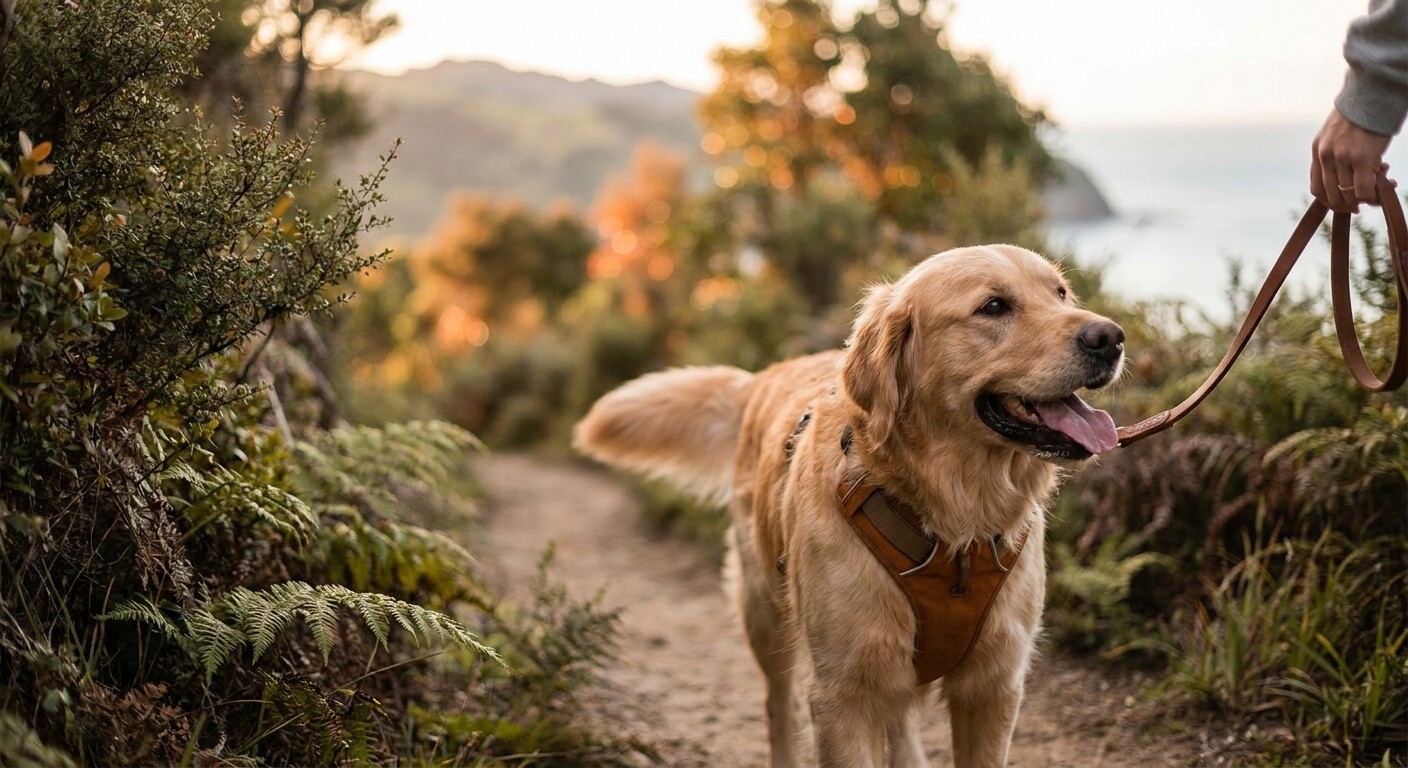
We compared the best dog harnesses available in New Zealand — from no-pull training harnesses to rugged hiking options. Real NZ pricing, honest recommendations.
The short version
EzyDog Quick Fit is the right harness for most NZ dogs — easy to put on, well-built, and stocked at every major pet store. For dogs that pull, the EzyDog Chest Plate with front-clip attachment gives you actual control without restricting movement. For hiking and tramping, Ruffwear Front Range is the gold standard. Tight budget? The Animates Essentials harness is a legitimate option, not just a placeholder.
Which one depends on what you need it for, how your dog walks, and how much fiddling you want to do every morning.
Affiliate note: If you want to compare the Kurgo harness range alongside the NZ-stocked EzyDog/Rogz options, PawPick may earn a commission from Kurgo AU links. Check whether NZ checkout/delivery is currently available, then compare landed cost and warranty support before buying direct.
Browse Kurgo AU dog harnesses →
Why a harness instead of a collar?
Collars are fine for carrying ID tags. For walking a dog that pulls, they’re not great.
A collar concentrates all leash pressure on the neck. For a strong puller, that’s sustained force on the trachea, thyroid, and cervical spine. Smaller breeds like French Bulldogs are particularly at risk — tracheal collapse is a real condition, and collar pressure is a contributing factor.
A harness distributes force across the chest and shoulders, giving you more control without the injury risk. For puppies still learning to walk, reactive dogs, or any dog that leans into the lead, a harness is the sensible default. Active breeds like Border Collies and Staffies particularly benefit from proper harness training. Consider pet insurance to cover potential injury costs from poor equipment choices.
The exception: Dogs that genuinely walk on a loose leash are fine with a flat collar. If that’s not your dog, read on.
Types of harnesses
Back-clip harness
Leash attaches to a D-ring between the shoulder blades.
- Pros: Easy to fit, comfortable, no chest restriction
- Cons: Least control for pulling dogs — they can lean straight into it
- Best for: Dogs that already walk well, small breeds, casual walkers
Front-clip / no-pull harness
Leash attaches at the chest. When the dog surges forward, the harness redirects them sideways, interrupting the pulling motion.
- Pros: Reduces pulling, good training tool, redirects rather than restricts
- Cons: Leash can tangle under legs if fitted poorly, needs proper adjustment
- Best for: Pullers, dogs in training, reactive dogs (pair with interactive toys for mental stimulation), working breeds like Border Collies and German Shepherds
Dual-clip harness
Attachment points on both the chest and the back. Use the front clip when training, the back clip for casual walks — or both at once with a double-ended lead.
- Pros: Versatile, works across training stages, one harness covers everything
- Cons: More hardware, slightly more complex to fit
- Best for: Dogs transitioning from pulling to loose-leash walking
Step-in harness
Dog steps into the harness with their front legs; you clip it at the back — nothing goes over their head.
- Pros: Good for dogs that panic at overhead handling
- Cons: Often less secure, can slip on narrow-chested dogs
- Best for: Small dogs, head-shy dogs, anxious breeds like Cavalier King Charles Spaniels (consider calming supplements for anxiety support)
Head halter (Halti / Gentle Leader)
Fits around the muzzle and behind the ears — where the head goes, the body follows. Not technically a harness, but worth including.
- Pros: Highly effective for strong pullers, gives maximum directional control
- Cons: Dogs resist it initially, looks like a muzzle (strangers will ask), requires a conditioning period
- Best for: Very strong pullers where body harnesses haven’t worked; large, powerful breeds
Top picks
🥇 Best everyday harness: EzyDog Quick Fit
- Type: Back-clip, step-in style
- Sizes: XXS to XXL
- Price: ~$45–65
- Available at: Animates, Petstock, PetDirect, Mighty Ape
- Best for: Most dogs, everyday walks
EzyDog is the dominant harness brand in NZ pet stores, and the Quick Fit is why. One-click buckle on top, step your dog in, clip — done. No multi-strap fiddle, no pulling it over a reluctant dog’s head. Once it’s adjusted to size, gearing up for a walk takes five seconds.
The build quality is the other thing. The neoprene chest plate doesn’t chafe, the stitching is reinforced at stress points, and the reflective trim is genuinely useful for winter evening walks — which in NZ means roughly half the year.
It won’t teach your dog not to pull (nothing does, short of training), but for a dog that already walks reasonably well, it’s the most practical everyday option in NZ. Family breeds like Golden Retrievers and Labradors typically adapt well to this style. For consistent daily exercise, pair with quality interactive toys and automatic feeders for structured routines.
Check price at Pet Direct →
🏆 Best no-pull: EzyDog Chest Plate Harness
- Type: Dual-clip (front and back attachment)
- Sizes: XS to XXL
- Price: ~$55–80
- Available at: Animates, Petstock, PetDirect, Mighty Ape
- Best for: Pullers, dogs in training, front-clip control
Yes, another EzyDog — they make the best harnesses widely available in NZ, full stop. The Chest Plate has a broad, padded chest panel that spreads pressure evenly, with D-rings at both the front and back for flexible leash attachment.
The front-clip is what makes it a no-pull harness. When your dog surges, the chest attachment redirects their momentum sideways. It doesn’t hurt — it just makes pulling inefficient. Most dogs work this out within a few walks and start offering a looser leash as a result.
The wide chest panel matters here. Narrow-strap front-clip harnesses can dig into the chest and restrict shoulder movement. EzyDog’s broad plate avoids that entirely.
Training tip: Use the front clip for training walks. Switch to the back clip once your dog’s leash manners improve. One harness, two modes.
Check price at Pet Direct →
⛰️ Best for hiking/adventure: Ruffwear Front Range
- Type: Dual-clip (front and back)
- Sizes: XXS to L/XL
- Price: ~$80–110
- Available at: PetDirect, selected outdoor retailers, Mighty Ape
- Best for: Hiking, tramping, adventure dogs, active breeds
Ruffwear is the Icebreaker of dog gear — built for the outdoors, priced accordingly. The Front Range is their most versatile harness and the pick for NZ bush and track conditions.
Four adjustment points (two at the chest, two at the belly) means you can dial in the fit properly — which matters on a long tramp when a loose or rubbing harness becomes a problem by kilometre three. The foam-padded chest and belly panels stay comfortable over hours of movement.
The materials are a step above everyday harnesses too: thicker webbing, aluminium buckles rather than plastic, overbuilt stitching. For Tararua-level country or anything remotely serious, it won’t let you down.
For everyday suburban walks, it’s overkill. PetDirect carries the full range if you want to look at sizing — it’s less available in physical stores than EzyDog. Adventure dogs need comprehensive care: maintain joint health with omega-3 supplements, support energy needs with high-quality nutrition, and ensure dental health stays on track during active lifestyles.
🐕 Best for large/strong dogs: Julius-K9 IDC Powerharness
- Type: Front-clip compatible, Y-front design
- Sizes: Mini through to size 4 (handles 90+ kg dogs)
- Price: ~$90–140
- Available at: PetDirect, selected pet stores, online retailers
- Best for: Large breeds, working dogs, dogs that need high-visibility gear
Julius-K9 is the harness of choice for police dogs, search-and-rescue teams, and working dog handlers internationally. Hungarian-made, tank-level durable, with those distinctive interchangeable Velcro labels on the sides.
For large, powerful NZ breeds — Rottweilers, German Shepherds, Mastiffs, big Huntaways, Labradors, and Golden Retrievers — the Powerharness provides serious control without restriction. The Y-front design keeps pressure off the shoulders, and the top handle lets you grab and redirect a strong dog quickly when you need to.
Trade-off is weight and bulk. This is not a minimalist harness. Smaller dogs will find it cumbersome. But for a 40+ kg dog that needs to be managed safely on lead, it’s one of the best options available in NZ. Large breeds require comprehensive health support: joint supplements for mobility, weight management nutrition to reduce joint stress, and probiotics for digestive health in active, powerful dogs.
💰 Best budget: Animates Essentials Harness
- Type: Back-clip
- Sizes: XS to XL
- Price: ~$20–35
- Available at: Animates (in-store and online)
- Best for: Puppies, casual walkers, tight budgets
Basic nylon webbing, plastic buckles, adjustable straps, reflective stitching. It won’t win any design awards, and the build quality is a step below EzyDog — thinner padding, less robust buckles, shorter lifespan under heavy use. For a puppy that’ll outgrow it in three months, or a small dog that barely loads the harness, it’s entirely adequate.
Also worth checking: Kmart occasionally stocks pet harnesses at similar price points. Quality varies between batches, but at $15–25 it’s low-risk for a temporary option.
🐶 Best for small dogs: Rogz Utility Harness
- Type: Back-clip, H-harness style
- Sizes: XS to medium
- Price: ~$30–50
- Available at: Animates, Petstock, PetDirect
- Best for: Small breeds, lightweight everyday use
Rogz is a South African brand that’s become standard-issue in NZ pet stores. The Utility harness is lightweight, well-made, and comes in a frankly unreasonable number of colour options.
For small dogs, the H-harness design distributes pressure across two chest straps without bulk, and the lightweight nylon doesn’t weigh down a 5 kg dog. It also washes easily — which matters for any dog close to the ground in a Wellington winter. Small breeds need specialized care: French Bulldog nutrition addresses breathing considerations, while Cavalier nutrition focuses on heart health. Consider a dog winter coat and quality dog shampoo for maintaining hygiene in muddy conditions.
How to measure your dog for a harness
A loose harness is a safety hazard (dogs back out of them). A tight harness causes chafing. Getting the fit right takes two minutes and saves a lot of grief.
What to measure
- Girth (chest): Around the widest part of the ribcage, just behind the front legs. This is the critical measurement — get this right first.
- Neck: Around the base of the neck where the collar sits (relevant for overhead-style harnesses).
- Weight: Useful as a secondary guide, but girth is more reliable — dogs of the same weight can have very different body shapes.
Fitting tips
- Two flat fingers should fit between the harness and your dog’s body at any point
- Check for chafing under the front legs after the first few walks — that’s the most common problem spot
- Re-check fit regularly for puppies (they grow fast), senior dogs with changing body shape, and dogs needing weight management
- Monitor for skin irritation in dogs with allergies or sensitive skin — quality materials matter for reactive dogs
Use case guide
Daily neighbourhood walks
Go with: EzyDog Quick Fit or Rogz Utility. Easy on, easy off, comfortable for 30–60 minute walks. Regular exercise supports overall health — combine with dental chews for oral hygiene, nail clippers for paw care, and GPS tracking for safety in urban environments.
No-pull training
Go with: EzyDog Chest Plate (front-clip) or Halti harness. Pair with positive reinforcement training — the harness helps, but it’s a tool, not a solution. For persistent or aggressive pulling, a qualified NZ dog trainer is worth the investment alongside the harness. Consider calming supplements for anxious or stressed dogs during training.
Hiking and tramping
Go with: Ruffwear Front Range. Worth the premium for long days on track. If you need a harness that doubles as a pack carrier for longer trips, see our guide to dog backpack harnesses for hiking in NZ. Make sure your dog is also current on flea and tick treatment — the NZ bush has its share of parasites. For dogs heading into rural areas, it’s also worth reviewing worming treatment, since bush environments increase exposure.
Puppies
Go with: Animates Essentials or a Kmart budget harness. They’ll outgrow it in weeks — save the premium harness for when they’ve stopped growing. If you’re setting up the full puppy kit, our guides to best puppy food in NZ, large breed puppy nutrition, best flea treatment for dogs in NZ, probiotics for digestive health, grain-free options for sensitive puppies, and automatic feeders for consistent feeding schedules cover what new owners usually need immediately.
Small dogs and toy breeds
Go with: Rogz Utility or a step-in style. Heavy, bulky harnesses designed for large dogs restrict small dogs’ movement — don’t size down a big-dog harness. Small dogs often benefit from indestructible toys for mental stimulation and joint supplements as they age. If your small dog struggles with longer walks — older joints, post-surgery recovery, or brachycephalic breathing limits — a carrier backpack is worth knowing about. The Kurgo G-Train dog carrier backpack is a serious premium option to compare for dogs up to 11kg.
Where to buy in NZ
- Animates — widest in-store selection; staff can help with fitting
- Petstock — strong EzyDog and Julius-K9 range
- PetDirect — best online prices; carries full Ruffwear range
- Mighty Ape — competitive on EzyDog
- Kmart / The Warehouse — budget options only
Sizing tip: Buy the first harness in a physical store so you can try it on the dog. Once you know the brand and size, replacements are cheaper online.
If your dog walks well in a harness but still treats the house like a rugby match, it’s worth sorting the rest of the setup too. Our guides to the best dog beds in NZ, best dog crates in NZ, best dog food in NZ, GPS trackers for dogs, and interactive toys are the natural next reads. For outdoor adventurers, also check our dog winter coat guide.
Bottom line
- Best all-rounder → EzyDog Quick Fit
- Dog pulls on the leash → EzyDog Chest Plate Harness (front-clip)
- Hiking and adventure → Ruffwear Front Range
- Large/powerful breed → Julius-K9 IDC Powerharness
- Small dog → Rogz Utility Harness
- Puppy or tight budget → Animates Essentials
- Nothing else has stopped the pulling → Halti head halter (with a proper conditioning period)
Whatever you go with, take ten minutes to fit it properly the first time. A well-fitted harness changes how walks feel — for you and for the dog. If you’re also transporting your dog in a car, a walking harness isn’t designed for crash forces — our guide to crash-tested dog car harnesses in NZ covers purpose-built options that can safely attach to a seatbelt system. Complete your pet care setup with comprehensive health support: preventive parasite treatments, quality nutrition for energy and joint health, comfortable bedding for recovery, and secure crating for safe transport. For ongoing health monitoring, pet insurance provides peace of mind during active adventures.
This guide is updated as products change and new options enter the NZ market. Last reviewed March 2026.
 PawPick