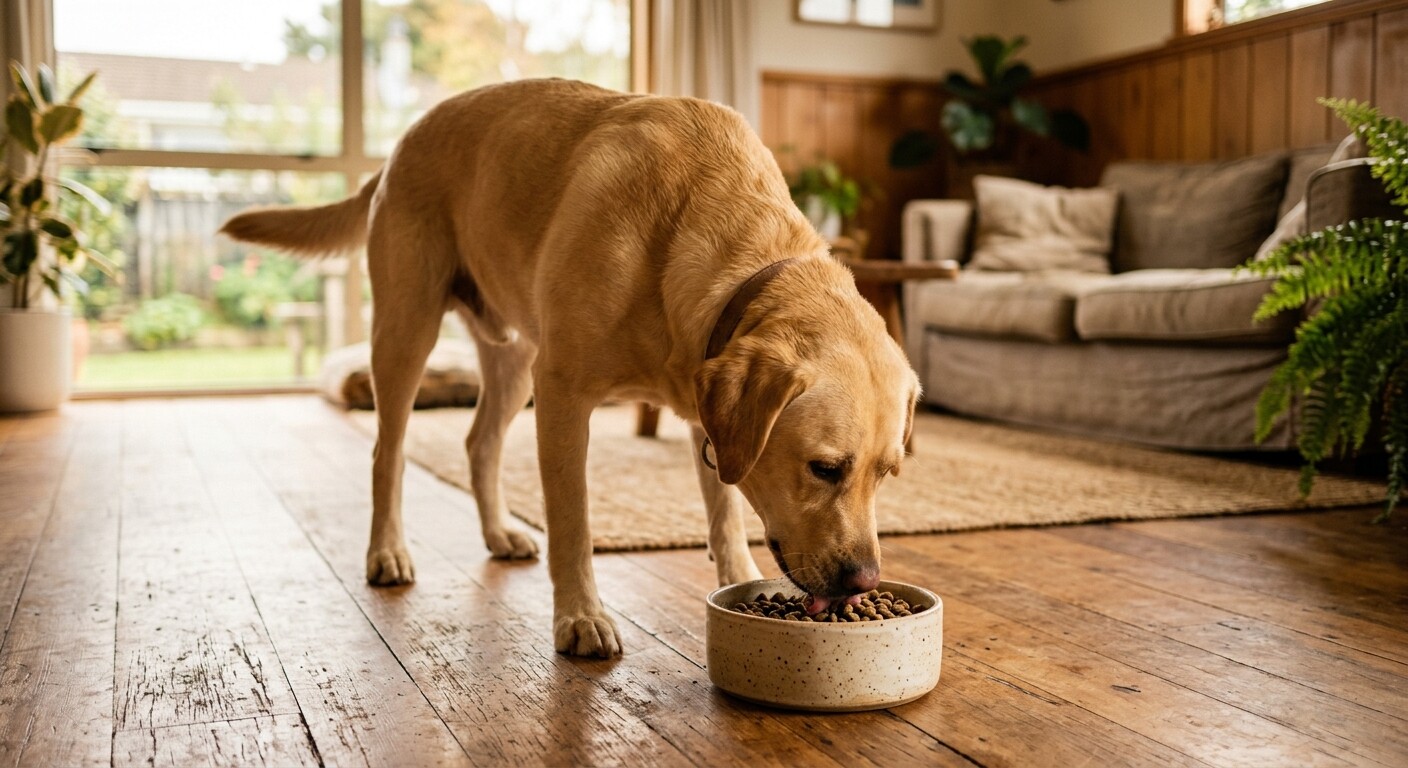
Raw vs kibble dog food compared for NZ owners — nutrition, cost, convenience, and which feeding method suits which dog. Honest verdict included.
Kibble wins for most NZ dog owners. It’s cheaper, safer, more convenient, and backed by decades of feeding research. Raw feeding wins on ingredient quality and palatability — but it demands time, freezer space, and a meaningful budget premium.
If you want the short version: feed a quality kibble from our best dog food NZ guide. If you’re already feeding premium food and want to understand whether raw is worth the step up, read on.
Quick verdict: For convenience, consistency, and cost, kibble is the practical winner. For ingredient quality and palatability, raw is genuinely better — but only if you do it properly. This article will tell you which category you’re in.
Feeding Methods at a Glance
| Attribute | Raw | Kibble |
|---|
| Ingredient quality | Fresh meat, organs, bone | Varies — mid-range to premium |
| Processing | Minimal | High-heat extrusion |
| Daily cost (20kg dog) | $5–10 | $1.20–4 |
| Prep time | 5–15 min/day | Near zero |
| Storage | Freezer required | Pantry |
| Palatability | High | Moderate to high |
| Vet guidance | Limited NZ-specific research | Extensive feeding trials |
| Safe for all dogs? | No (immunocompromised, young puppies) | Yes |
Cost Comparison
This is the number most people don’t want to look at, but it matters.
| Raw (prey-model / commercial) | Premium Kibble | Mid-Range Kibble |
|---|
| Daily cost (20kg dog) | $5–10/day | $2.50–4/day | $1.20–2.00/day |
| Annual cost | ~$1,825–3,650 | ~$913–1,460 | ~$440–730 |
| Setup cost | Freezer / storage containers | None | None |
| Prep time | 5–15 min/day | Near zero | Near zero |
Raw costs two to four times more than premium kibble to feed a medium dog in NZ. Over five years, that’s a $5,000–10,000 premium over mid-range kibble. Budget honestly before committing.
Ingredient Quality
Raw feeding, done right, puts fresh muscle meat, organ meat, and raw bone in your dog’s bowl with no heat processing, no rendered by-product meals, and no carbohydrate fillers. Commercial raw brands like those you’ll find through NZ raw delivery services give you this convenience without sourcing everything yourself.
Premium kibble is more complicated. High-heat extrusion destroys some heat-sensitive nutrients (enzymes, some B vitamins), and manufacturers compensate by adding synthetic vitamins post-processing. The best kibbles use high-quality meat meals and whole proteins — but “meat meal” covers a wide range of quality, and cheap kibbles use cereal grains and plant proteins to hit their protein percentages on paper.
The honest answer: top-tier raw food has better ingredients than any kibble. But a quality premium kibble like ACANA or the NZ-made options beats a mediocre raw diet assembled carelessly. Ingredient quality is less about the format and more about the specific product.
Winner: Raw — fresh meat, organs, and bone with minimal processing, no question.
Daily Cost
Already covered in the table above, but worth repeating: raw costs $5–10/day for a 20kg dog in NZ. Premium kibble costs $2.50–4/day. Mid-range kibble costs $1.20–2/day.
That gap is real, ongoing, and compounds over years. A 10-year dog on commercial raw costs $18,000–36,000 to feed versus $4,400–7,300 on mid-range kibble. Even against premium kibble, raw adds $10,000+ over a dog’s lifetime.
If budget is a serious constraint, raw feeding isn’t the answer. A quality mid-range kibble beats a badly-sourced raw diet on every metric that matters.
Winner: Kibble — two to four times cheaper for equivalent or better nutrition at many price points.
Convenience
Kibble wins this category without a fight. Open bag, scoop, serve. No defrosting, no portioning frozen patties the night before, no handling raw meat every morning, no freezer management. You can leave for a week and have someone house-sit without a three-page feeding brief. You can travel with it. You can buy it at Animates on a Saturday.
Raw feeding requires a chest freezer or a very organised fridge, daily defrost planning, safe handling practices (wash hands, sanitise surfaces, separate prep tools), and somewhere to store bones safely. None of this is hard — but it’s not near-zero effort.
Commercial raw delivery services through NZ raw suppliers make this easier. But you’re still thawing, portioning, and handling raw protein every day.
Winner: Kibble — no freezer, no prep, no planning.
Palatability
Most dogs prefer raw. It smells more like food to them. The texture is different. Picky eaters who circle their bowls and eat half a serve of kibble will often clean a raw bowl in seconds.
This isn’t universal — some dogs do just fine on kibble and show no preference. But if you have a genuinely picky eater or a dog that’s gone off food, raw frequently solves the problem when nothing else does. It’s also why NZ-made air-dried and freeze-dried options like ZIWI Peak and K9 Natural have built strong followings — they blur the line between raw and processed while delivering raw-level palatability without a freezer.
Winner: Raw — most dogs prefer it, full stop.
Safety
This is where kibble earns its position for cautious owners. High-heat extrusion kills pathogens. Commercial raw carries measurable bacterial contamination risk — salmonella, listeria, and E. coli have been found in raw pet food products in multiple countries, including NZ recalls.
For healthy adult dogs with functional immune systems, this is generally manageable. Dogs are adapted to handle a pathogen load that would make humans sick. The risk is mainly to:
- Immunocompromised dogs (on chemotherapy, post-surgery, chronic illness)
- Very young puppies (under 12 weeks)
- Households with immunocompromised people, infants under 12 months, or pregnant women
If you’re in any of those categories, raw is genuinely not recommended. Otherwise, source from reputable NZ suppliers, follow safe handling protocols, and the risk is low in practice.
Winner: Kibble — no pathogen risk, safe for every dog in every household.
Long-Term Health Outcomes
Honestly, the research here is inconclusive. Proponents of raw feeding report shinier coats, better stools, cleaner teeth, higher energy, and fewer vet visits. Some of this is real — raw-fed dogs typically produce smaller, less smelly stools (less indigestible filler to excrete) and many owners report visible coat improvements.
The problem is controlled, long-term studies comparing raw to kibble in dogs are almost non-existent. Most kibble research is funded by pet food companies with an interest in the outcome. Most raw feeding advocacy comes from practitioners without controlled trial data. Neither side has a clean evidence base.
What we do know: dogs are physiologically adapted to thrive on animal protein, fat, and bone. Dogs have been thriving on kibble for 70+ years with no population-level health crisis. Both feeding methods work. Neither is proven significantly superior for healthy, average-activity companion dogs.
Winner: Tie — insufficient NZ-specific research to call it either way.
Which Is Better For…
Working or Highly Active Dogs
Raw’s higher protein and fat density suits dogs with serious energy requirements — working farm dogs, sport dogs, search and rescue. The nutrient density from organ meat and bone supports muscle recovery in ways that cheaper kibble can’t match. Premium kibble like ACANA Regionals can also serve this population well.
Raw, or premium kibble.
Picky Eaters
If your dog circles the bowl, skips meals, or has gone off their food, raw is often the answer. The palatability gap is real. Alternatively, a freeze-dried topper like K9 Natural over quality kibble captures most of that palatability improvement at lower cost and effort.
Raw (or freeze-dried topper over kibble).
Dogs with Allergies or Sensitivities
Both formats can work for allergic dogs — it depends on the protein source, not the format. A single-protein raw diet (lamb-only, venison-only) can work well for elimination diets. Premium limited-ingredient kibble achieves the same thing. Raw does not automatically solve food allergies. See our best dog food for sensitive stomachs NZ guide for more options.
Either — focus on the protein source, not the format.
Puppies
Use a complete and balanced puppy kibble, full stop. A nutritionally incomplete raw diet during rapid growth causes skeletal problems that are expensive and heartbreaking to manage. Raw feeding for puppies requires genuine nutritional expertise. An unbalanced prey-model diet fed to a puppy is not acceptable risk — commercial raw brands formulated for puppies to AAFCO or FEDIAF standards are safer if you want raw, but puppy kibble from a reputable brand is the lowest-risk starting point.
Kibble (complete and balanced puppy formula).
Owners on a Tight Budget
Kibble. There is no version of raw feeding that competes on cost. If budget is tight, spend your money on the best quality kibble you can afford — a quality mid-range kibble beats a poorly-sourced raw diet on every measure.
Kibble.
Owners Who Travel
Kibble. Travelling with a freezer is not practical. If you travel frequently and leave your dog with a sitter, kibble is the obvious answer.
Kibble.
The Middle Ground: Air-Dried, Freeze-Dried, and Hybrid Feeding
NZ has two standout options that blur the raw vs kibble divide.
ZIWI Peak is air-dried — shelf stable, no prep, high meat content with minimal processing. It’s not technically raw but it’s the closest convenient alternative: nearly raw ingredient quality without the freezer or the handling.
K9 Natural is freeze-dried raw from Christchurch. Add water, serve. Raw nutrition with significantly more shelf stability than frozen raw, and none of the bacterial risk reduction you get from heat — but at least you’re not handling thawed meat every morning.
The hybrid approach — 80% quality kibble, 20% raw, freeze-dried, or even a decent chilled dog roll as a topper — is what many NZ owners actually do. You get most of raw’s palatability benefits, add moisture and flavour, and keep daily cost manageable. If the goal is simply to make kibble more appealing, compare the best dog rolls in NZ before paying freeze-dried prices.
Decision Framework
Choose raw if:
- Your budget is flexible ($5–10/day per dog is not a strain)
- You have freezer space and don’t mind daily prep
- Your dog is a picky eater and nothing else has worked
- You want maximum ingredient quality and are committed to doing it properly
- You’re working with a canine nutritionist to build a balanced diet
Choose kibble if:
- You want convenience and near-zero daily prep
- You travel often or need a sitter-friendly feeding routine
- You have a puppy or an immunocompromised dog
- Budget is a meaningful consideration
- You’re a first-time dog owner and want the lower-complexity starting point
Consider the middle ground if:
- You’re drawn to raw but put off by the cost and logistics
- Your dog needs more palatability encouragement than kibble provides
- You want better ingredient quality than standard kibble without full raw commitment
Bottom Line
Kibble is the right default for most NZ dog owners. It’s cheaper, safer, more convenient, and when you buy quality — from brands with real feeding trial data or strong ingredient credentials — it delivers excellent long-term nutrition.
Raw feeding is genuinely better on ingredient quality and palatability. It’s worth it if your budget allows, your dog is a picky eater, and you’re prepared to do it properly. Done carelessly or on a budget that forces corners, it’s worse than a quality kibble.
The honest recommendation: start with a quality kibble from our best dog food NZ guide. If you want to experiment with raw, use a NZ raw delivery service to trial it without full commitment. If your dog responds well and you can afford it, go for it. If not, a good premium kibble is nothing to apologise for.
Where to Go From Here
Browse NZ raw dog food delivery services →
See our top-rated NZ dog foods →
Based on publicly available nutritional research, NZ retail pricing as of April 2026, and analysis of commercial raw and kibble products available in New Zealand. Pricing and formulations change — always verify with your retailer. Consult your veterinarian before switching diets for dogs with health conditions.
 PawPick