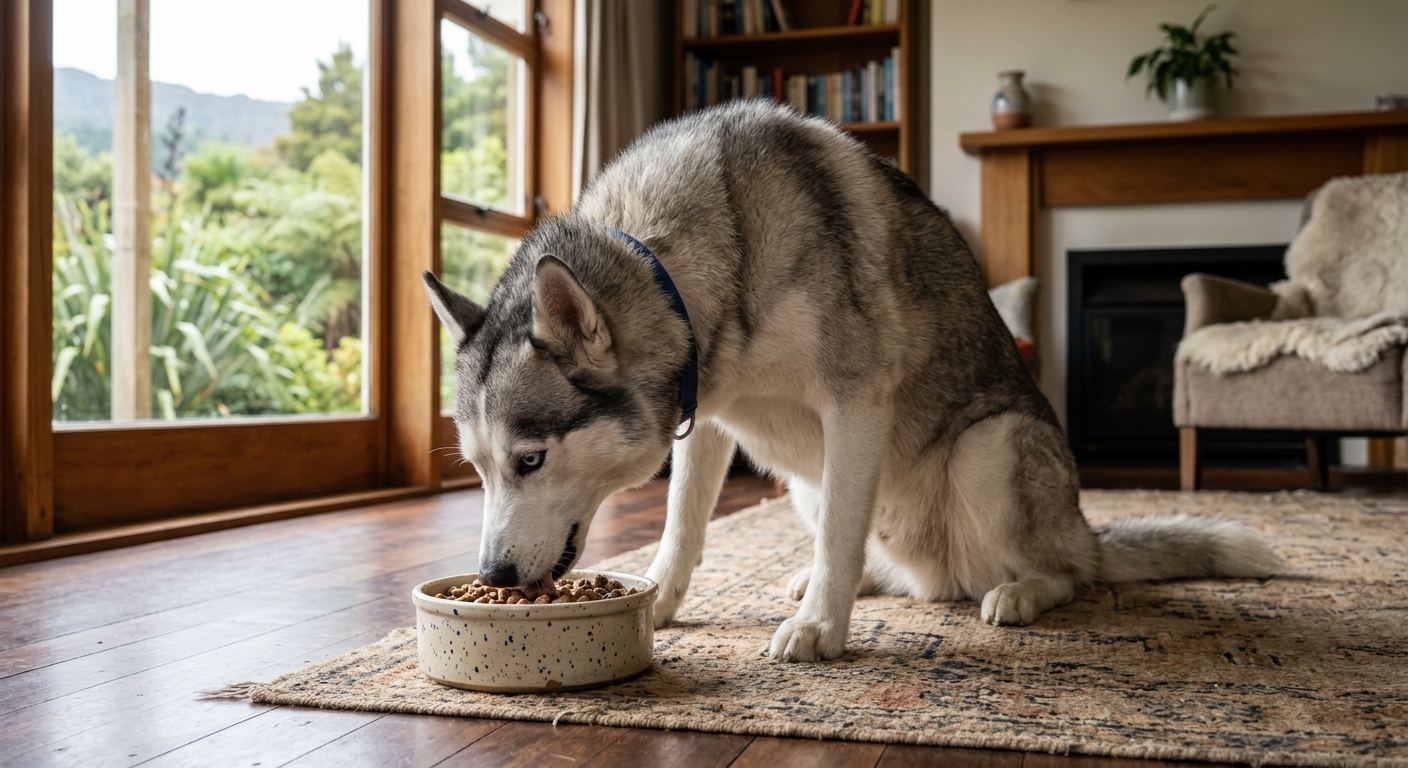
Siberian Huskies need high protein, adequate fat, and specific nutrients like zinc and omega-3s. My NZ-focused guide covers the best dog foods for huskies — from premium picks to budget options.
Huskies were bred to run hundreds of kilometres on minimal food. That efficient, high-performance metabolism makes them one of the more nuanced breeds to feed — they need quality nutrition but often eat less than their size suggests, and they have breed-specific needs around zinc and coat health that most generic formulas miss.
Similar high-energy working breeds have their own nutritional quirks — see my guides for Border Collies, German Shepherds, Labradors, and Golden Retrievers.
After reviewing what’s actually available and affordable in NZ, here are my top picks for keeping your Husky lean, energetic, and coat-glossy.
Quick Picks:
- Best Overall: ZIWI Peak Mackerel & Lamb — high protein, natural omega-3s, excellent for coat health
- Best Value: Black Hawk Chicken & Rice Adult — solid protein, affordable, widely stocked
- Best for Skin & Coat: Ivory Coat Ocean Fish & Salmon — rich in EPA/DHA and zinc-supporting nutrients
- Budget Pick: Purina Pro Plan Active 27/17 — designed for active breeds, higher protein than standard Pro Plan
- Premium Raw Option: K9 Natural Lamb Feast — freeze-dried, nutrient-dense, great for picky Huskies
Price-check the main picks
PawPick uses already-approved merchant links only. If a breed pick overlaps one of these VetSupply ranges, use it as an AU price check, then compare NZ stock, bag size, shipping, and your dog’s needs before buying:
Start here if you have not chosen a brand yet: this breed guide narrows the decision for one type of dog. For the overall brand shortlist, budgets, and retailer comparison, use the main best dog food in NZ guide first.
What Huskies Need Nutritionally
High Protein (Non-Negotiable)
Huskies evolved on high-animal-protein diets. Their muscles and metabolic systems are optimised for it. Look for:
- 28-32% crude protein minimum from quality animal sources (not plant-protein padding)
- Named meat as the first ingredient — chicken, lamb, fish, venison (not “meat meal” or “meat by-products”)
- Multiple animal proteins for amino acid completeness
This is where many supermarket brands fall short. Fillers and plant proteins won’t sustain a Husky’s energy or coat condition long-term.
Quality Fat (for Sustained Energy)
Huskies are endurance athletes. Unlike sprint breeds, they need fat for slow-burn energy:
- 15-20% crude fat for active Huskies
- Omega-3 fatty acids (EPA and DHA from fish sources) — critical for their double coat and skin health
- Omega-6 balance — important for skin barrier function, especially relevant given Husky skin sensitivities
Zinc (Breed-Specific Priority)
Siberian Huskies and Alaskan Malamutes are uniquely prone to zinc-responsive dermatosis — a condition where the body struggles to absorb zinc properly, leading to crusty, flaky skin around the face, nose, and paw pads.
- Look for foods with zinc listed in the guaranteed analysis (zinc proteinate is more bioavailable than zinc oxide)
- Fish-based diets tend to be naturally higher in bioavailable zinc
- If your Husky shows skin symptoms, talk to your vet — dietary changes alone may not be enough
Digestive Efficiency
Huskies have evolved to extract maximum nutrition from minimal food. This means:
- They genuinely need less food than their size suggests — don’t overfeed based on weight guidelines alone
- They can develop loose stools on overly rich diets — some Huskies do better on moderate rather than ultra-high fat
- Gradual food transitions (10+ days) matter for their gut health
Best Husky Dog Foods in NZ
1. ZIWI Peak Mackerel & Lamb (Premium Pick)
Why Huskies thrive on it:
- Protein: 38% — genuinely high from quality animal sources
- Fat: 18% — sustained energy without being excessive
- Natural EPA/DHA from mackerel (exceptional for coat and skin)
- Natural zinc from green-lipped mussel
- Air-dried = concentrated nutrition, small portions
Why it suits Huskies specifically:
The fish-forward protein base provides natural zinc and omega-3s in forms that are highly bioavailable — directly addressing the two biggest breed-specific nutritional gaps. The air-dried format means smaller portions, which suits Huskies’ tendency to self-regulate.
Feeding cost: ~$3.50 per day for a 25kg Husky
Read my full ZIWI Peak dog food review for detailed ingredient analysis and NZ pricing.
Where to buy: Animates, PetStock, specialty stores nationwide
Check price at Pet Direct →
2. Black Hawk Chicken & Rice Adult (Best Value)
Why this works for Huskies:
- Protein: 26% (solid for moderately active Huskies)
- Fat: 14% (appropriate sustained energy level)
- Omega-3 added via fish meal and flaxseed
- Australian-made, widely stocked across NZ
- Good digestibility — Huskies generally do well on the chicken and rice base
Honest assessment: Not specifically formulated for Huskies, but hits the nutritional targets well. The added omega-3s and reasonable protein level make it a reliable everyday food for NZ Huskies who aren’t in high-activity working situations.
Read my Black Hawk dog food review for full nutritional breakdown.
Feeding cost: ~$1.60 per day for a 25kg Husky
Where to buy: Animates, PetStock, vet clinics nationwide
Check price at Pet Direct →
3. Ivory Coat Ocean Fish & Salmon (Best for Skin & Coat)
Best for: Huskies with skin issues or poor coat condition
Why it works:
- Grain-free formula with fish as primary protein
- Very high natural EPA/DHA from salmon and ocean fish
- No chicken (useful if your Husky has a chicken sensitivity)
- Supports zinc absorption through high bioavailable minerals
Nutritional breakdown:
- Protein: 29%
- Fat: 17%
- Omega-3 rich from multiple fish sources
Feeding cost: ~$2.20 per day for a 25kg Husky
If your Husky has ongoing skin or coat issues, this is worth trialling for 8-12 weeks. Compare with similar formulas in my Ivory Coat review.
Where to buy: Animates, PetStock, online via Pet Direct
Check price at Pet Direct →
4. K9 Natural Lamb Feast (Premium Raw Option)
Why Huskies respond well to it:
- Freeze-dried raw format appeals to picky Huskies who reject dry kibble
- Protein: 55%+ (very high — feed smaller amounts)
- Natural zinc, omega-3s, and nutrients from whole ingredients
- Rehydrates well — good for encouraging hydration in Huskies who under-drink
The honest trade-off: K9 Natural is expensive and requires portion care given the protein density. But for Huskies who refuse standard kibble or have persistent coat/skin issues, it often achieves results other foods don’t.
Read my K9 Natural review and ZIWI Peak vs K9 Natural comparison for detailed analysis.
Feeding cost: ~$5-7 per day for a 25kg Husky
Check price at Pet Direct →
For active Huskies on a budget:
- Formulated specifically for active and working dogs
- Protein: 27%, Fat: 17% — higher than standard Pro Plan
- Real chicken as first ingredient
- Added omega-6 for coat health
Feeding cost: ~$1.80 per day for a 25kg Husky
Where to buy: Pet stores and some supermarkets
Honest assessment: The Active formula is a meaningful step up from standard Purina for Huskies — the higher protein and fat targets are much better suited to the breed. Not premium, but nutritionally appropriate and widely available.
Check price at Pet Direct →
Puppy, Adult & Senior Husky Nutrition
Husky Puppies (8 weeks – 14 months)
Husky puppies grow at a moderate rate compared to large breeds, but they still need puppy-specific nutrition:
- DHA for brain and eye development (important given Husky eye conditions like juvenile cataracts)
- Higher calorie density for growth energy
- Quality protein for muscle development
- 3-4 small meals per day as puppies; transition to twice daily at 6 months
Recommended: ZIWI Peak (all life stages), Royal Canin Medium Puppy, Black Hawk Chicken & Rice Puppy
See my puppy food guide for full NZ puppy nutrition principles.
Adult Huskies (14 months – 8 years)
Focus on sustained energy, coat health, and maintaining lean muscle:
- Active Huskies: 2.5-3.5 cups of quality dry food, or equivalent raw/freeze-dried
- Less active pet Huskies: Reduce portions — Huskies gain weight if overfed and under-exercised
- Split into two meals daily; Huskies can be prone to gulping if hungry
Senior Huskies (8+ years)
Energy needs decrease but nutritional quality matters more:
- Maintain high-quality protein to preserve muscle mass
- Increase omega-3s for joint support and coat condition
- Consider joint supplements if mobility decreases — see my dog joint supplements guide
- Watch for hypothyroidism (common in older Huskies) — this affects metabolism and weight
Husky-Specific Feeding Quirks
The Self-Regulation Phenomenon
Huskies are unique among domestic dogs in that they genuinely self-regulate food intake. Research from sled dog studies shows they can reduce calorie consumption by 60% in warm weather without ill effects.
What this means practically:
- Don’t panic if your Husky skips meals in summer
- Don’t add more food hoping they’ll eat — they’ll eat when they’re ready
- Do worry if they stop eating in winter or during high activity periods
Picky Eating
Many Husky owners report their dogs refuse food without explanation. Common triggers:
- Boredom with the same food (rotate proteins occasionally)
- Warm weather (normal appetite suppression)
- The food doesn’t meet their quality threshold (they’re surprisingly good judges)
What helps: Serve food at room temperature, add a small amount of warm water or bone broth, try a different protein base. If your Husky hasn’t eaten in 48+ hours, see your vet.
Hydration
Huskies often under-drink, especially on dry kibble diets. This can contribute to urinary issues. Adding water to kibble or feeding wet/raw food helps. A quality pet water fountain can encourage better drinking habits.
Ingredients to Look For
Coat & Skin Support:
- Salmon oil, fish meal, mackerel (natural EPA/DHA)
- Zinc proteinate or zinc chelate (highly bioavailable)
- Vitamin E (antioxidant, supports skin barrier)
Energy & Performance:
- Named animal proteins (chicken, lamb, fish, venison) as first ingredient
- Chicken fat or fish oil (quality fat sources)
- Brown rice, sweet potato, or oats (complex carbs for sustained energy)
Gut Health:
- Prebiotics (fructooligosaccharides)
- Probiotics (Bacillus coagulans, Lactobacillus)
- Easily digestible protein sources
Ingredients to Avoid
- Corn, wheat, soy as primary ingredients (cheap fillers, poor nutrition density)
- Artificial preservatives (BHA, BHT, ethoxyquin)
- Anonymous meat meals (“poultry meal”, “meat by-products”)
- Very high carbohydrate content — Huskies are protein-fat animals, not starch animals
For dogs with confirmed food sensitivities, see my dog food for allergies guide. If your Husky has a genuine grain sensitivity (rather than just a wheat or corn intolerance), my best grain-free dog food in NZ guide covers the options and the DCM research worth knowing about.
When to Talk to Your Vet
See your vet about your Husky’s diet if you notice:
- Crusty, flaky skin around the face, nose, or paws (possible zinc-responsive dermatosis)
- Dull, brittle, or thinning coat (may indicate omega-3 deficiency or thyroid issues)
- Unexplained weight gain despite normal feeding (hypothyroidism is common in Huskies)
- Persistent loose stools or digestive upset
- Refusing food for more than 48 hours (beyond normal summer appetite suppression)
- Eye cloudiness or discharge in younger dogs (Huskies have breed-specific eye conditions)
Huskies have several breed-specific health conditions that affect nutrition. Your vet knows your individual dog’s history — get a baseline blood panel at the 7-8 year mark to catch thyroid and other metabolic changes early.
Which Dog Food Is Best for Huskies in NZ?
Huskies need real animal protein (28%+), quality fat for sustained energy, and specific nutrients — particularly omega-3s and bioavailable zinc — that many standard dog foods don’t deliver in adequate amounts.
My top recommendation: ZIWI Peak Mackerel & Lamb for most NZ Huskies — the protein level, natural omega-3s from mackerel, and zinc from green-lipped mussel directly address breed-specific needs. If budget is a constraint, Black Hawk Chicken & Rice hits the nutritional targets at half the price. For Huskies with skin or coat problems, trial Ivory Coat Ocean Fish & Salmon for 8-12 weeks.
Most important: Don’t overfeed. Huskies self-regulate for a reason — their metabolisms are efficient by design. Feed quality food in appropriate portions, don’t free-feed, and let them tell you how much they need.
For broader NZ dog food comparisons, see my best dog food in NZ guide. For other high-energy working breeds, see my Border Collie and German Shepherd guides.
Best dog food by breed
Start with the main best dog food in NZ guide for the all-breed shortlist, then use these breed guides to adjust for size, weight, coat, digestion, and joint risk:
- Labrador Retriever — weight control, joint support, and measured meals.
- Golden Retriever — joint support, coat health, and sensible calories.
- Staffordshire Bull Terrier — muscle maintenance, skin support, and realistic budgets.
- French Bulldog — digestion, allergy triggers, and flat-face feeding.
- Border Collie — high-energy working-dog nutrition.
- German Shepherd — hip, joint, and digestive support.
- Poodle — coat, digestion, and size-specific feeding.
- Cavalier King Charles Spaniel — heart-aware feeding and weight management.
- Pug — weight control, skin folds, and flat-face kibble.
- Husky — you’re here; this guide covers high-protein fuel for active, lean dogs.
This guide covers foods available in New Zealand as of April 2026. Formulations and availability change — always check with your vet before making significant dietary changes, especially if your Husky has known health conditions.
 PawPick