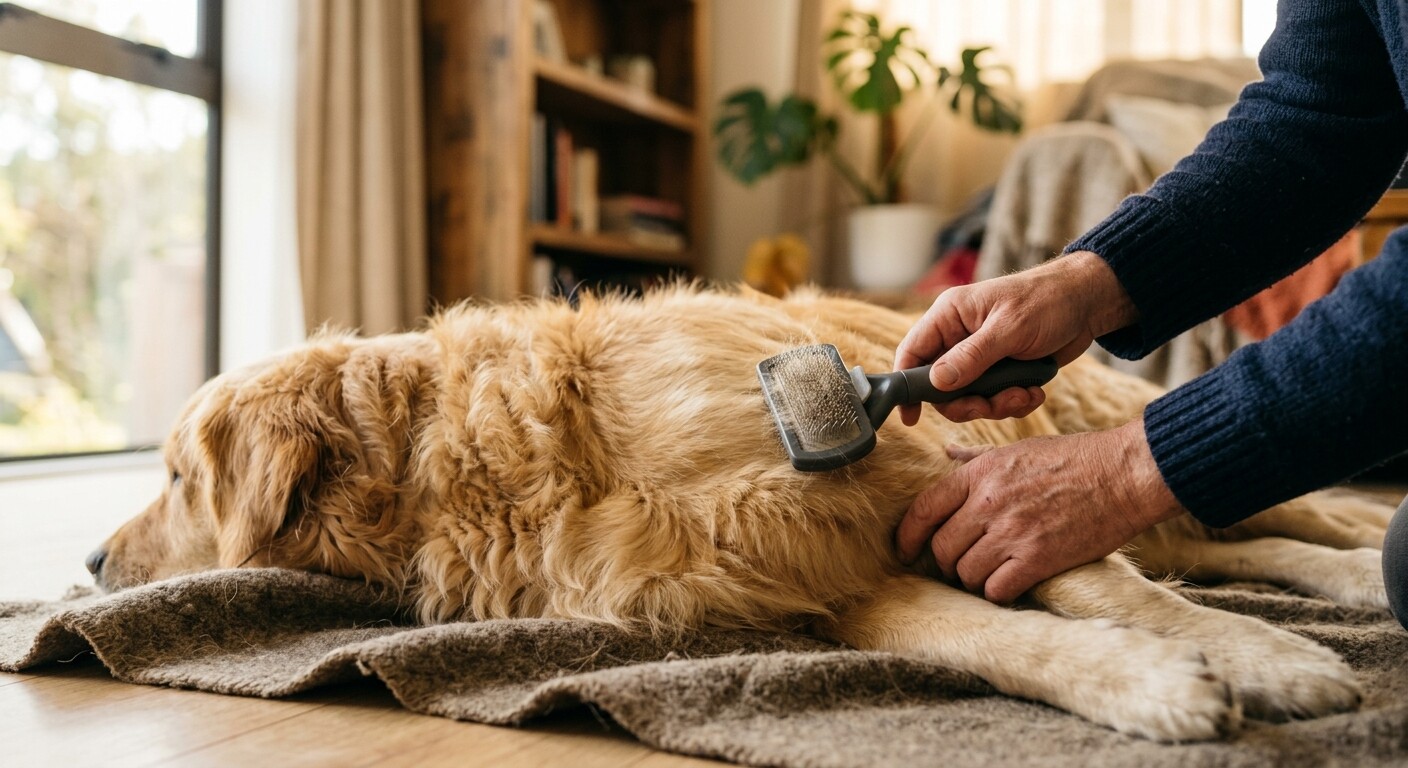
Independent comparison of the best dog deshedding brushes available in New Zealand — FURminator, KONG ZoomGroom, Wahl, and more, with NZ prices and where to buy.
The short version
- For most double-coated dogs: FURminator deShedding Tool — nothing else removes loose undercoat as efficiently.
- For sensitive dogs, puppies, or bath-time deshedding: KONG ZoomGroom — gentle rubber fingers that dogs actually enjoy.
- Best slicker brush for everyday maintenance: Kazoo Self-Cleaning Slicker Brush — does the job and the retractable pins make cleanup painless.
- On a budget: Paws & Claws Grooming Brush from The Warehouse.
- For heavy double coats that need serious work: Yours Droolly Shear Magic Shedding Rake.
| Brush | Best For | Price NZ | Where To Buy |
|---|
| FURminator deShedding Tool | Double-coated breeds, heavy shedders | ~$50–80 | Animates, PetStock, PetDirect |
| KONG ZoomGroom | Sensitive dogs, puppies, short-coated breeds | ~$19–25 | Animates, PetStock, PetDirect |
| Kazoo Self-Cleaning Slicker | Everyday maintenance, all coat types | ~$25–34 | Animates, PetDirect |
| Yours Droolly Shedding Rake | Heavy double coats, seasonal blowouts | ~$35–52 | Animates, PetDirect, Mitre 10 |
| Paws & Claws Grooming Brush | Budget, light shedding, first-time owners | ~$10–18 | The Warehouse |
Bottom line
- Best overall → FURminator deShedding Tool (~$50–80)
- Sensitive dogs & puppies → KONG ZoomGroom (~$19–25)
- Best slicker brush → Kazoo Self-Cleaning Slicker (~$25–34)
- Heavy double coats → Yours Droolly Shear Magic Shedding Rake (~$35–52)
- Budget → Paws & Claws Grooming Brush (~$10–18)
Most households with a shedding dog need two tools: a dedicated deshedding tool (FURminator or rake) for weekly or fortnightly sessions, and a slicker or rubber brush for quick daily maintenance. The FURminator plus a ZoomGroom covers probably 80 percent of dogs in New Zealand.
For related gear: best dog shampoo NZ for bathing before deshedding sessions, best dog nail clippers NZ to handle nails while you’re grooming, and omega-3 for dogs to support coat health from the inside out. If your dog’s winter coat is the issue, I’ve also covered dog winter coats for breeds that need extra warmth after losing their undercoat.
Fur King fit check: Fur King is better matched to clipping and at-home grooming kits than to deshedding brushes. If you need clippers rather than a FURminator-style brush, PawPick may earn a commission from Fur King; orders ship from Sydney, so check NZ delivery, exchange rate and total landed cost first.
Browse Fur King clippers and nail grinders AU →
Why deshedding matters (beyond your furniture)
Every dog sheds. Even the “hypoallergenic” ones lose some hair — they just do it differently. But if you own a double-coated breed in New Zealand, you already know the reality: fur on every surface, fur woven into your car upholstery, fur floating through the air in slow motion like some kind of canine snow globe.
Deshedding isn’t just about keeping your house presentable. Dead undercoat that stays trapped against the skin can cause matting, hot spots, and skin irritation — particularly in NZ’s humid upper North Island summers. Regular deshedding improves airflow through the coat, helps your dog regulate temperature, and lets you spot skin issues, lumps, or parasites early. If your dog is on flea treatment, checking the skin during grooming sessions is one of the best ways to catch problems before they escalate.
Māui is a staffy — single-coated, short-haired, and still manages to deposit enough fur on my couch to build a second dog. Even short-coated breeds benefit from regular brushing. It’s just a question of which tool matches the job.
Brush types explained
Before diving into specific products, it helps to understand what each type of brush actually does. They’re not interchangeable, and using the wrong one on the wrong coat is either ineffective or uncomfortable for your dog.
The FURminator-style tools. A stainless steel edge (not a blade — it doesn’t cut) that reaches through the topcoat and pulls out loose undercoat hair. These are the most effective at removing dead undercoat in a single session. Best for double-coated breeds. Can irritate skin if you press too hard or overdo it on one area.
Slicker brushes
Fine, short wire pins set in a flat or slightly curved pad. They remove loose surface hair, detangle minor knots, and smooth the coat. Gentler than deshedding tools and better for everyday brushing. Work on almost all coat types. The self-cleaning versions (with retractable pins) save you picking fur out of the bristles by hand.
Undercoat rakes
Look like a small garden rake with rotating teeth. Designed to penetrate thick double coats and remove loose undercoat without pulling the topcoat. Ideal for heavy-coated breeds like Huskies, Samoyeds, and German Shepherds during heavy shedding season. Not much use on short or single-coated dogs.
Rubber curry combs
Soft rubber fingers or nubs that massage the skin and lift loose hair through friction. Much gentler than metal tools. Great for sensitive dogs, puppies, short-coated breeds, and bath-time use (most work wet or dry). Won’t remove deep undercoat effectively but excellent for surface shedding and circulation.
Top picks
- Type: Stainless steel deshedding edge
- Sizes: Small (up to 10 kg), Medium (10–23 kg), Large (23–41 kg), Giant (41+ kg) — each in short-hair and long-hair versions
- Price: ~$50–80 depending on size
- Where to buy: Animates, PetStock, PetDirect, Pet Circle (AU, ships to NZ)
- Best for: Double-coated breeds, heavy shedders, serious deshedding sessions
Check price at Animates →
There’s a reason the FURminator has been the default recommendation for over a decade. The curved stainless steel edge reaches through the topcoat without cutting it and pulls out an almost alarming amount of loose undercoat. The first time you use one on a double-coated dog in spring, you’ll wonder how your dog had that much fur hiding under there.
The size and hair-length variants matter — a short-hair FURminator on a long-coated Collie won’t reach the undercoat properly, and a long-hair version on a Labrador is overkill. Match the tool to your dog. The FURejector button pushes collected fur off the blade, which sounds like a gimmick but genuinely speeds up the process.
I’ve watched friends use one on their Golden Retriever and fill an entire shopping bag with loose fur in twenty minutes. That’s fur that would otherwise have ended up on their couch, their car seats, and drifting gently across the kitchen floor.
Verdict: Best deshedding tool in NZ for double-coated breeds — nothing else comes close for removing loose undercoat.
Honest caveat: It’s the most expensive option on this list, and it can cause skin irritation if you’re too aggressive. Light, consistent strokes in the direction of hair growth — not back and forth like you’re sanding a deck. Also, it’s not for every coat type. Dogs without an undercoat (Poodles, Maltese, Bichons) shouldn’t be FURminated. It won’t do anything useful and may damage the coat.
🐕 Best for sensitive dogs and puppies: KONG ZoomGroom
- Type: Rubber curry comb
- Sizes: One size (large enough for most dogs)
- Price: ~$19–25
- Where to buy: Animates, PetStock, PetDirect, Pet Circle
- Best for: Sensitive dogs, puppies, short-coated breeds, bath-time grooming
Check price at PetDirect →
The ZoomGroom is KONG’s rubber grooming brush, and it’s brilliant for dogs that hate being brushed. The soft rubber fingers massage the skin rather than scraping it, which means most dogs lean into it rather than pulling away. It works wet or dry — during bath time it lathers shampoo beautifully and lifts loose fur at the same time.
For short-coated breeds like Staffies, Beagles, and Whippets, the ZoomGroom removes loose hair effectively without the risk of skin irritation from metal tools. It’s also the best starting point for puppies — gets them comfortable with grooming before you introduce something more serious once their adult coat comes through.
It won’t strip out a Husky’s undercoat the way a FURminator does. That’s not what it’s for. It handles surface shedding and light undercoat on short to medium coats, and it does it gently. At around $20, it’s worth owning even if you have a dedicated deshedding tool for the heavy sessions.
Verdict: Best gentle option — ideal for sensitive dogs, puppies, and bath-time grooming when metal tools are too harsh.
Honest caveat: Limited effectiveness on thick double coats. If your German Shepherd is blowing coat in October, you need a FURminator or a rake — the ZoomGroom won’t keep up.
🧹 Best slicker brush: Kazoo Self-Cleaning Slicker Brush
- Type: Wire-pin slicker brush with retractable pins
- Sizes: Medium, Large
- Price: ~$25–34
- Where to buy: Animates, PetDirect
- Best for: Everyday brushing, detangling, light deshedding, all coat types
Check price at Animates →
Slicker brushes are the everyday workhorse of dog grooming — and the Kazoo Self-Cleaning version solves the single most annoying thing about slicker brushes: getting the fur out of the pins afterwards. Push the button, the pins retract, the fur slides off. Done.
The wire pins are fine enough to detangle without pulling, and they remove loose surface hair effectively across all coat types. This isn’t a deep deshedding tool — it works the topcoat and catches loose hair before it hits your floor. For dogs with medium-length or curly coats, it’s arguably more useful day-to-day than a FURminator.
Kazoo is an Australian brand with good NZ distribution through Animates. The build quality is solid for the price, and the medium size suits most dogs up to about 25 kg. Go large for breeds like Golden Retrievers and Labs.
Verdict: Best everyday slicker brush — the retractable pin mechanism makes cleaning effortless and the wire pins suit most coat types.
Honest caveat: Not effective for deep undercoat removal. If your dog is a heavy shedder, use this between deshedding sessions for maintenance — not as a replacement.
🪮 Best for heavy double coats: Yours Droolly Shear Magic Shedding Rake
- Type: Undercoat rake with rotating teeth
- Sizes: Small dogs, Large dogs
- Price: ~$35–52
- Where to buy: Animates, PetDirect, Mitre 10
- Best for: Huskies, Samoyeds, German Shepherds, Border Collies — any breed with a dense double coat
Check price at Animates →
When a FURminator isn’t getting deep enough — or when you’re dealing with a seriously thick coat that’s blowing out — a shedding rake is the next step up. The Yours Droolly Shear Magic Shedding Rake has rounded, rotating teeth that work through dense undercoat without snagging or pulling the topcoat.
The rotating teeth are what separate this from cheap rakes that just yank. Each tooth turns independently as it moves through the coat, which means less pulling, less discomfort, and less risk of breaking coat hairs. For dogs that are already stressed about grooming, that makes a meaningful difference.
I’ve seen this recommended repeatedly in NZ dog grooming groups, particularly by Border Collie owners dealing with seasonal coat blowouts. One of those tools that doesn’t look impressive but does serious work. The large size handles big breeds comfortably.
Yours Droolly is an Australian brand (marketed under “Shear Magic” for their grooming line) with wide NZ availability — Animates stocks the full range, and Mitre 10 carries selected products.
Verdict: Best for heavy double coats — rotating teeth penetrate thick undercoat without the harsh pulling of cheap rakes.
Honest caveat: Not suitable for short-coated or single-coated breeds. Using a rake on a Staffy or a Boxer achieves nothing except annoying your dog. This is specifically for thick, dense coats with a heavy undercoat.
💰 Best budget: Paws & Claws Grooming Brush
- Type: Double-sided brush (bristle/pin)
- Price: ~$10–18
- Where to buy: The Warehouse
- Best for: Light shedding, general maintenance, budget households, first-time owners
Check price at The Warehouse →
If you’re not ready to spend $60+ on a FURminator and you just want something basic that removes loose hair — the Paws & Claws range at The Warehouse covers the essentials at a fraction of the price. Their double-sided grooming brush gives you a pin side for detangling and a bristle side for smoothing and removing loose surface fur.
It’s not going to compete with a dedicated deshedding tool on a double-coated breed. But for light to moderate shedders, regular maintenance brushing, or figuring out what kind of brush your dog actually tolerates before investing more — it does the job. At $10–18, the financial risk is essentially zero.
The Warehouse also stocks their metal grooming comb (~$12) which works as a basic undercoat comb for medium-length coats.
Verdict: Best budget pick — does the basics at a price that makes it a zero-risk first brush for any household.
Honest caveat: Build quality reflects the price. The pins may bend after heavy use, and the bristles won’t last as long as a Kazoo or Yours Droolly product. Fine as a starter or supplement, but heavy shedders need purpose-built tools.
✨ Also worth considering: Yours Droolly Shear Magic Slicker Brush
- Type: Wire-pin slicker brush
- Sizes: Puppy, Small, Large
- Price: ~$18–34
- Where to buy: Animates, PetDirect, Mitre 10
- Best for: Daily brushing, all coat types, pairing with a deshedding tool
If you prefer a traditional slicker without the self-cleaning mechanism (some people find the retractable pins less sturdy), the Shear Magic Slicker is the other go-to option in NZ. The anti-static pins reduce flyaway hair and the cushioned pad has decent give, making it comfortable for both short and long sessions.
PetDirect reviews are consistently positive — German Shepherd owners, Cavoodle owners, and cat owners all rate it. Available in three sizes so you can match it to your dog rather than using a one-size brush that’s too big for a small breed or too small for a Lab.
Pairs well with the Shear Magic Shedding Rake for a complete grooming kit: rake first to pull the undercoat, slicker after to smooth and finish.
How I evaluated
Every product on this list is available in New Zealand through local retailers — no importing from US Amazon and hoping it arrives. I prioritised tools available at Animates, PetStock, PetDirect, The Warehouse, and Mitre 10. Evaluation criteria: how effectively it removes loose hair for its intended coat type, build quality relative to price, comfort for the dog, ease of cleaning, and NZ availability. Products with consistent positive feedback from NZ dog owners carried more weight than marketing claims.
Which brush for which coat type
This is where most people get it wrong. Buying a FURminator for a Poodle or a rubber curry comb for a Husky is wasting money. Match the tool to the coat:
Double-coated heavy shedders (Husky, Samoyed, Golden Retriever, German Shepherd, Border Collie, Malamute) → FURminator deShedding Tool (long-hair version) + Yours Droolly Shedding Rake for heavy blowout sessions. Follow up with a slicker brush to smooth.
Double-coated moderate shedders (Labrador, Corgi, Australian Shepherd, Beagle) → FURminator (short or long-hair version depending on coat length). A slicker brush for weekly maintenance between deshedding sessions.
Short single-coated breeds (Staffy, Boxer, Whippet, Greyhound, French Bulldog) → KONG ZoomGroom or a basic bristle brush. These dogs still shed but they don’t have a dense undercoat. Rubber and bristle tools remove loose hair without irritating their relatively exposed skin.
Long or curly coats (Poodle, Bichon, Shih Tzu, Maltese, most Doodle crosses) → Slicker brush (Kazoo or Yours Droolly) for detangling and maintenance. These breeds typically don’t shed much but mat easily. A deshedding tool isn’t appropriate — they need regular brushing and professional clipping.
Wire or rough coats (Terriers, Schnauzers, Wire-haired Dachshunds) → Slicker brush for maintenance. Some benefit from hand-stripping rather than deshedding tools. Talk to a groomer about the best approach for your specific breed.
Breed-specific recommendations for NZ’s most popular dogs
Labrador Retriever — The NZ favourite and a notorious shedder. Dense double coat that blows twice a year. FURminator (medium or large, short-hair version) is the go-to. Weekly sessions year-round, twice-weekly during spring and autumn coat changes.
Golden Retriever — Even heavier coat than a Lab. FURminator (large, long-hair version) plus the Shedding Rake for the thick feathering around the legs and chest. Budget ten to fifteen minutes per session.
German Shepherd — One of the heaviest shedders kept in NZ. The undercoat is dense and the blowouts are legendary. FURminator (large, long-hair) and a shedding rake. If you own a German Shepherd and don’t own a deshedding tool, I have questions.
Border Collie — Thick double coat that varies between rough and smooth. Rough-coated Collies need the shedding rake and a slicker brush. Smooth-coated ones do well with just a FURminator.
Staffordshire Bull Terrier — Short, single coat. KONG ZoomGroom is perfect — removes loose hair, massages the skin, and most Staffies love the sensation. A FURminator is overkill for this coat type.
Cavalier King Charles Spaniel — Silky medium-length coat that sheds moderately. Slicker brush for daily maintenance, FURminator (small, long-hair) for weekly deshedding sessions. Pay attention to the ears and feathering where mats form.
Tips for better deshedding sessions
- Brush a dry coat. Wet fur clumps and is harder to work through. If you’re bathing first, dry your dog completely before deshedding. Exception: the KONG ZoomGroom, which works great during baths.
- Go with the grain. Always brush in the direction of hair growth. Going against it irritates the skin and pulls the coat.
- Light pressure, more passes. Let the tool do the work. Pressing harder doesn’t remove more fur — it scrapes the skin.
- Section the coat. On thick-coated dogs, part the fur and work in sections from the underside out. You’ll get dramatically more undercoat this way than brushing over the top surface.
- Watch for pink skin. If you see skin going pink or your dog flinching, you’ve done enough in that area. Move on or stop.
- Make it positive. Treats during and after. A calm dog lets you brush more effectively than a stressed one.
- Outdoor sessions. Unless you enjoy vacuuming, deshed outside. The amount of fur that comes off a double-coated dog during a spring deshedding session is genuinely astonishing.
The diet connection
This might seem tangential in a brush guide, but it’s directly relevant: what your dog eats affects how much they shed. Dogs on poor-quality food with inadequate fatty acids shed more excessively because the coat and skin aren’t properly nourished.
Omega-3 fatty acids — particularly EPA and DHA from fish oil — support coat health and can noticeably reduce excessive shedding. Not all shedding (that’s genetic and seasonal), but the extra shedding that comes from a diet that’s not meeting the coat’s needs.
If your dog is shedding more than seems normal for their breed, before buying a more aggressive brush, consider whether the food is the issue. Check our best dog food NZ guide, and for dogs with skin issues that contribute to coat problems, food for allergies and probiotics are worth discussing with your vet.
Where to buy in NZ
- Animates — largest physical selection. Stocks FURminator, KONG ZoomGroom, Kazoo, Yours Droolly, and Wahl. Best option for seeing tools in person before buying.
- PetStock — growing NZ presence. Good FURminator and Wahl range. Online and in-store.
- PetDirect — competitive online pricing, frequent sales, Auckland and Christchurch warehouses. Free shipping over $79.
- Mitre 10 — stocks Yours Droolly/Shear Magic range. Worth checking if you’re already there for other things.
- The Warehouse — budget Paws & Claws range. Limited grooming selection but good for basics.
- Pet Circle (AU) — ships to NZ. Wider range but factor in shipping time and cost.
Last reviewed March 2026.
 PawPick